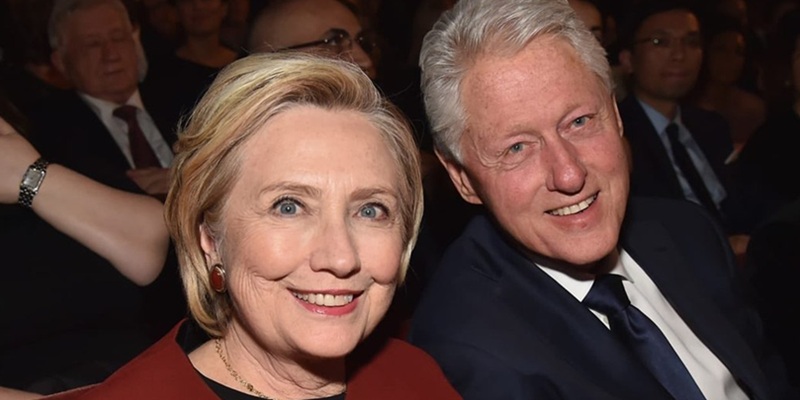
THIS DAWN — The House Oversight Committee voted Wednesday to hold former President Bill Clinton and former Secretary of State Hillary Clinton in contempt of Congress for defying subpoenas in the Jeffrey Epstein investigation, a move that could mark the first time a former president faces such punishment.

The Republican‑controlled panel advanced the resolutions in bipartisan votes, opening the door for a full House vote. If approved, the contempt charges would be referred to the Department of Justice, which could pursue criminal prosecution. Conviction carries the possibility of fines or even imprisonment, though such outcomes remain rare.
Committee Chairman Rep. James Comer (R‑Ky.) accused the Clintons of “defiance” rather than cooperation. “Subpoenas are not mere suggestions,” Comer said. “They carry the force of law and require compliance.”
The Clintons’ Position
The Clintons argue the subpoenas are invalid, insisting they serve no legislative purpose. In a letter last week, they said they had no knowledge of Epstein’s abuse and had already provided written declarations about their limited interactions with him. “We have tried to give you the little information we have. We’ve done so because Mr. Epstein’s crimes were horrific,” they wrote.
Behind the scenes, longtime Clinton lawyer David Kendall has sought compromise, even suggesting testimony on Christmas Eve. Comer rejected the offer, insisting only a transcribed deposition would suffice.
Divided Democrats
Democrats were split. Some progressives joined Republicans in demanding transparency, arguing no one should be shielded from scrutiny. Others criticized Comer for focusing on the Clintons while the Justice Department lags behind in releasing unredacted Epstein files.
Rep. Robert Garcia (D‑Calif.), the committee’s ranking member, said: “No president or former president is above the law.” Yet he questioned why Comer prioritized the Clinton subpoenas over broader efforts to obtain Epstein’s files.
Broader Context
The contempt fight is the latest turn in the Epstein saga. Epstein, a wealthy financier, was charged with sexually abusing dozens of teenage girls before dying by suicide in a New York jail cell in 2019. His ties to powerful men, including Clinton and Trump, have fueled public demands for transparency.
Congressional investigators are probing how Epstein evaded accountability for so long and whether his relationships with influential figures played a role. The committee has also subpoenaed Ghislaine Maxwell, Epstein’s longtime confidant now serving a lengthy prison sentence for sex trafficking. Comer announced Maxwell will be interviewed next month, while former Florida Attorney General Pam Bondi is scheduled to testify before the House Judiciary Committee in February.
Precedent and Consequences
Contempt of Congress proceedings are rare but have been used in high‑profile cases. Trump advisers Steve Bannon and Peter Navarro were convicted for defying subpoenas from the January 6th Committee, serving prison sentences. No former president has ever been successfully compelled to testify before Congress, though some have appeared voluntarily.
If the House approves the resolutions, the Justice Department would face the unprecedented decision of whether to prosecute a former president and former secretary of state.
Political Fallout
The move has scrambled partisan lines. While Republicans have long sought to tie the Clintons to Epstein, some Democrats now argue transparency is paramount, even if it means compelling testimony from a former Democratic president. The bipartisan push reflects frustration with delays in the Justice Department’s release of Epstein case files and growing public pressure for accountability.
Still, passage in the full House is uncertain. Republicans have struggled to secure majorities on contentious issues, and some moderates may balk at the prospect of targeting the Clintons.
The Oversight Committee’s vote to hold Bill and Hillary Clinton in contempt represents a watershed moment in congressional history and the Epstein investigation. Whether the full House follows through — and whether the Justice Department pursues prosecution — remains unclear. But the decision underscores the enduring reverberations of Epstein’s crimes and the determination of lawmakers to compel testimony from even the most powerful figures.