
THIS DAWN — The United States Department of Justice (DOJ) has begun releasing a new tranche of long-sealed records linked to disgraced financier and convicted sex trafficker Jeffrey Epstein.

The newly released documents reveal that Epstein met with Michael Jackson and former President Bill Clinton, amongst others.
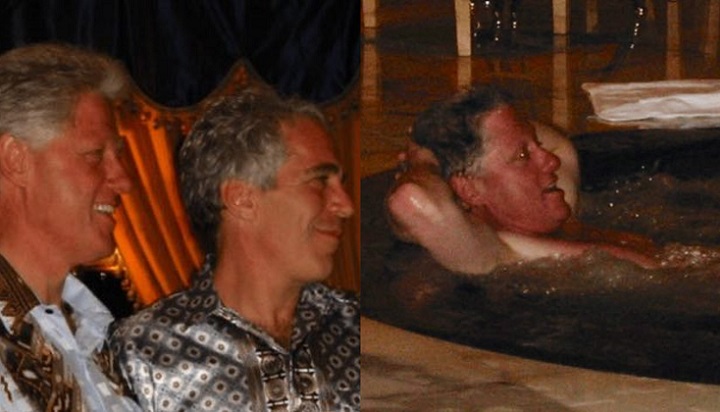
In one of the released files, President Clinton was seen enjoying his time with Epstein and a redacted individual.
The release and revelations have ignited intense political controversy, renewed public scrutiny, and sharp reactions from lawmakers and victims’ advocates.
In another newly released photo, Clinton was seen swimming alongside Ghislaine Maxwell and a redacted woman.
The release marks the first phase of compliance with the recently enacted Epstein Files Transparency Act.
That was a bipartisan law mandating the disclosure of all unclassified federal records connected to Epstein and related investigations.
The documents, published late Thursday, include investigative files, photographs, internal communications, and evidence gathered by federal authorities over several decades.
However, the partial nature of the disclosure has immediately triggered accusations that the DOJ is failing to fully comply with the law’s clear deadline requirements.
Partial Release of Epstein Files Sparks Backlash
Under the transparency law, signed last month, the DOJ was required to release all eligible Epstein-related files within 30 days.
The release will be subject only to narrow redactions to protect victims and national security interests.
Instead, the department confirmed that only a portion of the material is being made public at this stage, with additional releases expected in the coming weeks.
Senior DOJ officials said the delay was necessary to complete redactions and legal reviews, particularly to shield victims’ identities.
Critics, however, argue that the staggered release undermines the intent of the law.
“This law was explicit,” said one member of Congress involved in drafting the legislation.
“The American people were promised transparency, not an indefinite drip-feed of documents,” he added.
Both Republican and Democratic lawmakers have warned that continued delays could provoke congressional subpoenas or court action.
What the Released Files Contain
The initial batch reportedly spans hundreds of thousands of pages and includes materials from the FBI, federal prosecutors, and other agencies involved in Epstein-related investigations.
Much of the content overlaps with records previously disclosed through civil litigation and earlier court proceedings.
Analysts, meanwhile, say the scale and official sourcing of the documents make this release significant.
The files are expected to shed further light on Epstein’s extensive network of associates, his private properties, travel patterns, and federal handling of the case prior to his death in a New York jail cell in 2019.
Epstein’s longtime associate, Ghislaine Maxwell, is currently serving a 20-year federal prison sentence for her role in the trafficking conspiracy.
DOJ officials cautioned that the presence of a name in the files does not imply wrongdoing, emphasizing that many individuals referenced were never accused or investigated.
Survivors and Advocates Demand Full Disclosure
Victims’ advocacy groups welcomed the release as a long-overdue step but expressed frustration at its limited scope.
“For survivors, transparency is not about spectacle — it’s about accountability,” said one advocate. “Every delay prolongs pain and fuels suspicion that powerful interests are still being protected.”
Survivors of Epstein’s abuse have long argued that secrecy surrounding the case allowed systemic failures to go unexamined and enabled Epstein to evade justice for years.
Political and Public Pressure Mounts
The Epstein case has remained a flashpoint in U.S. politics due to Epstein’s connections to wealthy, influential figures across business, politics, and international society.
The new disclosures have already reignited calls for deeper investigations into whether federal authorities failed to act decisively despite mounting evidence against Epstein as early as the 1990s.
House committees are expected to hold hearings in the coming weeks to assess the DOJ’s compliance with the transparency law.
Several lawmakers have also demanded a firm timetable for the release of the remaining files.
DOJ Defends Its Actions on Epstein
In a brief statement, the Department of Justice insisted it is acting in good faith and within the bounds of the law.
“We are committed to transparency while fulfilling our legal and ethical obligation to protect victims and sensitive information,” a DOJ spokesperson said.
The spokesperson added that additional document releases are imminent.
Still, critics argue that the department’s assurances fall short.
They note that many documents have been in government custody for years and should already have undergone review.
What Comes Next
Further document dumps are expected over the coming days and weeks, with journalists, legal experts, and independent researchers poised to scrutinize the material for new revelations.
Congressional leaders have signaled they will escalate pressure if the full scope of records is not disclosed promptly.
As the Epstein files finally begin to surface, the unfolding disclosures threaten to reopen old wounds and challenge institutional credibility.
It also revived unresolved questions about power, privilege, and accountability at the highest levels of society.
For now, the partial release has done little to quiet public outrage.
It has, instead, intensified demands for the full truth behind one of the most disturbing criminal scandals of modern times.