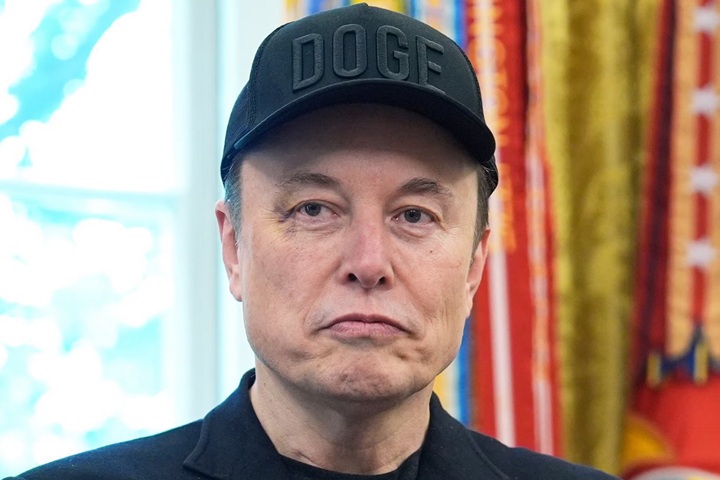
THIS DAWN — Billionaire entrepreneur Elon Musk has become the first person in modern history to surpass an estimated net worth of $675 billion, according to consolidated valuations from financial analysts tracking global equity markets, private holdings, and asset appreciation.

The unprecedented milestone is attributed to a sharp rise in the valuation of Musk’s core business interests, particularly Tesla Inc., SpaceX, and several privately held ventures linked to artificial intelligence, satellite communications, and advanced manufacturing. Market analysts describe the figure as a paper valuation, reflecting Musk’s equity stakes rather than liquid cash holdings.
Musk, who serves as Chief Executive Officer of Tesla and SpaceX, already held the title of the world’s richest individual. However, crossing the $675 billion threshold places him in a category previously thought to be economically implausible for a single person.
Drivers of the Wealth Surge
Financial analysts point to three major factors behind the surge:
First, SpaceX’s valuation has reportedly climbed sharply following new government contracts, expanded Starlink operations across emerging markets, and expectations of future orbital and lunar missions. Private secondary-market trades have reportedly placed SpaceX’s valuation well above previous benchmarks.
Second, Tesla’s market capitalisation has benefited from renewed investor confidence in electric vehicles, energy storage, and autonomous-driving technologies, particularly after the company announced major advances in AI-assisted driving systems and manufacturing efficiencies.
Third, Musk’s growing footprint in artificial intelligence, robotics, and data infrastructure has further boosted investor sentiment. Several of Musk’s private ventures are believed to be positioning for future public listings or strategic funding rounds at elevated valuations.
Not Liquid Wealth
Experts have cautioned that Musk’s net worth should not be interpreted as spendable cash. The majority of his wealth is tied to equity holdings, which fluctuate with market conditions and are subject to regulatory and liquidity constraints.
“This is not money sitting in a bank account,” said one market analyst. “It represents ownership value in companies that could rise or fall significantly depending on global economic conditions, technology cycles, and regulatory decisions.”
Despite this, the milestone underscores the scale of wealth concentration in the modern global economy, particularly within the technology sector.
Broader Implications
Musk’s wealth milestone has reignited global debate on income inequality, taxation of ultra-high-net-worth individuals, and the influence of billionaire entrepreneurs on politics, innovation, and public policy.
Supporters argue that Musk’s fortune reflects value creation through innovation, job creation, and technological breakthroughs in clean energy and space exploration. Critics, however, say such levels of wealth highlight systemic imbalances and raise ethical questions about regulation and redistribution.
Historically, even industrial-era magnates such as John D. Rockefeller, when adjusted for inflation, are estimated to have peaked below this level.
Musk Remains Characteristically Silent
As of the time of reporting, Musk has not issued a formal statement on the valuation milestone. Known for his understated reactions to wealth rankings, the billionaire has previously said he measures success by technological progress rather than personal fortune.
Whether temporary or sustained, Musk’s crossing of the $675 billion mark has already entered financial history, reshaping perceptions of wealth limits in the 21st century.