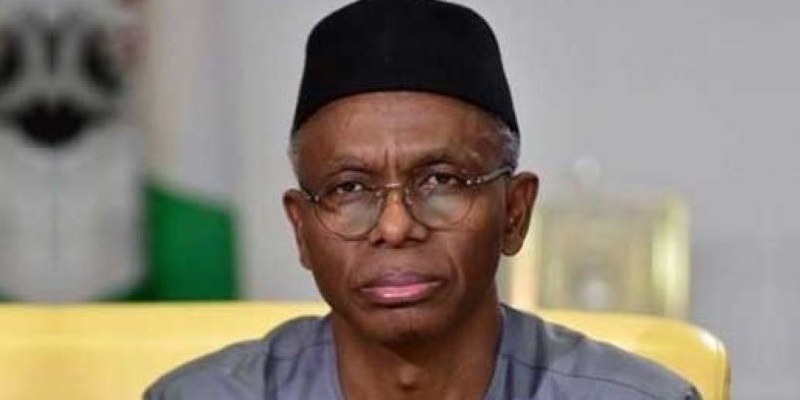

Mr. Muyiwa Adekeye, the media adviser to former Kaduna State Governor Nasir El-Rufai has lamented how his principal has till date spent 17 days in detention following his voluntary appearance before Nigeria’s anti-corruption authorities.
Mr. Adekeye made the remarks in an essay he published online, noting that multiple legal disputes have emerged over the circumstances of his arrest, detention, and the search of his residence.
Adekeye detailed the developments surrounding the case since El-Rufai first reported to investigators on February 16, 2026.
Detention and Transfer Between Agencies
According to Adekeye, El-Rufai voluntarily presented himself at the office of the Economic and Financial Crimes Commission (EFCC) on Monday, February 16, 2026.
Two days later, on February 18, he was transferred to the custody of the Independent Corrupt Practices and Other Related Offences Commission (ICPC), which has since continued to hold him.
Authorities disclosed that the ICPC obtained a 14-day remand warrant on February 19 to keep the former governor in custody while investigations continued.
The warrant is expected to expire on March 5, 2026.
ICPC officials indicated that they plan to formally charge El-Rufai in court before or on the expiration of the remand period.
Dispute Over Alleged Discovery of Surveillance Equipment
A major point of contention emerged on March 2 when the El-Rufai family rejected claims reportedly made by the ICPC that wiretapping equipment was recovered during a search of the former governor’s residence.
The family described the allegation as false and sensational, while El-Rufai’s legal team said they are preparing legal action against the anti-corruption agency for what they described as defamatory claims.
Legal Challenge to Search and Detention
El-Rufai’s lawyers have also mounted a legal challenge against the warrants used in the investigation.
The defence is contesting both the remand order and the search warrant executed on February 19, arguing that the warrant lacked sufficient legal basis.
The matter concerning the search warrant came before Justice Joyce Abdulmalik on March 3. The court adjourned the case to March 11 to allow all parties involved to be properly served.
According to the defence, the warrant should be declared invalid due to several alleged flaws, including:
-
Lack of specificity in its description of items to be searched
-
Drafting errors and ambiguities in execution parameters
-
Overly broad scope
-
Absence of probable cause
El-Rufai’s legal team is also asking the court to declare the search a violation of his fundamental human rights and to bar investigators from using any items recovered during the search as evidence in future proceedings.
Fundamental Rights Case Reassigned
In a separate legal development, El-Rufai had filed a fundamental rights enforcement suit against several federal agencies, including the Department of State Services, the ICPC, and the EFCC.
Justice Hussaini Belgore of the FCT High Court initially handled the matter but transmitted the case file to the Chief Judge for reassignment after announcing plans to proceed on leave.
The case had earlier been adjourned to allow respondents to file their legal responses.
Delayed Court Arraignment
Meanwhile, a planned arraignment of El-Rufai by the Department of State Services did not proceed as scheduled on February 25 at the Federal High Court.
Prosecutors informed the court that they were unable to produce the defendant and requested a two-week adjournment.
El-Rufai’s lawyers opposed the request, arguing that the DSS should have been able to produce him since he was already in the custody of another federal agency.
Justice Joyce Abdulmalik subsequently adjourned the matter to April 23, 2026.
The court has yet to hear El-Rufai’s pending applications seeking to quash the charges filed by the DSS and requesting bail.
Political and Legal Implications
The ongoing detention and legal disputes involving El-Rufai have attracted significant attention across Nigeria’s political and legal circles.
Analysts say the coming weeks will be crucial as courts consider multiple legal challenges related to his detention, search warrants, and the validity of the charges being prepared by federal agencies.
With the remand warrant set to expire soon and several court dates approaching, the case is expected to remain a major issue in Nigeria’s political and judicial landscape.