
Nasir El-Rufai, the former Governor of Kaduna State, is dominating headlines and social media trends in Nigeria today as he faces arraignment in court on corruption-related charges.
The Independent Corrupt Practices and Other Related Offences Commission (ICPC) brought El-Rufai and his associate, Joel Adoga, before the Federal High Court in Kaduna.
over allegations of corruption, money laundering, abuse of office, and misappropriation of public funds.
The charges are linked to over ₦432 billion allegedly mismanaged during his tenure as governor between 2015 and 2023.
Dramatic Court Scenes
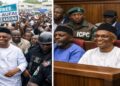
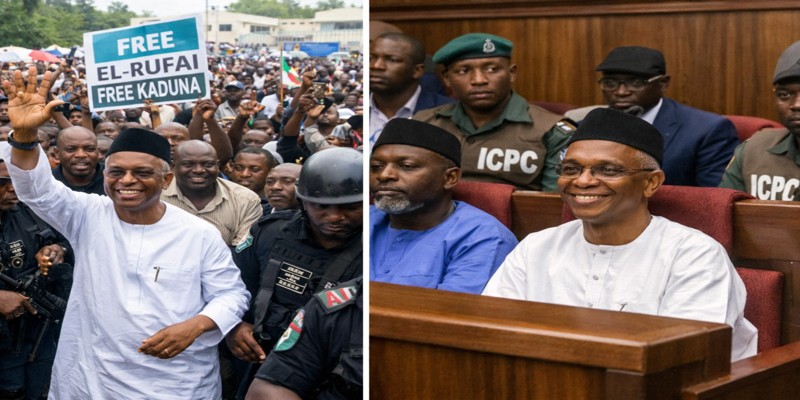
El-Rufai’s arrival at the court was marked by a massive show of support.
Thousands of his loyalists and political allies gathered outside, chanting and waving banners, while heavy security forces tried to maintain order.
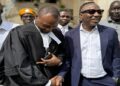
Inside the courtroom, videos and photos of El-Rufai smiling in the dock — despite spending more than 30 days in detention — quickly went viral, fueling debates online.
A String of Legal Battles
This arraignment is the latest in a series of legal troubles for El-Rufai in 2026.
Earlier this year, he was accused of illegally wire-tapping the phone lines of National Security Adviser Nuhu Ribadu, a claim he controversially admitted knowing about.
He was previously detained by the EFCC and DSS, and in February, he was dramatically stopped at the airport upon returning from Cairo.
Political Undertones
El-Rufai’s supporters argue that the charges are politically motivated, pointing to his recent defection from the ruling APC to the African Democratic Congress (ADC).
Since joining the ADC coalition, he has become one of the most vocal critics of President
Tinubu’s administration, warning of national security risks and openly calling for regime change in 2027.
His family and allies within the ADC have described his prosecution as persecution aimed at weakening opposition momentum ahead of the next elections.
Public Reaction
On X (Twitter), hashtags such as #FreeElRufai and #JusticeForElRufai are trending, with Nigerians sharply divided.
Some see the trial as a necessary step toward accountability and anti-corruption, while others view it as a witch-hunt designed to silence a prominent opposition figure.
Broader Context
El-Rufai remains one of Nigeria’s most polarizing figures.
In the North, he is admired for his boldness and political courage, while critics — especially in Southern Kaduna — accuse him of poor governance and mishandling of ethnic and religious crises during his time in office.
As the trial unfolds, the case is expected to test Nigeria’s anti-corruption institutions and highlight the deep intersection of law and politics in the country.
Whether this marks genuine accountability or political maneuvering remains a subject of heated national debate.