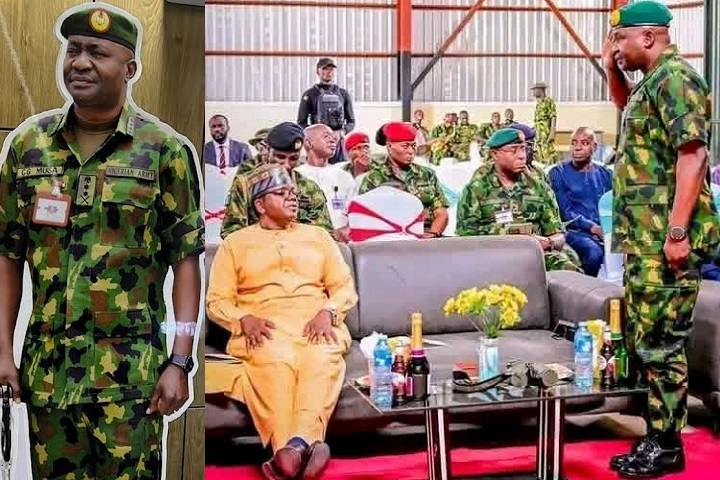
THIS DAWN — President Bola Ahmed Tinubu’s nomination of General Christopher Gwabin Musa as the new Minister of Defence marks one of the most intriguing role reversals within Nigeria’s contemporary security and political landscape.

Until recently, Musa—then Nigeria’s Chief of Defence Staff (CDS)—operated under an arrangement in which the Minister of State for Defence, Bello Matawalle, was constitutionally his supervising minister.
In practice, that structure often placed a seasoned four-star general—leading Nigeria’s entire Armed Forces—under the political authority of a former governor with no military background.
Now, with Musa appointed substantive, full Minister of Defence, the script has flipped dramatically.
The general who once took directives from Matawalle will now—if the President reassigns portfolios as expected—issue the strategic military and administrative orders that Matawalle must follow in his junior capacity.
The symbolism is unmistakable: a restoration of the military chain-of-command hierarchy within the civilian architecture of the Ministry of Defence.
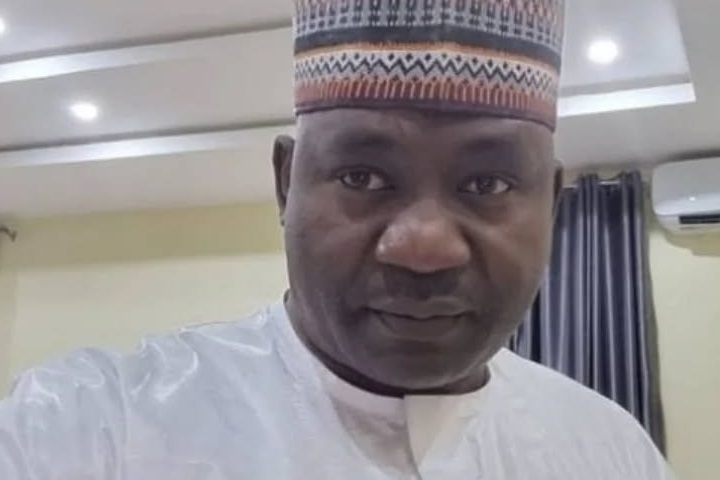
Competence, discipline, leadership, experience
This reversal speaks to a deeper truth about Nigeria’s governance: competence eventually asserts itself, even after periods where political calculations temporarily overshadow professional logic.
Musa’s record is substantial—former Theatre Commander of Operation Hadin Kai, former Commander of the Infantry Corps, former CDS, and recipient of the Colin Powell Award for Soldiering.
His life has been defined by discipline, leadership, and hard-won field experience.
To have such an officer subordinated to a political appointee with limited security expertise was always awkward.
Matawalle, for his part, is not without political weight.
As a former governor of Zamfara State—once the epicentre of banditry—he came into the defence ministry with strong opinions on security.
Yet, his experience is political, not professional.
The defence establishment quietly acknowledged the tension inherent in the previous arrangement: a globally trained general answering to a partisan politician with no service background.
It was an inversion of expertise that many insiders found difficult to rationalize. Musa’s elevation corrects that structural flaw.
For the first time in years, Nigeria is poised to have a Defence Minister who deeply understands the military, its culture, its frustrations, and its internal contradictions.
That clarity is invaluable as Nigeria prepares for intensified counterterrorism operations, reforms in defence procurement, and a major restructuring of the Armed Forces leading up to 2027.
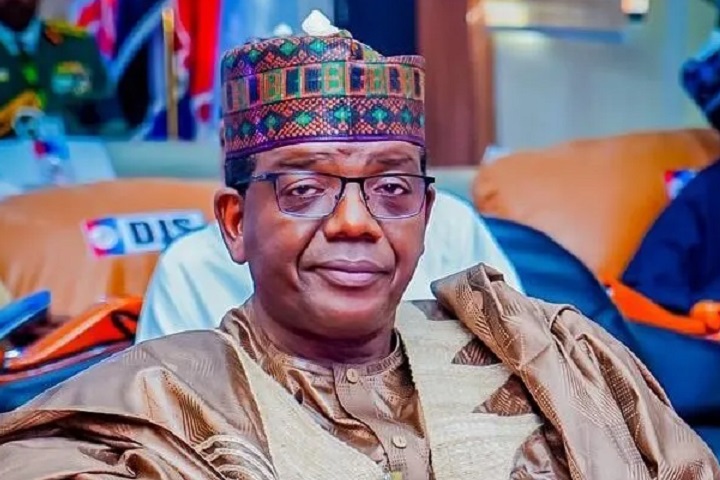
Unquestioned superior
But beyond competence, the political optics are fascinating.
In government, power shifts—sometimes subtly, sometimes dramatically. In this case, it has shifted decisively.
The man who once entered meetings to “brief” Matawalle will now enter the defence headquarters as the unquestioned superior. It is a reversal that Nigerian politics rarely offers so cleanly.
The development also sends a message to the wider military community: the Tinubu administration is willing to reward excellence, even after a change of roles or tenure.
It suggests that officers who serve professionally may still rise to significant political authority—an important morale boost in a force long frustrated by political interference and opaque leadership structures.
As for Matawalle, remaining as a junior minister while his former subordinate moves above him in the hierarchy is likely to cause discomfort.
But politics demands adaptability, and every administration reshuffles loyalties, influence, and stature.
Matawalle will have to adjust to the new reality: General Musa is now not just a colleague, but the man ultimately responsible for Nigeria’s defence architecture.
In the end, Nigeria may benefit from this reversal.
A Defence Ministry led by someone who truly understands defence is exactly what the country needs.
And the irony—that Musa has moved from taking orders from Matawalle to giving orders to Matawalle—is simply an added footnote in the unpredictable theatre of Nigerian politics.