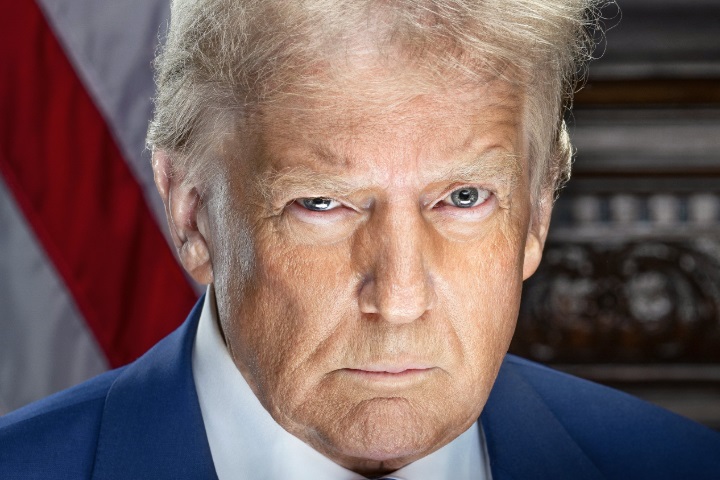
THIS DAWN — President Donald Trump has filed a lawsuit seeking $10 billion in damages from the British Broadcasting Corporation (BBC).

The suit, filed on December 15, 2025, accused the international broadcaster of defamation and of engaging in deceptive and unfair trade practices stemming from its editing and presentation of his January 6, 2021 speech.
According to reports, the complaint was filed in a U.S. court.
It alleged that the BBC selectively edited portions of his address to supporters in Washington, D.C., in a manner that materially altered its meaning and falsely portrayed him as inciting violence at the U.S. Capitol.
The suit claims the broadcaster’s coverage omitted key passages in which Trump urged supporters to protest “peacefully and patriotically,” thereby, in his view, advancing a “knowingly false and defamatory narrative” about his intentions.
The January 6 speech, delivered shortly before a mob of Trump supporters stormed the Capitol in an effort to disrupt the certification of the 2020 presidential election, remains one of the most scrutinized political addresses in modern U.S. history.
Multiple investigations, including a congressional inquiry, examined Trump’s actions and rhetoric surrounding the events of that day.
Trump has consistently denied responsibility for the violence, arguing that his remarks have been mischaracterized by political opponents and the media.
‘Deliberate distortion’
In the lawsuit, Trump contends that the BBC’s reporting went beyond editorial judgment and crossed into deliberate distortion.
His legal team argues that the broadcaster’s global reach amplified the alleged harm.
They claimed it damaged Trump’s reputation internationally and reinforced what the complaint describes as a “false association with criminal violence and insurrection.”
The suit further alleged that BBC’s editorial decisions were driven by ideological bias rather than journalistic standards.
Beyond defamation, the lawsuit accuses the BBC of deceptive and unfair trade practices, a claim more commonly associated with commercial disputes.
Trump’s attorneys argue that the BBC, as a publicly funded broadcaster that also operates commercial services worldwide, misled audiences by presenting edited content as an accurate and complete account.
That violated consumer protection principles, the attorneys insisted.

Trump’s reputational harm and economic loss
The $10 billion damages figure reflects what the complaint describes as the scale of reputational harm and economic loss suffered by Trump, including alleged impacts on his political prospects, business interests, and public standing.
Legal experts note that defamation cases involving public figures face a high legal bar in the United States.
It requires plaintiffs to prove “actual malice” — that the defendant knowingly published false information or acted with reckless disregard for the truth.
The BBC has not yet filed a formal response in court.
A spokesperson, however, said the broadcaster “stands by its journalism” and intends to “vigorously defend” itself against the claims.
The BBC has previously maintained that its coverage of January 6 was based on established facts, contemporaneous reporting, and widely available video evidence of the events surrounding the Capitol riot.
Trump’s knack for hitting media organizations
The lawsuit adds to a growing list of legal actions by Trump targeting major media organizations.
In recent years, he has pursued defamation claims against U.S. news outlets and social media companies.
He often accused them of bias and coordinated efforts to undermine him politically.
While many such cases have been dismissed or settled, Trump and his allies argue that litigation is necessary to challenge what they describe as systemic media misconduct.
Legal analysts say the case could raise complex jurisdictional questions, given the BBC’s status as a U.K.-based public broadcaster and the cross-border nature of its operations.
Issues of applicable law, venue, and enforceability of any potential judgment are likely to feature prominently if the case proceeds.
For now, the filing underscores Trump’s continued effort to contest the dominant narrative surrounding January 6.
It also confronts media organizations he believes have misrepresented his words and actions.
Whether the lawsuit advances beyond preliminary stages may ultimately depend on how courts assess the BBC’s editorial discretion against the stringent standards governing defamation claims by public figures.