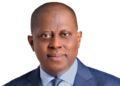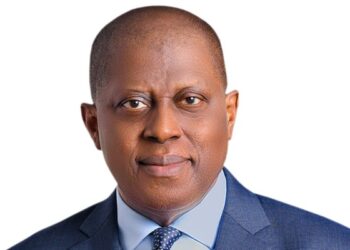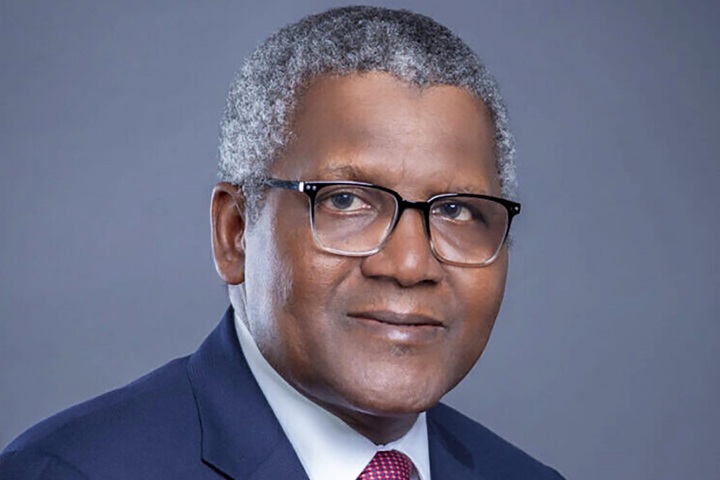
THIS DAWN — Nigeria’s petroleum regulatory landscape has been thrown into renewed controversy following explosive allegations by President of the Dangote Group, Alhaji Aliko Dangote, against the Chief Executive Officer of the Nigerian Midstream and Downstream Petroleum Regulatory Authority (NMDPRA), Engineer Farouk Ahmed.

The accusations, detailed in an essay by public affairs commentator Onwuasoanya FCC Jones and attributed to comments made by Dangote at a press conference in Lagos, centre on claims of economic sabotage, regulatory bias, and personal enrichment far beyond verifiable income.
Speaking at the corporate headquarters of the Dangote Refinery, Dangote reportedly accused the NMDPRA boss of living well above his legitimate earnings, citing what he described as evidence that Engineer Ahmed paid approximately ₦7.5 billion—estimated at about $5 million—in tuition fees over several years for four of his children attending schools in Switzerland.
According to Dangote, the alleged expenditure raises serious questions about the sources of income available to a public official heading a regulatory agency.
Dangote contrasted the alleged spending with his own family choices, noting that despite his capacity to send his children to any school globally, they attended secondary schools in Nigeria. He reportedly argued that such personal decisions reflected confidence in the country and stood in sharp contrast to what he described as the conduct of some members of the ruling elite.
Beyond personal lifestyle concerns, Dangote accused the NMDPRA and other petroleum sector regulators of policies that allegedly undermine Nigeria’s domestic refining ambitions. He claimed that continued issuance of import licences for what he described as “low-quality blended Premium Motor Spirit (PMS)” at high prices has distorted the market, making it difficult for local refiners to operate sustainably and achieve break-even.
According to the allegations, such regulatory decisions amount to deliberate frustration of efforts to stabilise Nigeria’s local refining capacity, including investments aimed at reducing dependence on fuel imports and conserving foreign exchange. Dangote reportedly described the actions as economic sabotage that directly harms ordinary Nigerians through higher fuel costs and weakened energy security.
The billionaire industrialist was quoted as saying he had no doubts about the accuracy of his claims before taking them public. He reportedly challenged Engineer Ahmed to disprove the allegations and expressed readiness to publish details of the alleged school fee payments. Dangote also reportedly said he was prepared to explore legal avenues, including compelling the Swiss institutions involved to disclose records of the payments, should the matter proceed further.
The essay by Onwuasoanya FCC Jones frames the allegations within a broader critique of Nigeria’s political and economic elite, accusing some officials of undermining national development while insulating their families from the consequences of poor governance.
The author argues that the alleged conduct reflects a lack of faith in Nigeria’s future and a willingness to prioritise personal and familial comfort over national interest.
The commentary further portrays Dangote as a rare example of patriotism within Nigeria’s elite, suggesting that his intervention is driven by concern for ordinary Nigerians rather than political ambition. The essay contrasts Dangote’s stance with that of elected officials, arguing that despite not seeking public office, the industrialist has shown greater empathy for the economic hardships faced by citizens.
However, the allegations remain unproven at this stage. As of the time of reporting, Engineer Farouk Ahmed and the NMDPRA had not publicly responded to the claims. No official documentation has been released by anti-corruption agencies to substantiate or refute the assertions regarding foreign school fees or regulatory misconduct.
Legal and governance experts note that allegations of this magnitude require thorough investigation by appropriate authorities, including the Economic and Financial Crimes Commission (EFCC) and the Independent Corrupt Practices and Other Related Offences Commission (ICPC). They caution that while public accountability is essential, due process must be followed to avoid trial by media.
The controversy places additional pressure on the Federal Government, particularly given President Bola Tinubu’s stated vision of reforming Nigeria’s petroleum sector, strengthening local refining, and restoring investor confidence. Observers say how the administration responds—whether through investigation, clarification, or silence—will signal its commitment to transparency and sectoral reform.
For now, the allegations have intensified public scrutiny of petroleum sector regulators and reopened debates about accountability, regulatory integrity, and the balance between public service and private privilege in Nigeria’s governance structure.