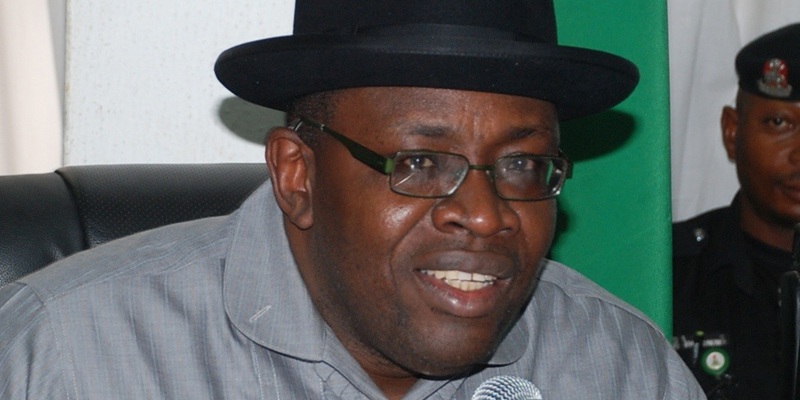
TDFormer Governor of Bayelsa State and current Senator, Henry Seriake Dickson, has voiced his disappointment over the Senate’s initial refusal to pass the clause mandating electronic transmission of election results from polling stations.

Dickson recounted his frustration at the development in a post on his X, formerly Twitter, handle.
He noted that the decision was taken while he was in Bayelsa mourning the death of his brother, the Deputy Governor.
Background to the Controversy
Dickson, a member of the Electoral Committee, explained that the clause on mandatory electronic transmission was the product of two years of painstaking work.
It had been harmonized through workshops, conferences, and consultations.
The harmonization process involved lawmakers, civil society, and the Independent National Electoral Commission (INEC).
He praised the House of Representatives, under Speaker Tajudeen Abbas, for passing the agreed version without alteration.
In contrast, he lamented the Senate’s initial rejection.
The rejection sparked widespread protests and anger among Nigerians who saw the decision as a setback to transparency.
He said: “I saw the protests, the agitations, and the anger by Nigerians, and I share in them.
“As someone who worked and fought for the concept of electronic transmission of election results in the 9th Senate, where we even took a division of the Senate on this issue…
“I feel bad that the Senate did not pass what we took time to harmonise through several workshops and conferences, even with the presence of INEC.
Emergency Session and Rescission Motion
Upon returning to Senate duties after mourning, Dickson confronted members of the Senate leadership.
He revealed that the Senate Chief Whip, Senator Tahir Monguno, moved a motion for rescission, which was adopted.
This effectively reversed the earlier position.
However, the Senate added a proviso: election results would still be validated in cases where electronic transmission fails due to network issues.
While this compromise has drawn criticism from activists who fear it leaves room for manipulation, Dickson described it as “incremental progress.”
He remarked:
“INEC had told us that they have the capacity to transmit election results nationwide, and we believe them.
“But in parliament, you don’t get all you want at the time you want.
“What happened today was not a loss to democracy; it was incremental progress.
“It was not what we fought for or prepared for, but it is still something we can work with while hoping to improve on it later.
The Role of IREV in Electoral Transparency
Dickson emphasized the importance of INEC’s Result Viewing Portal (IREV), introduced as an improvement on the Card Reader and BVAS.
He clarified that IREV does not collate results but provides real-time access to polling unit data.
According to him, it allows citizens, parties, and observers to monitor outcomes directly.
He stressed that manipulation typically occurs at collation centres—ward and local government levels.
There, he said, results are vulnerable to interference, thuggery, and executive influence.
By mandating transmission to IREV, Dickson argued, Nigeria can cut off opportunities for manipulation.
They can also ensure that polling unit results remain the primary evidence of electoral outcomes.
Implications for the 2027 Elections
Dickson reassured Nigerians that despite the Senate’s compromise, the framework still represents progress.
He noted that INEC will issue guidelines requiring presiding officers to sign results, make copies, and transmit them electronically to IREV.
This, he said, amounts to real-time monitoring of results from polling stations upward.
He concluded that while the reforms are not perfect, they directly address the greatest assault on democracy.
The assault, Dickson said, is chiefly manipulation at collation centres.
With IREV, candidates and parties can collate results from polling stations and know their true standing.
It can also reduce disputes and restoring confidence in the electoral process.
Senator Dickson’s remarks underscore both the frustrations and incremental gains in Nigeria’s electoral reform journey.
Undoubtedly, the Senate’s proviso has raised concerns among citizens.
Dickson, however, insists that the adoption of electronic transmission to IREV remains a significant milestone in curbing electoral fraud.
As Nigeria prepares for the 2027 general elections, the harmonization of Senate and House positions will be crucial.
It will determine whether the reforms deliver the transparency and credibility Nigerians demand.