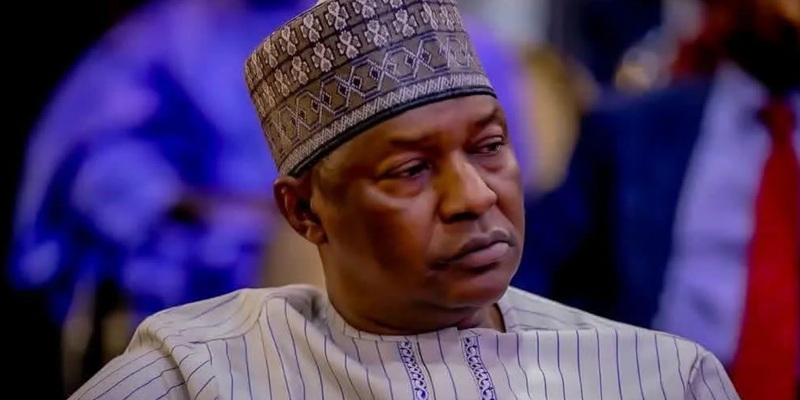
THIS DAWN — The Department of State Services (DSS) has re‑arrested former Attorney‑General of the Federation and Minister of Justice, Abubakar Malami, SAN.

The latest arrest has shaken Nigeria’s political and legal establishment, as Malami was just recently released from Kuje Correctional Facility on bail.
He was earlier detained over allegations of financial impropriety and embezzlement.
The current arrest, tied to allegations of terrorism financing, has reignited debate about accountability, political rivalry, and the credibility of Nigeria’s counter‑terrorism framework.
Background
Malami, who served as Nigeria’s chief law officer under former President Muhammadu Buhari, has long been a controversial figure.
While praised for spearheading reforms in Nigeria’s anti‑money laundering (AML) and counter‑terrorism financing (CFT) systems, he has also faced persistent insinuations of links to alleged terror financiers.
These allegations resurfaced in late 2025 when reports cited a retired military officer.
The officer had suggested that certain suspects had “business or institutional relationships” with Malami and other individuals.
Though the officer clarified he was not directly accusing Malami of financing terrorism, headlines and political commentary amplified the insinuations.
Malami’s December 2025 Statement
On December 5, 2025, Malami issued a lengthy public statement rejecting any suggestion of complicity. He stressed:
- He had never been accused, interrogated, or investigated by any domestic or international agency in relation to terrorism financing.
- His record in office directly contradicted such claims, pointing to reforms that strengthened Nigeria’s AML/CFT architecture.
- He warned against “weaponising ordinary institutional contact into a tool of character assassination.”
Malami highlighted specific reforms he championed:
- Creation of the Nigerian Financial Intelligence Unit (NFIU):
Established as an independent body to meet global standards and restore Nigeria’s credibility.
- Money Laundering (Prevention and Prohibition) Act, 2022:
A comprehensive law replacing outdated frameworks and tightening penalties.
- Terrorism (Prevention and Prohibition) Act, 2022:
Updated offences and reinforced provisions against terrorism financing in line with UN obligations.
- FATF Grey‑List Exit:
These reforms contributed to Nigeria’s eventual removal from the Financial Action Task Force (FATF) grey list, a milestone inconsistent with claims of collusion.
DSS Action
Despite Malami’s defense, the DSS moved swiftly after his release from Kuje prison, detaining him again under terrorism financing allegations.
The agency has not yet issued a detailed public explanation.
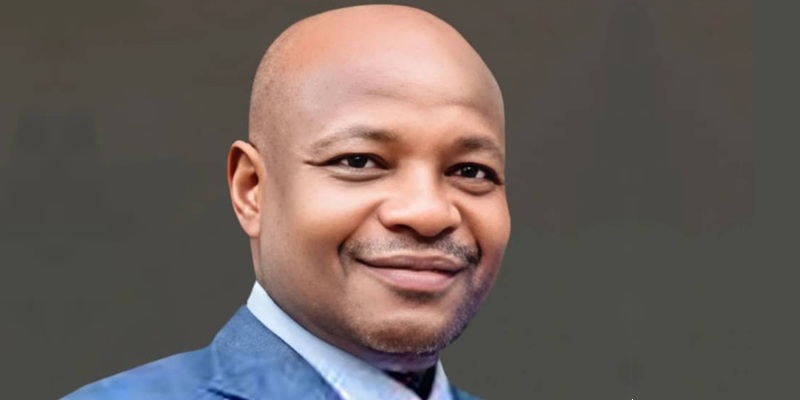
The silence has fuelled speculation about whether the arrest is based on new intelligence or political maneuvering.
Observers note that the DSS has increasingly targeted high‑profile figures in recent months, reflecting pressure to demonstrate seriousness in tackling terrorism financing networks.
Political Context
Malami’s arrest comes at a sensitive time.
Nigeria is preparing for the 2027 general elections, and political rivalries are intensifying.
Some analysts argue that Malami’s detention may be part of broader efforts to weaken perceived power brokers ahead of the polls.
Opposition figures have accused the government of selective enforcement.
They suggest that the government is using the allegations to settle political scores.
Supporters of the arrest counter that no individual, regardless of past office, should be immune from investigation if credible suspicions exist.
Implications
The case carries significant consequences:
- Legal Precedent: If prosecuted, Malami’s case would test Nigeria’s ability to apply terrorism financing laws to elite figures.
- Institutional Credibility: The DSS’s handling of the matter will shape perceptions of Nigeria’s commitment to due process and transparency.
- Political Fallout: The arrest may deepen partisan divisions, with narratives of witch‑hunt versus accountability dominating discourse.
- International Attention: Given Malami’s role in AML/CFT reforms, the case will attract scrutiny from FATF, donor agencies, and foreign governments monitoring Nigeria’s compliance.
Broader Security Concerns
Nigeria continues to grapple with widespread insecurity, from jihadist insurgencies in the northeast to banditry in the northwest.
Allegations of terrorism financing strike at the heart of these challenges.
They raise questions about whether financial networks enabling violence are being adequately disrupted.
Malami’s case, whether substantiated or politically driven, underscores the difficulty of balancing governance, accountability, and national security in a polarized environment.
The DSS’s arrest of Abubakar Malami after his release from Kuje prison marks a dramatic escalation in Nigeria’s fight against terrorism financing.
On his part, Malami insists his record in office contradicts any suggestion of complicity.
On the other hand, the case highlights the tension between political accountability and institutional credibility.
As proceedings unfold, the outcome will have far‑reaching implications for Nigeria’s governance, its international reputation, and the credibility of its counter‑terrorism financing regime.
Whether Malami is vindicated or prosecuted, the case will remain a defining test of Nigeria’s resolve to confront terrorism financing at the highest levels.