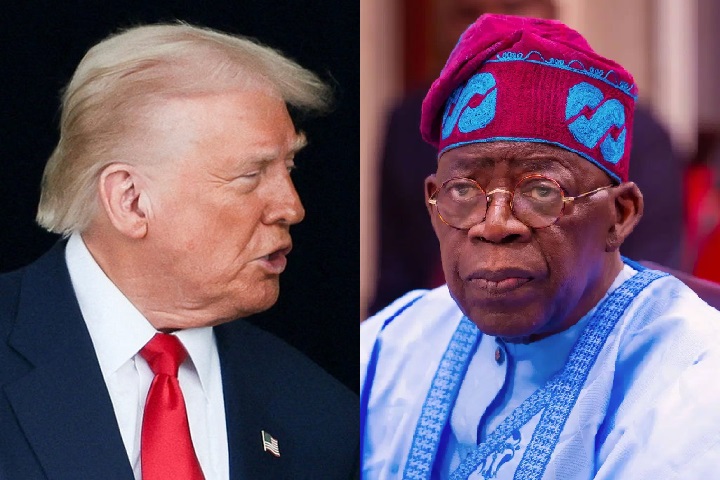

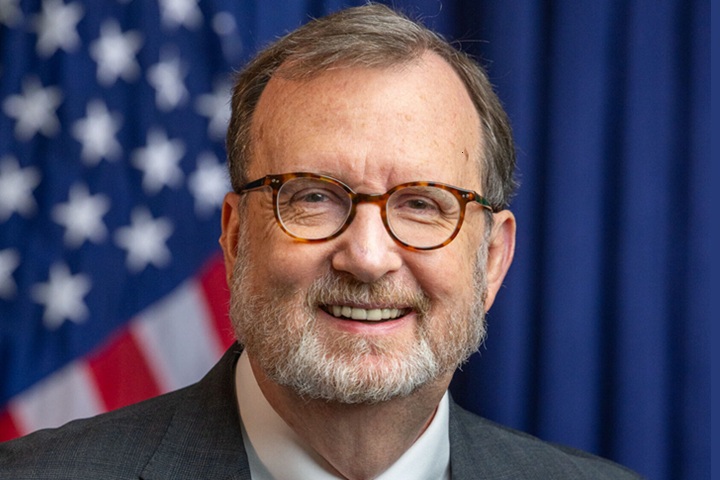
THIS DAWN — United States President Donald Trump has recalled Richard Mills, the US Ambassador to Nigeria.
Observers described the move as one of the most sweeping diplomatic reshuffles in recent history.
The move reportedly affected more than two dozen countries.
It drew global attention due to its scale and the disproportionate impact on Africa, the continent said to be hardest hit by the recalls.
A Sudden Diplomatic Realignment
Ambassador Mills, a seasoned career diplomat, had been serving as Washington’s top envoy to Abuja.
His stewardship coincides with a period of heightened diplomatic, security, and economic engagement between the United States and Nigeria.
His recall signals a significant recalibration by the Trump administration.
The administration, observers note, appear intent on realigning its foreign service with broader strategic and political priorities.
The White House has not provided a detailed explanation for the decision.
However, officials familiar with the process describe it as part of a broader effort to restructure US diplomatic representation abroad.
Such recalls, though not unprecedented, are unusual in their breadth, particularly when they involve multiple regions simultaneously.
Analysts note that large-scale ambassadorial reshuffles often reflect shifts in:
- foreign policy direction,
- administrative consolidation, or,
- a desire to install envoys more closely aligned with an administration’s worldview.
Africa Most Affected
Africa has emerged as the region most affected by the shake-up, raising questions about the future of US engagement on the continent.
Several African capitals are reportedly experiencing similar changes.
This has prompted speculation that Washington may be reassessing its diplomatic footprint amid competing global priorities, including:
- great-power competition,
- trade negotiations, and,
- security challenges elsewhere.
Nigeria, Africa’s most populous nation and one of the United States’ most significant partners on the continent, has been particularly impacted.
Cooperation between the two countries spans counterterrorism, trade, energy, health, and democratic governance.
Mills’ tenure coincided with ongoing US support for Nigeria’s fight against insurgency, as well as efforts to strengthen electoral institutions and civil society.
Reactions in Abuja over Recalled Ambassador
The recall has been met with cautious reactions from diplomatic observers and policy experts in Nigeria.
While some view the move as a routine administrative adjustment, others see it as a potential signal of shifting priorities in Washington’s Africa policy.
Diplomatic sources stress that the recall does not necessarily indicate a deterioration in US–Nigeria relations.
Ambassadorial changes, they note, are often administrative rather than punitive, particularly when they involve career diplomats rather than political appointees.
Until a successor is named, the US Embassy in Abuja will be led by a chargé d’affaires, ensuring continuity in diplomatic operations.
Broader Implications of Recalled Ambassador
The timing of the recall has nonetheless fueled debate in both diplomatic and political circles.
Some analysts interpret the move as part of President Trump’s broader skepticism toward multilateral engagement and traditional diplomacy.
This stance has characterized much of his foreign policy approach.
Others argue that the administration may be seeking to streamline overseas missions, reduce costs, or recalibrate engagement strategies in regions deemed less central to immediate US strategic interests.
Beyond Africa, reports indicate that the recalls extend to diplomatic missions in parts of Europe, Asia, and Latin America, underscoring the global scope of the shake-up.
The cumulative effect has prompted concern among foreign policy experts about potential disruptions to diplomatic continuity.
This is especially so in countries where ambassadors play key roles in crisis management, trade facilitation, and security cooperation.
What Comes Next
For Nigeria, the coming months will be critical in determining whether the recall marks a temporary administrative adjustment or a more substantive shift in bilateral relations.
Much will depend on the profile and priorities of any new ambassador appointed by the Trump administration, as well as the broader foreign policy direction Washington adopts toward Africa.
As the global diplomatic reshuffle unfolds, governments and observers alike are watching closely for further signals from Washington.
The recall of Ambassador Richard Mills stands as one of the most prominent indicators yet of a US foreign service undergoing rapid and far-reaching change under President Trump’s leadership.