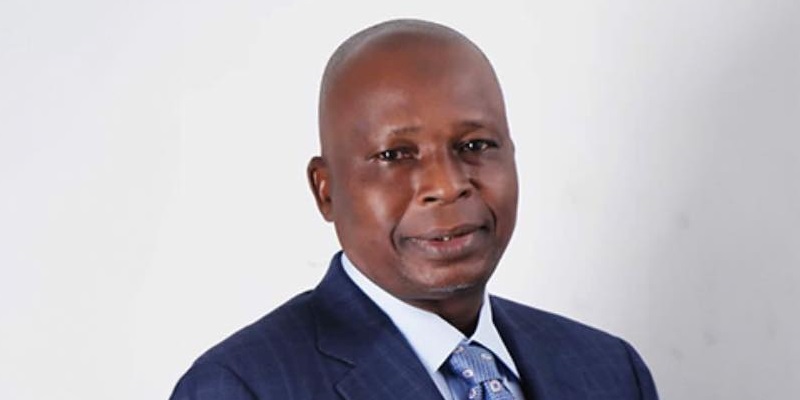
THIS DAWN — Nigerian civic advocate and public finance reformer, Funso Doherty, has raised alarm over what he describes as a “procedural breach” in the enactment of Nigeria’s new tax legislation, set to commence in January 2026.

Doherty’s remarks were contained in a strongly worded open letter to Nigeria’s Attorney-General of the Federation (AGF) and Minister of Justice, Chief Lateef Olasunkanmi Fagbemi, SAN.
The letter, dated December 29, outlined a sequence of events.
Doherty pointed out serious discrepancies between the version of the tax bill passed by the National Assembly and the version signed and gazetted by President Bola Ahmed Tinubu.
The letter comes amid growing controversy surrounding the 2025 tax reform laws, revealing the discrepancies.
The laws have faced public backlash for their perceived harshness and questionable legality.
Doherty’s intervention adds a legal and constitutional dimension to the debate, which has dominated Nigeria’s media space.
He suggested that the law currently being enforced may not have passed through proper legislative channels.
Key Allegations and Timeline
Doherty’s letter distills the issue into five critical points:
- A harmonized version of the tax bill was passed by the National Assembly.
- A different version was signed by the President and published via gazette.
- A lawmaker raised concerns about disparities between the two versions.
- The National Assembly launched an investigation and ordered a re-gazetting of the law.
- The re-gazetting order implies that the signed and published version does not fully reflect what was passed by lawmakers.

According to Doherty, this sequence of events has profound implications.
Most notably, he argued that the version signed by the President differs from the version passed by the National Assembly.
Therefore, the harmonized bill has not been properly assented to, raising questions about the legal validity of the tax law currently in force.
Doherty Lists Legal and Constitutional Implications
Doherty’s letter emphasizes that the breach is not merely procedural but constitutional.
Under Section 4 of the 1999 Constitution, legislative powers are vested solely in the National Assembly.
Any alteration of a bill after it has been passed by lawmakers and before or after presidential assent constitutes a violation of the separation of powers.
He warns that enforcing a law that was not properly passed and assented to undermines the rule of law and sets a dangerous precedent.
“The implications are equally straightforward,” Doherty writes.
“The currently signed and gazetted document is not the same as the bill that was passed by the NASS.
“Equivalently and by implication, the harmonized bill that was passed by the NASS has not been assented to by the President,” he added.
His letter calls on the Attorney-General to acknowledge the gravity of the situation and take steps to ensure that the rule of law is upheld.
Public Reaction and Broader Context
Doherty’s intervention follows weeks of public outcry over the tax reforms, which critics say disproportionately burden ordinary Nigerians.
The controversy intensified after Hon. Abdussamad Dasuki disclosed on the House floor that the gazetted version of the law did not match the legislative record.
The Senate and House leadership subsequently ordered a re-gazetting, effectively confirming that the law had been altered post-assent.
Civil society groups, legal experts, and opposition parties have since demanded accountability, with some calling the breach a form of “constitutional treason.”
Doherty’s letter adds weight to these calls, framing the issue as a fundamental threat to Nigeria’s democratic process.
About Funso Doherty
Funso Doherty is a Nigerian civic advocate, public finance reformer, and former gubernatorial candidate in Lagos State.
He is known for his work in promoting transparency, accountability, and good governance.
Doherty has served as the Managing Director of ARM Investment Managers and is a chartered accountant with global experience in finance and strategy.
His public interventions often focus on fiscal responsibility, legislative integrity, and citizen engagement in governance.