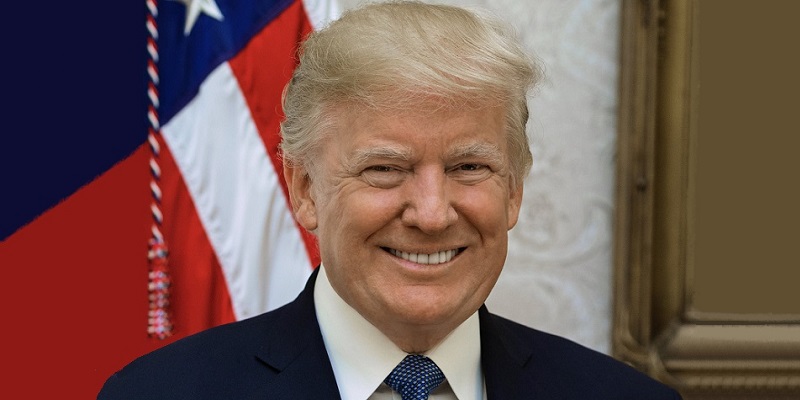
THIS DAWN — Preliminary details have begun to surface regarding President Donald Trump’s much-discussed Greenland deal, a strategic arrangement that could reshape U.S. influence in the Arctic.

While the full scope of the agreement remains under wraps, early disclosures point to a plan that blends military strategy, economic opportunity, and long-term geopolitical positioning.
In the meantime, The White House quoted President trump as saying:
“Based upon a very productive meeting that I have had with the Secretary General of NATO, Mark Rutte, we have formed the framework of a future deal with respect to Greenland and, in fact, the entire Arctic Region.
“This solution, if consummated, will be a great one for the United States of America, and all NATO Nations.
“Based upon this understanding, I will not be imposing the Tariffs that were scheduled to go into effect on February 1st.
“Additional discussions are being held concerning The Golden Dome as it pertains to Greenland.
“Further information will be made available as discussions progress.
“Vice President JD Vance, Secretary of State Marco Rubio, Special Envoy Steve Witkoff, and various others, as needed, will be responsible for the negotiations.
“They will report directly to me. Thank you for your attention to this matter!”
Missile Defense and the “Golden Dome”
At the heart of the deal is the integration of U.S. missile defense assets, including a system referred to as the “Golden Dome.”
This advanced defense shield is expected to be deployed across select Greenlandic territories.
It will provide the United States with enhanced protection against potential threats from Russia and other adversaries.
Military analysts suggest that Greenland’s geographic position makes it an ideal location for such systems.
It will offer coverage across the North Atlantic and Arctic corridors.
The deployment of the Golden Dome would not only bolster U.S. homeland defense but also strengthen NATO’s collective security posture in the region.
Countering Russian Presence in the Arctic
A core objective of the deal is to counter Russia’s growing presence in the Arctic.
Moscow has invested heavily in Arctic bases, icebreakers, and resource exploration, positioning itself as a dominant player in the region.
By securing access to Greenland, the United States aims to balance this influence, ensuring that the Arctic does not become a one-sided theater of Russian power.
The deal underscores Washington’s recognition of the Arctic as a new frontier of strategic competition.
Climate change and melting ice caps are opening previously inaccessible routes and resources in the region.
Limited Strategic Land Access
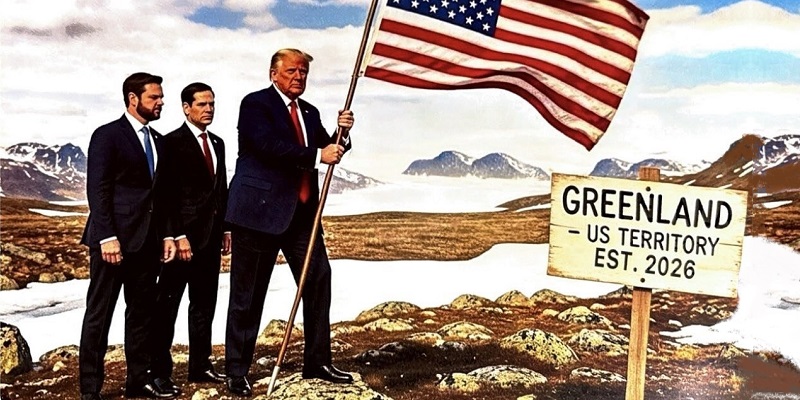
Sources indicate that the U.S. would gain access to limited strategic land areas in Greenland under the arrangement.
These parcels are expected to host defense installations, radar systems, and logistical hubs.
Importantly, the deal does not amount to a wholesale acquisition of Greenland, as some earlier speculation suggested.
Instead, it appears to be a targeted partnership, granting the U.S. specific rights to land critical for defense and infrastructure projects.
Meanwhile, it will continue to respect Greenland’s autonomy under Danish sovereignty.
Infrastructure Projects on the Horizon
The agreement could trigger a wave of U.S.-supported infrastructure projects across Greenland.
These would likely include ports, airfields, and energy facilities designed to support both military and civilian needs.
Such projects would not only enhance U.S. operational capacity but also provide Greenland with long-term economic benefits.
Improved infrastructure could boost tourism, trade, and connectivity, positioning Greenland as a more integrated player in global commerce.
Observers note that these projects may mirror past U.S. investments in strategic territories, where military objectives dovetail with economic development.
American Firms in Mineral Development
Another key component of the deal involves American firms participating in Greenland’s mineral development.
Greenland is rich in rare earth elements, uranium, and other critical minerals essential for modern technologies.
This includes semiconductors, batteries, and defense systems.
By securing a role for U.S. companies, the deal aims to reduce reliance on Chinese supply chains, which currently dominate global rare earth production.
This move aligns with broader U.S. efforts to safeguard critical minerals and ensure secure access for industries ranging from defense to renewable energy.
No Fixed End Date
One of the most striking aspects of the arrangement is that it reportedly has no fixed end date.
Unlike traditional defense agreements that operate on renewable terms, this deal appears designed as an open-ended partnership.
Analysts interpret this as a signal of Washington’s long-term commitment to Greenland and the Arctic.
By embedding the deal without a sunset clause, the U.S. ensures continuity of presence and influence, regardless of political transitions or shifting global dynamics.
The Greenland deal, though still in its preliminary stages, carries significant implications:
- For U.S. Defense: It strengthens missile defense and Arctic readiness.
- For Geopolitics: It challenges Russia’s dominance and signals U.S. resolve in the Arctic.
- For Greenland: It promises infrastructure development and economic opportunities, though questions remain about sovereignty and local consent.
- And For Global Markets: It positions American firms to secure critical minerals, reshaping supply chains.
Strategic and Political Implications
Critics caution that the deal could spark tensions with Denmark, Greenland’s sovereign authority, and raise concerns among local communities wary of foreign military presence.
Supporters, however, argue that the arrangement is a pragmatic step toward securing U.S. interests in a rapidly changing Arctic landscape.
As preliminary details emerge, President Trump’s Greenland deal appears to be more than symbolic.
It is a strategic blueprint for U.S. defense, economic expansion, and geopolitical competition in the Arctic.
With missile defense systems like the Golden Dome, infrastructure investments, and mineral partnerships, the deal could redefine America’s role in the region for decades to come.
The absence of a fixed end date underscores the seriousness of Washington’s intent: Greenland is not just a fleeting interest, but a cornerstone of U.S. strategy in the 21st century.