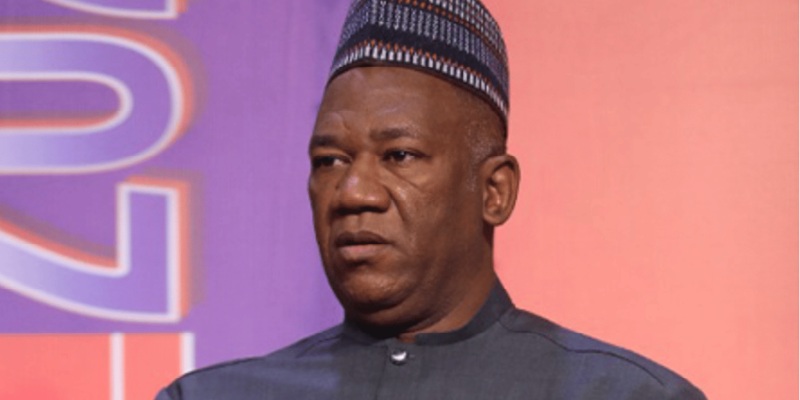
THIS DAWN — Yusuf Datti Baba-Ahmed, former running mate to Peter Obi in the 2023 presidential election, has stated that Obi’s recent political move should be understood as joining a coalition rather than a formal defection to the African Democratic Congress (ADC).

Speaking on television, Baba-Ahmed emphasized the need to distinguish between coalition alignment and party defection.
He urged verification of whether statutory procedures for leaving the Labour Party (LP) were completed by Obi.
Statements on coalition versus defection
Baba-Ahmed referenced Obi’s remarks at an event in Enugu, noting that Obi “mentioned joining the coalition” and did not explicitly declare defection to the ADC.
He underscored that his interpretation is based on the wording of Obi’s public statements and suggested that observers confirm whether Obi announced an alliance or a formal party switch.
This distinction matters because public alignment with a coalition does not, by itself, constitute party defection under Nigerian political norms and party constitutions.
Procedural requirements and party confirmation
Addressing the procedural aspect, Baba-Ahmed called for clarity from LP’s leadership on whether Obi has “submitted a resignation letter and returned his card as required by law.”
In Nigerian party practice, a formal defection typically involves written resignation, return of party membership card, and sometimes public notification by party organs.
Baba-Ahmed’s remarks aim to center the legal and institutional procedures over perceived political optics.
It highlighted that due process determines party status—especially for high-profile figures whose moves carry national implications.

Reported December 2025 ADC announcement in Enugu
The report notes that in December 2025, Obi was said to have “officially joined the ADC” during a rally at the Nike Lake Resort Hotel in Enugu.
It called on opposition members to join the ADC and describing it as a family committed to rescuing Nigeria from poor leadership.
This claim, if accurate, would suggest a formal partisan switch rather than mere coalition alignment.
However, Baba-Ahmed’s insistence on procedural confirmation indicates that public declarations must be matched by documented party processes to be definitive.
The tension between the event’s framing and procedural verification remains central to interpreting Obi’s current party status.
Personal relations and political posture
Despite any political divergence, Baba-Ahmed affirmed a cordial personal relationship with Obi.
He stated that Obi attended a family wedding at his home and that he maintains “much respect” for him.
Moreover, Baba-Ahmed signaled openness to supporting Obi’s 2027 presidential ambition if Obi does not secure the ADC ticket and returns to the LP.
This stance suggests that, beyond party lines, shared objectives and political compatibility could re-open collaboration pathways ahead of the 2027 cycle.
Implications for coalition-building and 2027 strategy
- Coalition clarity: If Obi’s move is primarily coalitional, it may facilitate cross-party coordination without forcing immediate reconfiguration of LP structures, allowing broader opposition synergy while minimizing legal disputes over defection. It also permits exploratory alignment on policy and strategy across ADC, LP, and other opposition blocs.
- Party law and legitimacy: Formalizing defection impacts legitimacy, ballot access, and internal party dynamics. Clear documentation would reduce confusion among supporters and stakeholders and prevent litigation that could distract from campaign organization.
- Electoral calculus: Coalition alignment can consolidate votes in key regions, streamline messaging, and create joint platforms—especially if NNPP, PDP, or other parties engage. Conversely, a formal defection changes resource flows, delegate support, and party machinery availability, potentially reorienting campaign architecture.
Outstanding questions
- Has LP acknowledged a formal resignation? Confirmation from LP would resolve uncertainty about Obi’s party status and inform whether he can participate in ADC primaries or coalition processes without legal challenges.
- What is the coalition’s structure? Details on governance, candidate selection, and policy synchronization will determine whether this is a strategic alliance or a transitional phase toward full partisan realignment.
- Will legal documentation follow? The presence or absence of formal letters, membership card return, and party registry updates will be decisive for clarifying political standing and preventing pre-election disputes.
The evolving narrative around Peter Obi’s political alignment reflects a nuanced distinction between joining a coalition and formally defecting to another party.
Baba-Ahmed’s intervention prioritizes procedural integrity and urges verification from LP to ensure clarity for voters and institutions.
Whether Obi’s December 2025 Enugu announcement constitutes a definitive ADC defection or a coalition alignment will hinge on formal party processes.
Meanwhile, preserved personal ties and conditional future support from Baba-Ahmed signal that opposition collaboration remains viable as parties shape strategies for 2027