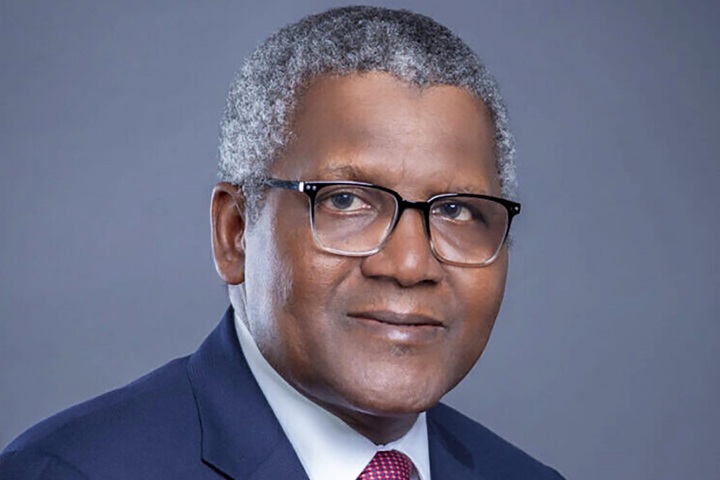
THIS DAWN — Aliko Dangote’s decision to withdraw his petition against former Nigerian Midstream and Downstream Petroleum Regulatory Authority (NMDPRA) chief, Ahmed Farouk, has stirred significant debate.

While the billionaire industrialist has formally stepped back, the Independent Corrupt Practices and Other Related Offences Commission (ICPC) insists its investigation will continue, citing public interest and statutory mandate.
It could be recalled that on December 16, 2025, Dangote, through his legal counsel Dr. O.J. Onoja (SAN), submitted a petition to the ICPC.
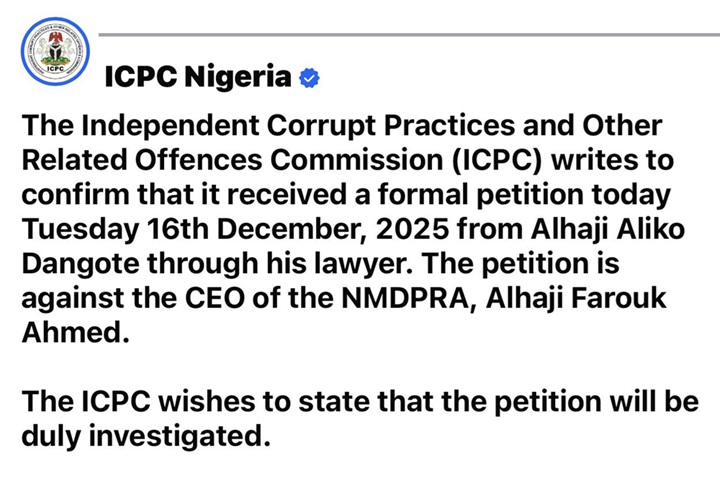
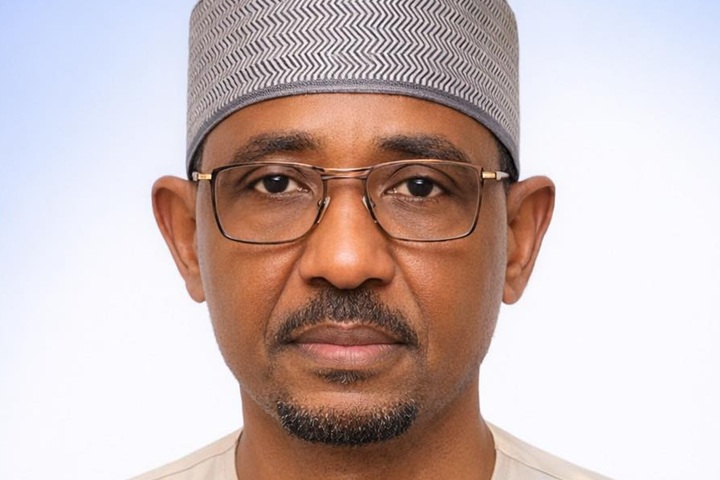
Dangote alleged corruption and financial impropriety against Farouk Ahmed, who had recently resigned as NMDPRA’s chief executive.
The petition reportedly raised concerns about regulatory decisions and financial dealings during Ahmed’s tenure.
However, in a letter dated January 5, 2026, Dangote’s counsel formally notified the ICPC of the withdrawal of the petition.
The letter, titled “Notice of Withdrawal of Petition against Engineer Farouk Ahmed”, was acknowledged by the commission.
ICPC’s Position
Despite the withdrawal, the ICPC has made clear that its probe will not be halted.
Spokesperson John Odey emphasized that the commission acts in the interest of Nigerians and cannot discontinue investigations merely at the request of a petitioner.
“The ICPC will therefore continue to investigate this matter in line with its statutory mandate and in the interest of transparency, accountability and the fight against corruption for the benefit of Nigeria,” Odey stated.
The commission confirmed that investigative steps are already underway.
The steps include engagements with institutions and stakeholders relevant to the allegations.
1. For Dangote:
The withdrawal raises questions about why Africa’s richest man chose to step back.
Analysts speculate it may reflect a strategic recalibration, possible settlement, or a desire to avoid prolonged public controversy.
2. For Farouk Ahmed:
Although the petition has been withdrawn, the continuation of ICPC’s probe means Ahmed remains under scrutiny.
His resignation from NMDPRA already cast a shadow, and ongoing investigations could affect his reputation and future roles in the energy sector.
3. For ICPC and Governance:
The commission’s refusal to drop the case underscores its independence and commitment to public accountability.
It signals that anti-corruption investigations are not contingent on the whims of powerful individuals.
It reinforces the principle that allegations of public concern must be pursued regardless of petitioner withdrawal.
Corruption, Regulatory Capture, Shady Deals Allegations
The Nigerian petroleum sector has long been plagued by allegations of corruption, regulatory capture, and opaque dealings.
The NMDPRA, created to oversee midstream and downstream operations, is central to reforms aimed at transparency in fuel supply and pricing.
Allegations against its former chief executive therefore carry weight for both governance and investor confidence.
Dangote, whose refinery project is pivotal to Nigeria’s energy future, has often clashed with regulators over supply, pricing, and market control.
His petition against Ahmed was seen by some as part of this broader struggle.
The withdrawal may ease tensions but does not erase the underlying issues.
Dangote’s withdrawal of his petition against ex-NMDPRA boss Ahmed Farouk has not ended the matter.
The ICPC’s insistence on continuing its investigation highlights the seriousness of the allegations and the commission’s determination to uphold transparency.
For Nigeria, the case is a litmus test of whether anti-corruption institutions can withstand pressure from powerful interests and deliver accountability in the petroleum sector.