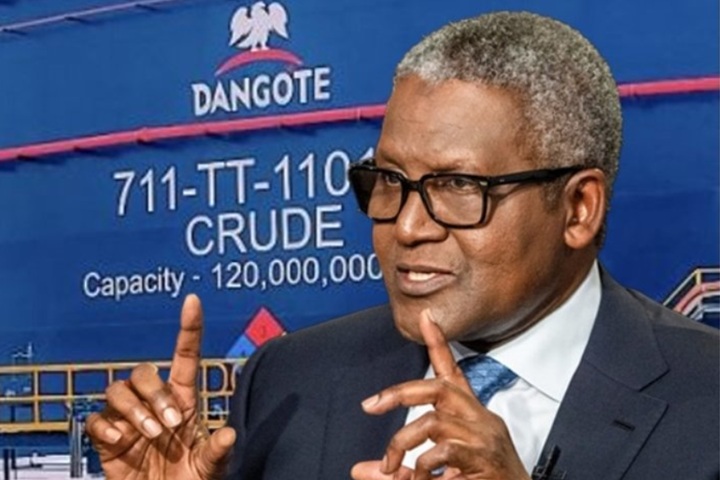
THIS DAWN — The Chief Executive Officer of the Nigerian Midstream and Downstream Petroleum Regulatory Authority (NMDPRA), Engr. Farouk Ahmed, has resigned following the exposé by Africa’s richest businessman, Alhaji Aliko Dangote, who accused him of corruption.

Also resigned was the Chief Executive Officer of the Nigerian Upstream Petroleum Regulatory Commission (NUPRC), Mr. Gbenga Komolafe.
This Dawn reported earlier that Dangote accused Ahmed of corruption, drawing the first blood.
He also drew the second blood via a petition, dated December 16, 2025, to the Independent Corrupt Practices and Other Related Offences Commission (ICPC) requesting a formal investigation of the latter.
In the petition, he claimed that Ahmed spent over $7 million on Swiss boarding schools like Aiglon College and Institut Le Rosey for his four children, including a Harvard MBA.
He even printed out the names and school of Ahmed’s children as proof of evidence.
Barely minutes after the report, Ahmed and Komolafe resigned.
Following their resignation, President Bola Ahmed Tinubu formally requested the Senate to confirm two new chief executives to head the petroleum regulatory agencies.
In a State House press release issued on Tuesday, December 17, 2025, and signed by the President’s Special Adviser on Information and Strategy, Bayo Onanuga, the Presidency announced that the nominations were transmitted to the Senate for expedited consideration.
Products of Buhari’s legacy
Both outgoing officials were appointed in 2021 by former President Muhammadu Buhari to lead the regulatory bodies established under the Petroleum Industry Act (PIA).
The development comes barely a day after the Independent Corrupt Practices and Other Related Offences Commission (ICPC) confirmed receipt of the petition by Dangote against Ahmed.
The case had already heightened public scrutiny of the leadership of the NMDPRA.
As earlier reported, the ICPC said the petition would be duly investigated.
Although the Presidency did not link Ahmed’s resignation to the petition, the timing has intensified public debate around governance, accountability, and regulatory stability in Nigeria’s oil and gas sector.
Analysts note that the exit of both regulators represents one of the most significant leadership changes since the PIA came into force.
Replacements for Komolafe
To replace Komolafe at the NUPRC, President Tinubu nominated Oritsemeyiwa Amanorisewo Eyesan, a veteran oil industry professional with nearly 33 years of experience at the Nigerian National Petroleum Company Limited (NNPC) and its subsidiaries.
Eyesan, an Economics graduate of the University of Benin, most recently served as Executive Vice President, Upstream, between 2023 and 2024.
Prior to that, she was Group General Manager, Corporate Planning and Strategy at NNPC from 2019 to 2023, where she played a central role in strategic reforms and upstream planning.
Her nomination is being viewed as a signal of continuity in upstream sector reforms, particularly in the areas of licensing, production oversight, and investor engagement under the PIA framework.
Replacements for Farouk Ahmed
For NMDPRA, Tinubu nominated Engineer Saidu Aliyu Mohammed, a highly experienced energy executive with an extensive background in gas, refining, and downstream operations.
Born in 1957 in Gombe State, Mohammed graduated from Ahmadu Bello University in 1981 with a degree in Chemical Engineering.
He was announced on Tuesday as an independent non-executive director at Seplat Energy.
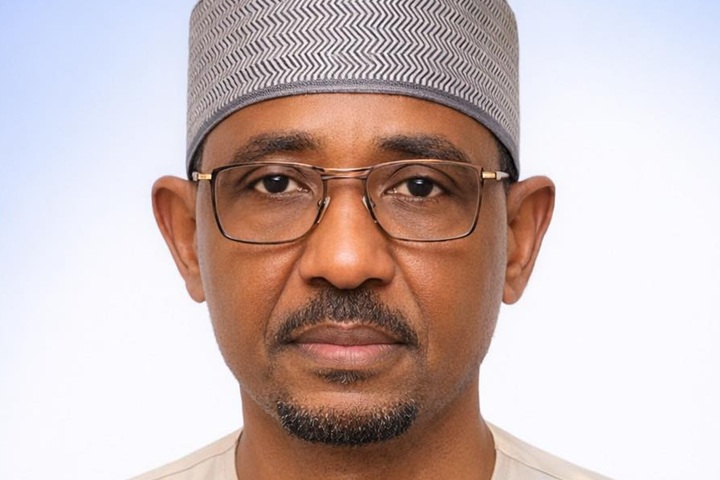
Mohammed has held several strategic positions across Nigeria’s energy value chain, including Managing Director of the Kaduna Refining and Petrochemical Company and the Nigerian Gas Company.
He has also chaired the boards of the West African Gas Pipeline Company, Nigeria LNG subsidiaries, and NNPC Retail.
Notably, he served as Group Executive Director and Chief Operating Officer of the Gas and Power Directorate.
There, he provided strategic leadership on landmark projects and policy frameworks.
His contributions include involvement in the Gas Masterplan, the Gas Network Code, and key inputs into the Petroleum Industry Act.
He played a pivotal role in the delivery of major infrastructure projects such as:
- the Escravos–Lagos Pipeline Expansion,
- the Ajaokuta–Kaduna–Kano (AKK) Gas Pipeline, and,
- Nigeria LNG expansion projects.
End of an era
The resignations of Ahmed and Komolafe mark the end of an era for the first set of regulators appointed under the PIA.
The law was designed to insulate petroleum regulation from political interference and improve transparency, efficiency, and investor confidence.
Their successors will now face the task of consolidating reforms while navigating heightened public expectations around accountability and regulatory independence.
If confirmed by the Senate, Eyesan and Mohammed will assume leadership at a time when Nigeria’s oil and gas sector is undergoing critical transitions.
The transitions include:
- post-subsidy market adjustments,
- refinery integration,
- gas commercialisation, and,
- regulatory realignment.
The Senate’s handling of the confirmation process is expected to draw close attention from industry stakeholders and the wider public.