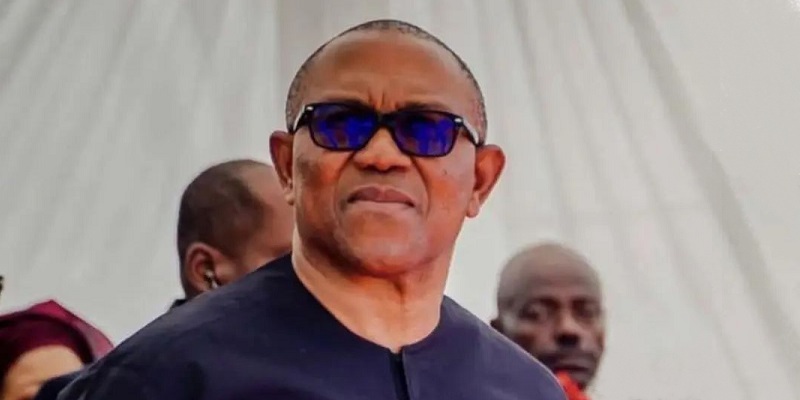
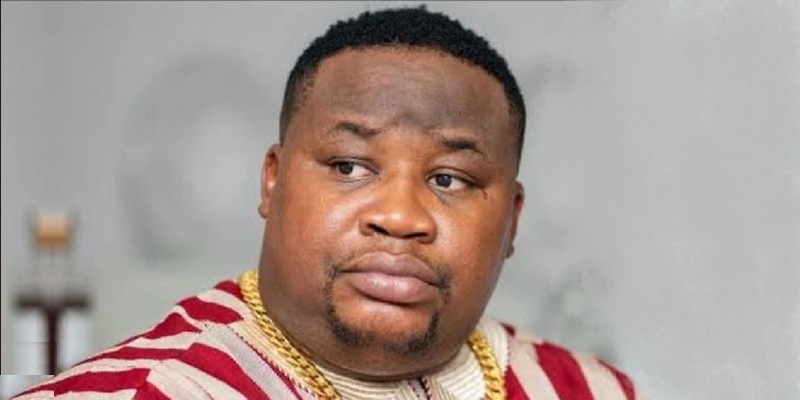
TDPopular Nigerian socialite and businessman Pascal Okechukwu, popularly known as Cubana Chief Priest, has announced that he will campaign against former Labour Party presidential candidate Peter Obi in the 2027 elections.

The declaration has sent ripples across Nigeria’s political landscape.
It highlights the growing influence of celebrity figures in shaping public opinion and electoral dynamics.
From Obi Supporter to APC Loyalist
During an Instagram interactive session, Cubana Chief Priest confirmed his new stance when asked if he would oppose Obi in 2027:
“Yes oh hope say no be crime cuz I worked for Obi last election even as special adviser to an APC governor.”
This marks a sharp departure from his support for Obi in 2023, despite serving as a Special Adviser to Imo State Governor Hope Uzodimma of the All Progressives Congress (APC).
His shift aligns with his recent appointment as Imo State Director for the pro-APC City Boy Movement.
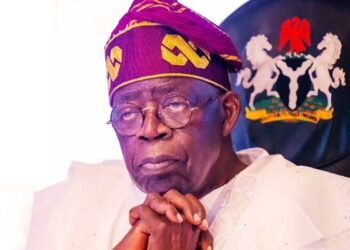
The group is backing President Bola Ahmed Tinubu’s Renewed Hope Agenda.
He reinforced his loyalty, stating:
“Last election, as special adviser to Governor Hope, I worked for Peter Obi, but this time I dey with Asiwaju.”
This statement underscores a broader realignment, as Cubana Chief Priest positions himself firmly within the APC’s political machinery.
He signaled his readiness to leverage his popularity and grassroots connections in support of Tinubu’s administration.
Political Ambitions
Beyond endorsements, Cubana Chief Priest revealed his own political aspirations.
He announced plans to contest for a House of Representatives seat in 2027 under the APC banner.
He described the move as “meticulously considered and strategically smart.”
This ambition reflects a growing trend of entertainers and influencers transitioning into formal politics.
They capitalize on their visibility and mass appeal to secure electoral positions.
His entry into the political arena could reshape local dynamics, particularly in Imo State.
In the state, his influence among youth and business communities is significant.
Online Reactions: Praise and Criticism
The announcement has sparked intense debate online, particularly on X (formerly Twitter), where opinions are sharply divided:
Supporters: Defended his decision as a democratic right, applauding his pragmatism. One user wrote:
“He worked for Obi in the last election, Obi did not win. Now he’s working for Tinubu.
“Everyone has the right to support whosoever he chooses.”
Critics (Obidients): Accused him of betrayal and opportunism.
@DaddyTwinzz posted:
“You already campaigned against Peter Obi in 2023, so why making noise about 2027?
“Did you ever think of dumping APC for Obi? Obviously, No!”
@AfamDeluxo described his move as:
“A brazenly cynical, pathetically transparent attempt to rewrite history while the ink is still wet on the receipts.”
The polarized reactions reflect Nigeria’s increasingly heated political climate, where loyalty shifts are scrutinized and often interpreted as opportunistic maneuvers.
Media Coverage
Major outlets have reported the development, amplifying the debate.
Social media discussions suggest the move may be part of broader efforts to weaken Obi’s influence in the South-East, a region where he enjoys strong grassroots support.
Analysts note that Cubana Chief Priest’s declaration could be a strategic play by APC operatives to sway public sentiment in a region critical to Nigeria’s electoral map.
Cubana Chief Priest’s declaration underscores the shifting political alliances ahead of the 2027 elections.
His journey from entertainment mogul to political influencer illustrates how celebrity figures are increasingly shaping Nigeria’s democratic discourse.
As alliances shift and new ambitions emerge, the focus now turns to how such endorsements—or oppositions—will affect voter sentiment.
This will be particularly significant in regions where Obi maintains strong grassroots support.
The development highlights the evolving intersection of politics, entertainment, and social media in Nigeria’s democracy.
It raises questions about how much influence personalities like Cubana Chief Priest can wield in determining electoral outcomes.