
THIS DAWN — A devastating accident occurred on Wednesday morning when a construction crane collapsed onto a moving passenger train in Thailand, killing at least 32 people and injuring dozens more.

The incident took place near Si Khio district in Nakhon Ratchasima province, as Special Express Train No. 21 was traveling from Bangkok to Ubon Ratchathani.
The train, carrying 190 passengers, was struck around 9 a.m. by a crane involved in the construction of the Thai-Chinese high-speed rail project.
The crane was lifting a concrete segment when it suddenly gave way, crashing onto the train between Nong Nam Khuean and Si Khio stations.
Casualties and Rescue Efforts
Initial reports confirmed 22 fatalities, but the death toll later rose to 32, with 99 individuals affected, including seven in critical condition.
Emergency responders rushed to the scene, working tirelessly to extract survivors and provide medical assistance.
Approximately 70 passengers escaped unharmed, while others were treated for injuries ranging from minor to life-threatening.
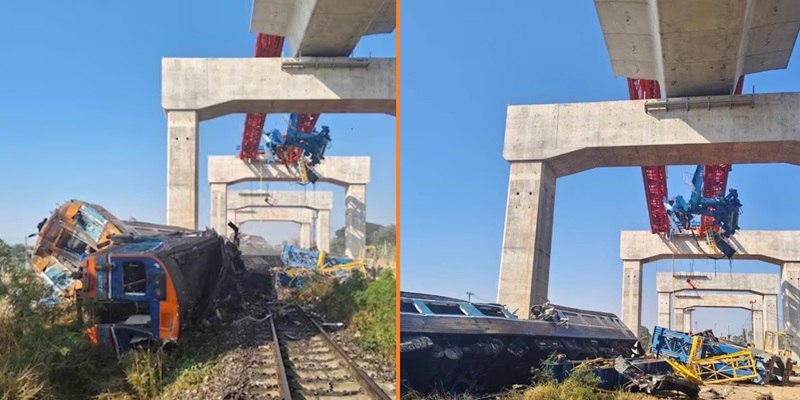
Rescue operations were complicated by the scale of the collapse and the remote location of the incident.
Local hospitals were placed on high alert, and additional medical teams were dispatched to support overwhelmed facilities.
Investigation and Accountability
Authorities have launched a full investigation into the cause of the collapse.
Preliminary assessments suggest possible mechanical failure or human error during the lifting operation.
The State Railway of Thailand has announced plans to sue the contractor responsible for the construction.
It cited gross negligence and raising concerns about safety standards on the long-delayed infrastructure project.
The Thai-Chinese high-speed rail initiative, a cornerstone of Thailand’s regional connectivity ambitions, has faced repeated delays and criticism over transparency and safety.
This tragic event is expected to intensify scrutiny and calls for reform.
Public Reaction and Government Response
The incident has sparked national outrage, with citizens demanding accountability and improved safety protocols for public infrastructure projects.
Government officials have pledged a thorough inquiry and support for victims and their families.
Transport Minister Saksayam Chidchob has, meanwhile, expressed condolences.
Chidchob assured the public that those responsible would face consequences.
“This is a heartbreaking tragedy. We will ensure justice is served and safety is never compromised again,” he stated.
The collapse raises serious questions about the oversight of large-scale construction projects in Thailand.
With the high-speed rail project seen as a symbol of modernization, this disaster underscores the urgent need for rigorous safety enforcement, transparent contracting, and public accountability.
As investigations continue, the nation mourns the lives lost and hopes for swift action to prevent future tragedies.