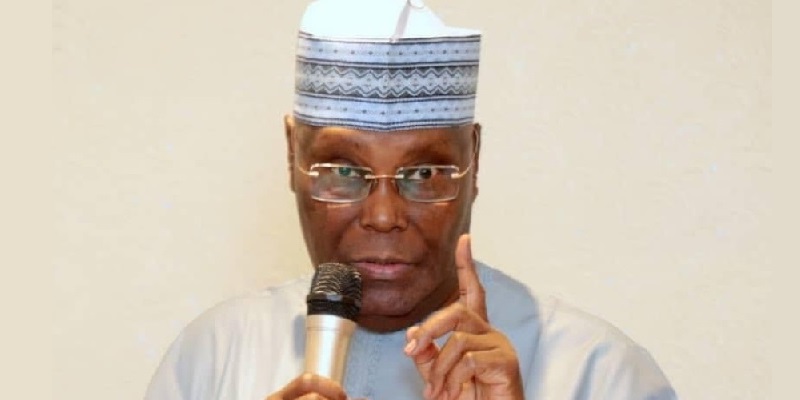

In the annals of Nigeria’s tumultuous political history, few figures have been as enduring and polarizing as Alhaji Atiku Abubakar. Once celebrated as the quintessential bridge-builder and custodian of a pan-Nigerian political vision, Atiku has become emblematic of the perils of unbridled ambition.
His political arc, deeply intertwined with the rise and fall of the People’s Democratic Party (PDP), reveals a cautionary tale of how personal ambition, when divorced from strategic consensus and political intelligence, can implode even the most formidable political institutions.
From PDM to Presidential Pursuits
Atiku’s roots in Nigerian politics trace back to the powerful Peoples Democratic Movement (PDM), established by Major-General Shehu Musa Yar’Adua.
The movement, forged in the crucible of Nigeria’s post-military transition, embodied a vision of political inclusion that transcended regional and ethnic boundaries.
Atiku, alongside Dr. Chuba Okadigbo, emerged as one of Yar’Adua’s most loyal proteges. The PDM laid the foundation for the PDP in 1998, where Atiku’s strategic positioning ensured he remained a constant force.
Elected Governor of Adamawa in 1999, Atiku swiftly abandoned that mandate to become Vice President under President Olusegun Obasanjo.
A consensus existed that Obasanjo would serve a single term, after which power would rotate to the Southeast as compensation for the marginalization of Dr. Alex Ekwueme.
But by 2002, Obasanjo reneged, seeking a second term. Atiku, with overwhelming support from governors, posed a significant challenge to Obasanjo’s bid.
The compromise that allowed Obasanjo’s second term was predicated on an understanding: power would shift back to the North in 2007.
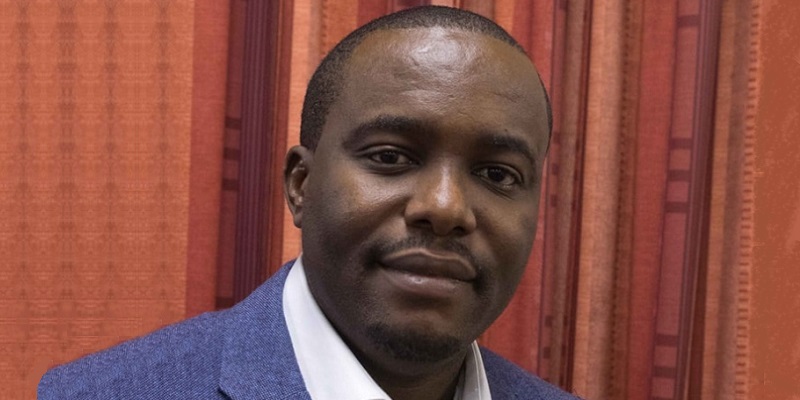
A History of Unfulfilled Pursuit: Atiku’s Political Ascent and Its Cost
Atiku Abubakar’s political ambition predates Nigeria’s Fourth Republic. His journey began in 1990 when he declared interest in the Gongola State governorship.
Following the state’s bifurcation into Adamawa and Taraba in 1991, he won the SDP primaries for Adamawa but was disqualified by the ruling military regime before the elections.
In 1993, Atiku entered the SDP presidential primaries, placing third behind Moshood Abiola and Baba Gana Kingibe.
With a combined vote share that could have rivaled Abiola’s, Atiku was encouraged by his mentor, Shehu Musa Yar’Adua, to step down—based on a promise that Abiola would choose him as running mate.
The promise was broken, and Kingibe was picked instead.
Undeterred, Atiku resurfaced during the aborted Abacha transition, eyeing the Adamawa governorship under the UNCP.
By 1998, as Nigeria prepared to return to democracy, he won the PDP governorship ticket in Adamawa but forfeited the office to become Olusegun Obasanjo’s running mate.
Although Atiku never held his initial elective mandate, his ambition to become president became louder and more determined with each political cycle—evolving from aspiration into an obsession.
From the 1990s through the 2023 elections, Atiku contested for Nigeria’s presidency six times under different political contexts, each attempt further straining party unity and intensifying internal divisions within the PDP.
This decades-long, unrelenting pursuit—often without deference to party zoning agreements or national consensus—became both the symbol and symptom of the PDP’s gradual collapse.
Although, Atiku’s quest to become Nigeria’s President began in 1991 under the SDP. This ambition became more vociferous in the fourth republic.
Atiku’s unrelenting quest for the presidency—a pursuit that would, over two decades, become a defining and ultimately destructive force within the PDP.
Betrayal of Zoning: The Breaking Point
In 2022, when the PDP was expected to honor its zoning tradition and cede the presidential ticket to the South, Atiku brazenly flouted this principle.
He leveraged his northern alliances and internal machinations to clinch the ticket, sidelining Southern stakeholders and provoking widespread disaffection.
This was no minor political misstep—it was a betrayal of a founding tenet of the PDP’s survival strategy.
Zoning was not merely an informal tradition; it was a carefully crafted tool of national cohesion, ensuring that all regions felt included in Nigeria’s central power equation.
Atiku’s decision to violate this pact fractured the PDP irreparably.
Wike: The Political Equalizer
Atiku felt that he had subdued the South and didn’t see any challenger until Governor Nyesom Wike, the indomitable force from Rivers State surfaced.
Betrayed and marginalized by the party he had helped sustain, Wike emerged as the counterforce to Atiku’s overreach.
With raw tenacity and political clarity, he galvanized the G5 Governors and launched a silent rebellion within the PDP.
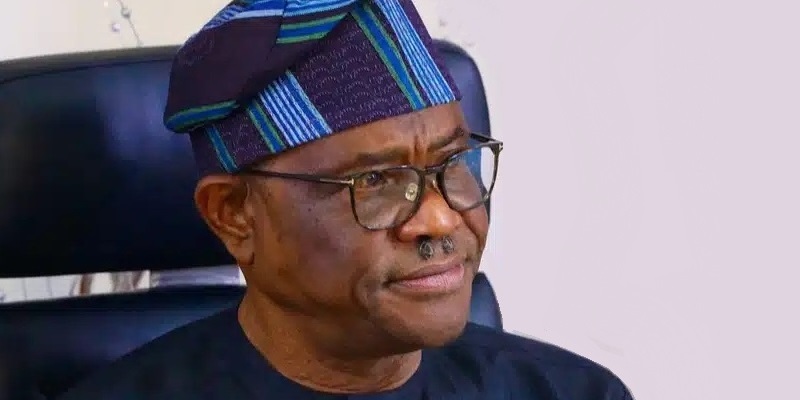
Wike understood that modern politics is driven not by platitudes but by strategic alignment, structure, and leverage.
His response was both tactical and transformative. By refusing to campaign for Atiku, and covertly supporting the opposition APC, Wike turned the tables.
He redefined political loyalty not as blind submission but as strategic recalibration.
The results of the 2023 election were devastating for the PDP: it lost its base in the South, failed to penetrate the North-Central, and suffered credibility collapse nationwide.
Atiku, instead of emerging as the unifier he claimed to be, stood isolated—a victim of his own ambition.
Political Theory in Action: When Structure Trumps Sentiment
Atiku’s implosion aligns with several foundational political theories:
- Robert Michels’ Iron Law of Oligarchy suggests that internal party elites eventually pursue self-preservation over party values.
Atiku, by sidelining zoning and consensus, exemplified this. - Sun Tzu’s Art of War warns against fighting battles without securing the terrain.
Atiku ignored the PDP terrain—disaffected governors, regional sensitivities, and electoral fatigue—and paid the price. - Clausewitzian Strategy holds that war (or politics) must align ends, ways, and means.
Atiku had the ambition (ends), but lacked the coalition (ways) and underestimated resistance (means).
Wike’s Masterstroke and Atiku’s Quiet Retirement
In contrast, Wike’s actions reflected political intelligence and situational awareness. He neutralized Atiku not by direct confrontation but through strategic attrition—starving his campaign of legitimacy, funding, and regional support.
Today, Wike sits comfortably in national reckoning, holding sway in both APC and PDP circuits. His transition from rebel governor to FCT Minister reflects a rare capacity for political adaptation.
Atiku, on the other hand, has faded into the background, politically retired not by age but by irrelevance.
The 2027 elections, already in motion, have no room for a northern repeat or a recycled flagbearer.
The party he once dominated is now a fragmented relic.
Conclusion: Lessons for Political Legacy
The fall of the PDP is not just a party story—it is a testament to how personal ambition, when left unchecked, cannibalizes collective vision.
Atiku’s insistence on contesting in 2023, against the spirit of zoning, exposed not only his desperation but also his disregard for institutional harmony.
The irony is stark: in attempting to bury others’ ambitions, Atiku buried his own.
The PDP, if it hopes to resurrect, must chart a path free from the shadow of its past hegemon.
And for future aspirants, the Atiku saga offers this enduring truth: ambition is noble; overreach is fatal.