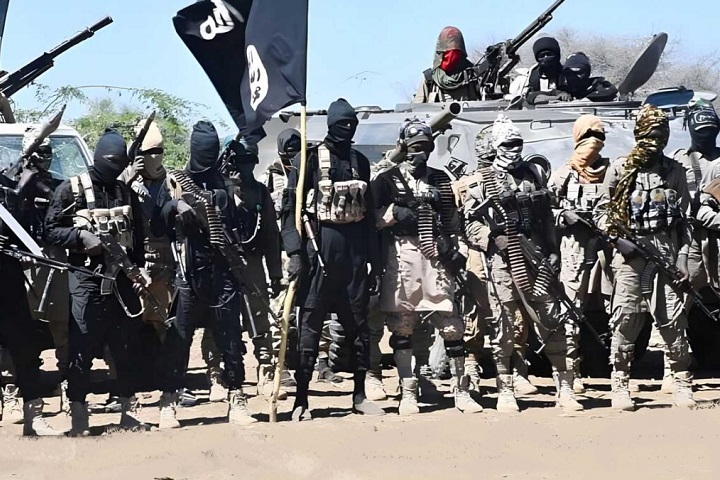
THIS DAWN — A wave of violence targeting Christian communities in Nigeria has drawn international condemnation and promises of support from global leaders.

The Islamic State West Africa Province (ISWAP) has intensified its attacks, issuing chilling ultimatums to Christians to convert to Islam or face death.
The escalation comes amid a series of deadly incidents across Plateau, Adamawa, and Borno States, leaving dozens dead and communities devastated.
Plateau State Massacre
On New Year’s Eve, nine people were killed during a “crossover night” church service in Plateau State.
Residents have branded the attack a “Christian genocide,” underscoring the vulnerability of worshippers during religious gatherings.
Survivors described the assault as sudden and brutal, with attackers storming the service and opening fire indiscriminately.
The incident has heightened fears of renewed sectarian violence in the Middle Belt region, which has long been plagued by clashes between armed groups and local communities.
ISWAP’s Ultimatum in Adamawa
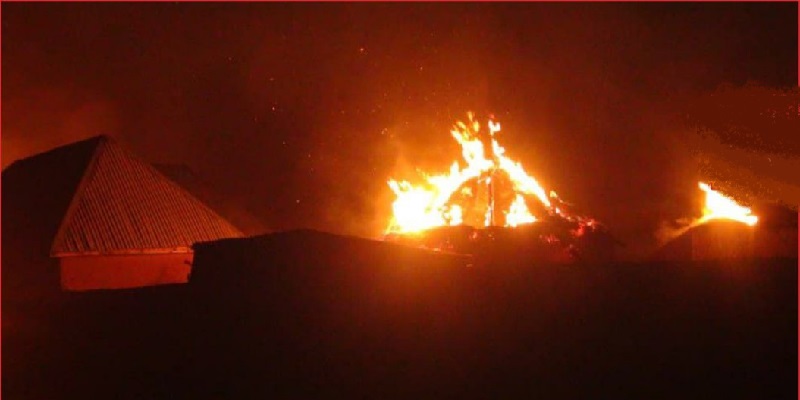
In Adamawa State, ISWAP militants razed an entire village, threatening residents to convert to Islam or die.
The attack was reportedly carried out in alleged retaliation for U.S. airstrikes in Sokoto, which targeted terrorist hideouts.
The militants’ ultimatum has been widely condemned as a blatant act of religious persecution.
U.S. Congressman Riley Moore raised fresh alarm over the incident, describing it as “clear examples of Christian persecution.”
He urged the international community to take decisive action to protect vulnerable populations in Nigeria.
Moore’s remarks reflect growing concern in Washington about the spread of extremist violence across West Africa and its impact on religious minorities.
Suicide Bombing in Maiduguri
Meanwhile, in Maiduguri, Borno State, a suicide bomber identified as Ibrahim Mohammed confessed to being paid 100,000 Naira to carry out the Christmas Eve bombing at Gamboru Market Mosque.
The attack, which targeted worshippers during evening prayers, left scores injured and further underscored the reach of extremist networks in the region.
Mohammed’s confession highlights the financial incentives used by terror groups to recruit vulnerable individuals into carrying out deadly missions.
Netanyahu’s Pledge of Support
Against this backdrop of violence, Israeli Prime Minister Benjamin Netanyahu announced a formal agenda to protect Nigerian Christians, in partnership with the United States. Speaking on the importance of solidarity, Netanyahu declared:
“Just as the Christian community stood with us in difficult moments, we will stand with you – and help in every way to protect Christian communities all over the world.
“This partnership of shared values is strong, and together we will prevail.”
His remarks signal a significant diplomatic commitment to addressing religious persecution in Nigeria.
Analysts note that Israel’s involvement, alongside U.S. support, could mark a turning point in international efforts to confront extremist violence in West Africa.
Global and Local Reactions
The attacks have sparked outrage among Nigerian Christian leaders, who have called for stronger government action to protect worshippers.
Civil society groups warn that failure to address the crisis could embolden extremists and deepen sectarian divisions.
Internationally, Netanyahu’s pledge has been welcomed by advocacy groups, who see it as a sign of growing recognition of the plight of Nigerian Christians.
The U.S. Congress has also been vocal, with lawmakers like Riley Moore pressing for increased humanitarian aid and security cooperation with Nigeria.
The Broader Context
ISWAP, a splinter faction of Boko Haram, has intensified its campaign of terror in recent months, targeting both Muslim and Christian communities.
Its strategy of issuing ultimatums and carrying out mass killings reflects a broader attempt to destabilize Nigeria and expand its influence across the Sahel.
Nigeria’s government has vowed to respond decisively, but critics argue that security forces remain overstretched and under-resourced.
The persistence of attacks in Plateau, Adamawa, and Borno underscores the urgent need for coordinated national and international efforts to combat terrorism.
The crossover night massacre in Plateau, the razing of villages in Adamawa, and the suicide bombing in Maiduguri paint a grim picture of Nigeria’s security challenges as 2026 begins.
ISWAP’s threats to Christians have amplified fears of religious persecution, while Netanyahu’s pledge of support offers a glimmer of hope for international solidarity.
As Nigeria grapples with the twin challenges of terrorism and sectarian violence, the role of global partners like Israel and the U.S. may prove pivotal in ensuring that vulnerable communities are protected.
For now, the message from ISWAP is one of terror, but the response from international allies suggests that the fight for Nigeria’s Christians is gaining powerful new champions.