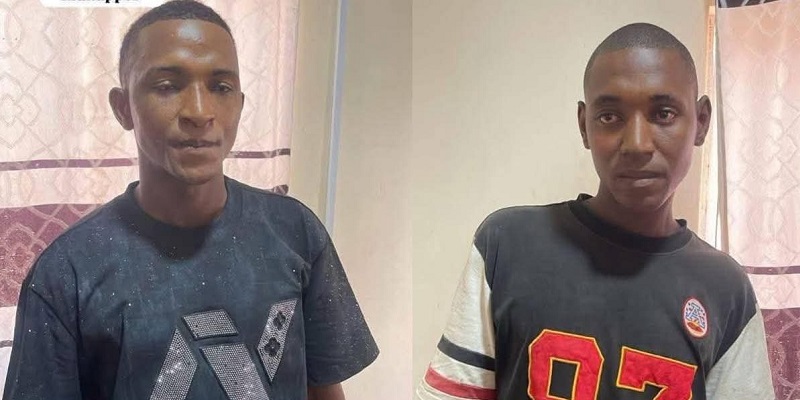
TDA dramatic twist has emerged in the case of Dr. Abu Babatunde’s abduction, as conflicting accounts circulate about how suspects linked to the crime were apprehended.

The incident, which has gripped Edo State and beyond, highlights both the brutality of kidnapping gangs and the complexities of law enforcement narratives in Nigeria.
One widely circulated account paints a chilling yet ironic picture.
The Human Angle
Fulani kidnappers had abducted Dr. Babatunde and his younger brother.
They killed the latter when he attempted to escape without paying response.
They were, however, reportedly arrested under extraordinary circumstances.
The gang had demanded ₦100 million in ransom, but eventually released Dr. Babatunde after millions were paid.
Weeks later, fate intervened.
The suspects allegedly returned to the same hospital where the doctor works, seeking urgent treatment for a sick child.
In a surreal twist, Dr. Babatunde himself attended to the child.
Recognizing the men as his abductors, he quietly alerted the police.
Officers swiftly moved in, arresting the suspects on the spot.
For many residents, this narrative underscores the irony of life: criminals forced to rely on the very man they had brutalized.

The Police Account
The Edo State Police Command, however, presented a rather fantastic version of the events.
In an official statement, the Command outlined successive breakthroughs in the investigation:
-
First Arrest (3 February 2026):
Operatives of the Auchi Division claimed that they were working with local hunters and vigilantes when they intercepted Saminu Kawujie during a bush-combing operation at Warake Forest.
They also claimed they recovered some items, including two knives, mobile phones, an ATM card, and ₦20,250 in cash.
According to the report, an identification parade was conducted, and they confirmed Kawujie as one of the abductors.
-
Further Arrests (8 February 2026):
At Specialist Hospital, Auchi, the police stated they apprehended Idris Abubakar and Sani Abubakar.
Both were identified as members of the gang, with Idris reportedly the individual who received ransom money during the January 2 abduction.
The Command stressed that investigations are ongoing to dismantle the entire criminal network.
Commissioner of Police CP Monday Agbonika assured the public that aggressive bush-combing operations and intelligence-led policing will continue across Edo State to restore confidence in security.
Public Reaction
The contrasting accounts — one highlighting a dramatic hospital encounter, the other emphasizing a police operation — have fueled confusion among residents.
For some, the human-interest version resonates more strongly, symbolizing poetic justice: kidnappers undone by their own desperation.
For others, the police narrative reflects the painstaking work of security agencies, often overshadowed by sensational retellings.
Community leaders have urged clarity, noting that conflicting reports risk undermining public trust in law enforcement.
Nonetheless, both versions converge on one point: the arrests represent a significant breakthrough in Edo State’s fight against kidnapping.
Broader Context
Kidnapping has become one of Nigeria’s most pressing security challenges, with gangs exploiting rural forests and highways to terrorize communities.
The Babatunde case illustrates both the human cost — a young life lost, millions extorted — and the resilience of victims who continue to serve society despite trauma.
Whether through fate or force, the arrests mark a turning point.
For Edo residents, the hope is that this case will not only deliver justice.
Instead, it also signals a sustained crackdown on criminal networks that have long plagued the region.