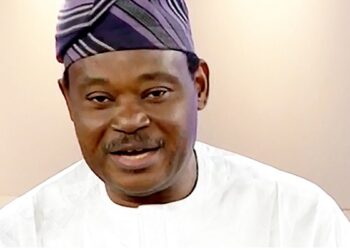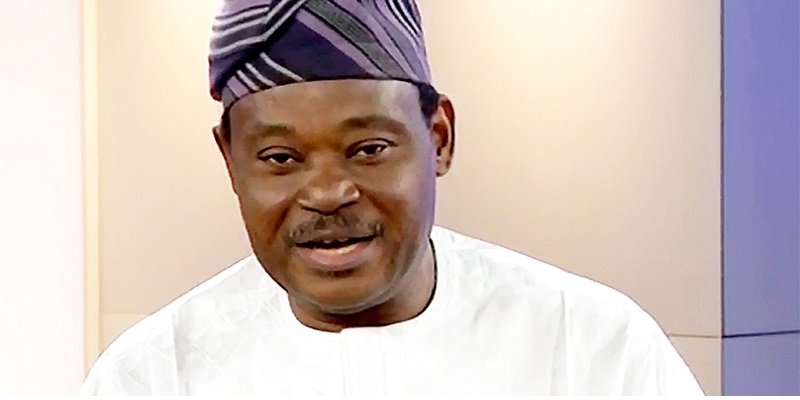
TDA coalition of prominent Nigerian civil society organisations has issued a strongly worded petition to the Economic and Financial Crimes Commission (EFCC), demanding urgent enforcement of outstanding criminal charges and financial recovery obligations against Senator Jimoh Ibrahim.

The petition comes in response to his recent appointment by President Bola Tinubu as Nigeria’s Permanent Representative to the United Nations in New York.
The coalition described the move as an “institutional crisis” that risks undermining Nigeria’s credibility in the global arena.
Allegations of Financial Misconduct
The petition outlines a series of unresolved allegations and judicial findings against Senator Ibrahim:
-
Diversion of Aviation Intervention Funds:
The National Assembly’s Joint Committee on Aviation previously documented that Air Nigeria collapsed after Ibrahim allegedly diverted a ₦35.5 billion government intervention loan into his private company, NICON Investment Limited.
The loan was guaranteed by UBA and funded by the Bank of Industry
In 2014, the Senate passed a resolution directing the Central Bank of Nigeria to recover the funds.
Civil society groups argue that no recovery has been made to date, leaving a gaping hole in public accountability.
-
Energy Bank of Ghana Acquisition:
In 2016, former Air Nigeria Finance Director, John Nnorom, testified before a Senate Committee that Ibrahim used diverted AFRIXIM loan funds to acquire Energy Bank of Ghana.
Ibrahim reportedly registered it in his personal name rather than under the airline.
Nnorom was later prosecuted at Ibrahim’s behest but discharged and acquitted.
Observers widely interpreted the ruling as vindication of his testimony and further evidence of financial impropriety.
-
AMCON Debt Enforcement:
The Asset Management Corporation of Nigeria (AMCON) seized 12 properties belonging to Ibrahim and his companies under Suit No. FHL/L/CL/776/2016.
AMCON cited a ₦69.4 billion debt.
In December 2021, the Court of Appeal dismissed Ibrahim’s appeal against the seizure.
The Court confirmed his continued non-compliance with repayment obligations and leaving the debt unresolved.
-
EFCC Investigation (2012):
Ibrahim was interrogated by EFCC agents in 2012 over the Air Nigeria scandal.
Reports at the time suggested that key documents were destroyed before questioning.
Civil society organisations now demand clarity on the status of that investigation.
They also noted the absence of any prosecutorial outcome.
Petition Demands
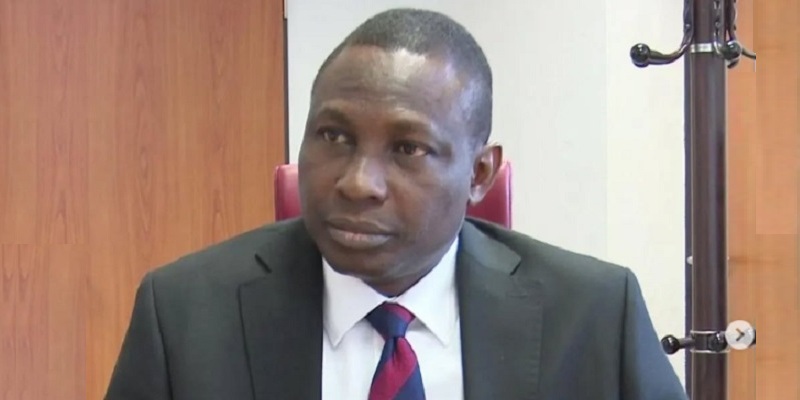
The coalition’s petition calls on the EFCC to:
- Provide a public status update on the 2012 investigation.
- Determine whether the 2014 Senate resolution on recovery of ₦35.5 billion provides grounds to reopen a formal case.
- Coordinate with relevant institutions to preserve Nigerian jurisdiction over Ibrahim before his departure to New York.
- Exercise its statutory mandate under the EFCC Act to investigate the full scope of financial crimes disclosed in court records.
Institutional Crisis and Global Implications
The coalition warns that allowing Ibrahim to assume a prestigious diplomatic post abroad without resolving these matters would erode public trust in Nigeria’s accountability institutions.
It argues that such an appointment risks shielding him from prosecution, effectively placing him beyond the reach of Nigerian law.
“This is not merely a domestic issue,” the petition states.
“It sends a damaging signal to Nigerians and to the international community that financial accountability can be circumvented through political appointments,” it added.
Observers note that the controversy could cast a shadow over Nigeria’s representation at the United Nations.
It raises questions about the country’s commitment to transparency and rule of law.
Analysis
This petition underscores the growing tension between Nigeria’s civil society and its political establishment.
The government, on one hand, seeks to project diplomatic strength through Ibrahim’s appointment.
Activists, on the other hand, argue that unresolved corruption cases threaten to undermine Nigeria’s credibility both at home and abroad.
The EFCC now faces mounting pressure to act decisively.
It ought to balance the demands of civil society with the political sensitivities of a high-profile diplomatic posting.
The outcome will likely serve as a litmus test for Nigeria’s anti-corruption institutions and their ability to enforce accountability at the highest levels of power.
Read also: