TDIn many Nigerian public debates today, the City Boy Movement is presented as a youthful, grassroots force advocating civic engagement and inclusive development.

Its official narrative emphasises “accountable leadership, unity, progress, and citizen empowerment” — language designed to appeal to broad youth demographics across Nigeria’s regions.
But beneath this aspirational branding lies a pattern that resonates uncannily with the Igbo cultural critique of efulefu taking on honours they cannot carry — that is, status without substance.
1. Misalignment of Identity and Purpose
The City Boy Movement positions itself as a civic and youth advocacy group.
Yet, in practice, it has become closely aligned with partisan political interests — particularly in support of President Bola Ahmed Tinubu’s administration and his 2027 re‑election campaign.
This dual identity creates a tension:
- Movement rhetoric: broad civic development and empowerment.
- Movement reality: strategic political mobilisation and vote aggregation.
When a body that claiming popular representation becomes tightly bound to entrenched political power, it risks losing its autonomous civic voice.
This is much like a respected traditional title worn without the cultural history or moral foundation that justified it in the first place.
2. Celebrity Endorsements and Symbolic Capital
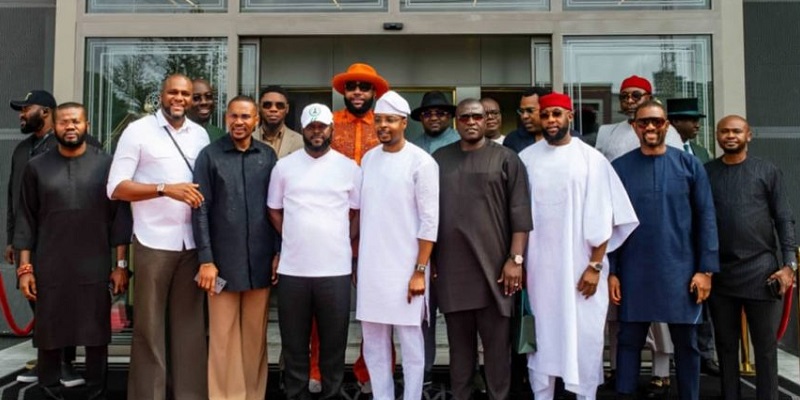
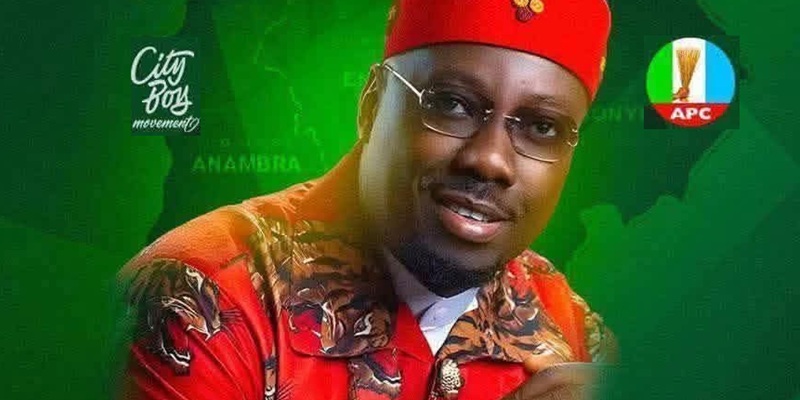
The appointment of high‑profile figures such as Obinna ‘Obi Cubana’ Iyiegbu and other notable influencers as coordinators or ambassadors has generated both visibility and controversy.
While this might signal broad appeal, it also highlights a deeper phenomenon:
- •Symbol over strategy: reliance on names and clout rather than organisational depth.
- Spectacle over substance: visibility that masks strategic deficits in policy or community empowerment.
This is akin to someone donning an honour (regalia, title, movement leadership) without mastering the responsibilities implied by that status.
In Igbo parlance distilled earlier, this is the efulefu wearing the “eriri” (symbol) in the wrong place — displaying the emblem before earning the ethical and communal grounding behind it.
3. Youth Agency vs. Political Instrumentalisation
Much of the criticism directed at the City Boy Movement — especially from social commentators and within Igbo online circles — frames it not as a genuine youth movement but as a political tool mobilising youth votes for a specific agenda.
This creates a scenario where:
- Youth empowerment becomes synonymous with political expediency,
- Authentic grassroots concerns are subsumed under top‑down campaign priorities,
- Independent civic participation risk being co‑opted into partisan mobilisation.
Here the risk mirrors the original metaphor: the symbol (movement) becomes separated from its moral or communal roots and, thus, loses credibility among the very people it seeks to represent.
4. The Igbo Perspective on Misplaced Honour
To draw it back to the earlier cultural axiom:
“Efulefu nara Ozo, yie eriri ya n’ebe na‑ekwesịghị.” (When an unworthy person takes a title, he wears its cord in the wrong place.)
Applied here, it suggests:
- A movement that claims to champion youth but serves entrenched political interests may be dressed up with powerful names and glossy messaging,
- But if it fails to deliver genuine empowerment, accountability, or community advancement — and instead functions as a vehicle for elite capture — then its symbolic legitimacy is misplaced.
This phenomenon can erode public trust, not only in youthful civic engagement but also in the broader institutions such movements claim to reform.
5. The Broader Consequence
If movements like the City Boy Movement are perceived primarily as extensions of political machinery, then:
- Authentic youth voices and agendas may be sidelined.
- Civic mobilisation becomes synonymous with political patronage.
- Culture‑based critique (like the efulefu metaphor) resonates because it captures an underlying sense that symbols are being worn without deserved authority.
In other words: when youth movements prioritise alignment with power over principled leadership, they risk embodying exactly the pattern their rhetoric claims to oppose.
The current trend around the City Boy Movement shows how modern political branding can appropriate youth energy and popular language without grounding itself in genuine agency and accountability.
In Igbo cultural terms, it highlights the timeless wisdom that honour and leadership must be earned — not merely donned for display.