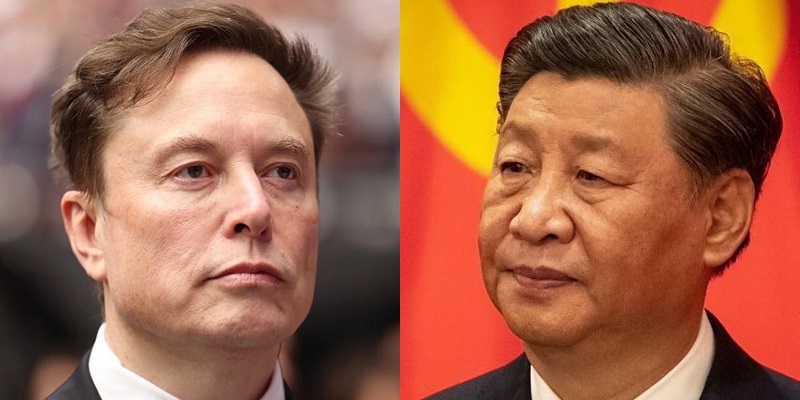
THIS DAWN — In a move that could reshape the future of global internet infrastructure and space governance, China has formally applied to launch nearly 200,000 satellites into orbit, dwarfing the ambitions of Elon Musk’s Starlink, which aims for 50,000 satellites at full capacity.

The filings were submitted to the International Telecommunication Union (ITU) by the newly formed Institute of Radio Spectrum Utilisation and Technological Innovation.
It outlines two massive constellations named CTC-1 and CTC-2, each comprising 96,714 satellites spread across 3,660 orbital planes.
China’s Ambitious Satellite Mega-Constellation
This proposed mega-constellation would be the largest satellite deployment in human history.
It also raises concerns about orbital congestion, space debris, and geopolitical competition.
Experts warn that such a dense network could monopolize low-Earth orbit, potentially limiting access for other nations and commercial operators.
Meanwhile, the Chinese government has not disclosed the specific purpose of these satellites.
However, analysts speculate they could serve a mix of broadband internet, surveillance, military communications, and global positioning services.
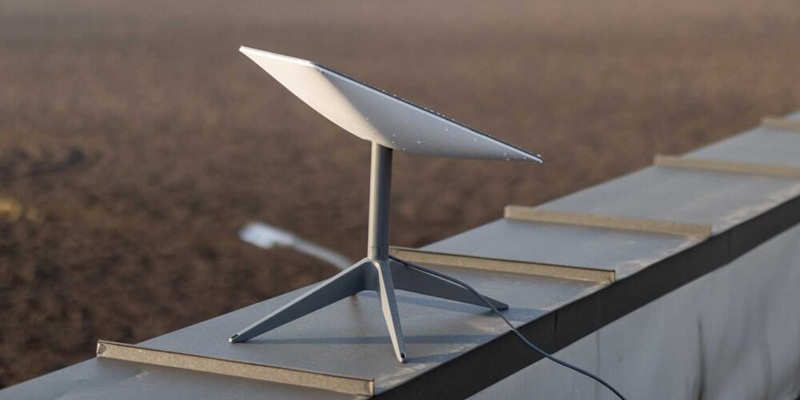
The timing of the filings—shortly after China criticized Starlink for posing a collision risk—suggests a strategic countermeasure to Western dominance in space-based internet services.
Strategic Implications
China’s satellite ambitions reflect a broader push to establish technological sovereignty and reduce reliance on foreign infrastructure.
By creating a parallel network to Starlink, China could offer state-controlled internet access to partner nations, particularly in the Global South.
Internet connectivity gaps remain significant in the southern hemisphere.
This development also intensifies the space race between China and the United States, with implications for:
- Cybersecurity,
- Data control, and,
- International regulation.
The ITU’s role in spectrum allocation will be critical in managing this surge in satellite activity and preventing orbital conflicts.
India’s 5G Surge: Second-Largest Network Globally
In a separate but equally transformative development, India has emerged as the world’s second-largest 5G market.
India boasts over 400 million users just three years after launching commercial services in 2022.
According to Union Minister Jyotiraditya Scindia, India has surpassed the United States, European Union, and Japan in 5G adoption, trailing only China, which has over a billion users.
India’s rapid growth is attributed to:
- Aggressive network expansion by telecom giants like Reliance Jio and Bharti Airtel.
- Affordable data pricing, making high-speed internet accessible to a broad population.
- Government support, including spectrum auctions and infrastructure incentives.
As of March 2025, India had installed over 469,000 5G base transceiver stations.
The installations cover 99.6% of the country and reach 85% of the population.
Global Impact of India’s 5G Expansion
India’s 5G boom is not just a domestic achievement—it’s a global benchmark in digital transformation.
The country is now a key player in shaping the future of mobile connectivity, smart cities, and digital commerce.
With projections suggesting India could reach one billion 5G users by 2031, the nation is poised to influence global standards, innovation, and supply chains in the telecom sector.
Moreover, India’s success offers a model for other developing nations seeking to leapfrog into next-generation connectivity without prohibitive costs.
China’s satellite mega-constellation and India’s 5G surge represent two distinct but converging narratives of technological ambition.
While China eyes the skies to assert dominance in orbital infrastructure, India is transforming its terrestrial landscape with unprecedented digital reach.
Together, these developments signal a shift in global tech leadership, with Asia emerging as a powerhouse in connectivity and innovation.