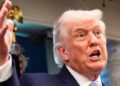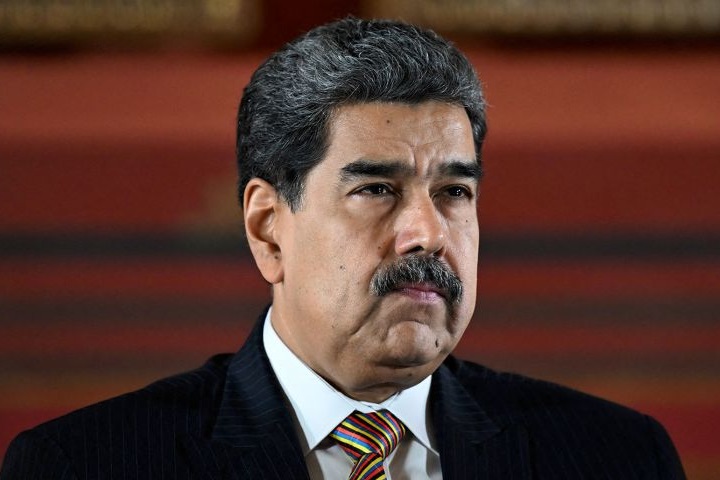
THIS DAWN — In a dramatic turn of events, U.S. officials announced the indictment and capture of Venezuelan President Nicolas Maduro and his wife, Cilia Flores.

The announcement was made by Attorney General Pamela Bondi and earlier reinforced by President Trump.
It marks a watershed moment in U.S.–Venezuela relations and signals an unprecedented escalation in America’s fight against international narcotics trafficking and terrorism.
The Indictment
According to Attorney General Bondi, Nicolas Maduro has been formally indicted in the Southern District of New York on multiple charges.
These include:
- Narco‑Terrorism Conspiracy
- Cocaine Importation Conspiracy
- Possession of Machineguns and Destructive Devices
- Conspiracy to Possess Machineguns and Destructive Devices against the United States
Bondi emphasized that these charges reflect the seriousness of Maduro’s alleged involvement in transnational criminal activities.
“They will soon face the full wrath of American justice on American soil in American courts,” she declared.
It underscored the determination of the Department of Justice to pursue accountability at the highest levels.
Acknowledgment of Leadership and Military Action
Bondi’s statement also highlighted the role of President Trump in demanding accountability on behalf of the American people.
She expressed gratitude to the President for his courage in authorizing the decisive action.
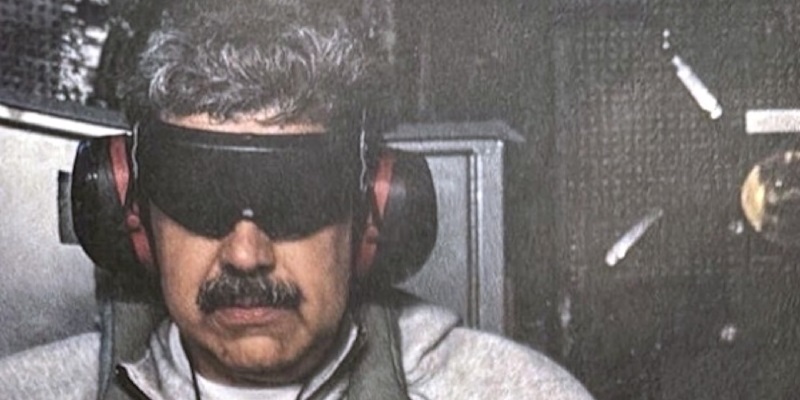
She extended thanks to the U.S. military for conducting what she described as an “incredible and highly successful mission” to capture Maduro and Flores.
This acknowledgment underscores the collaborative effort between civilian leadership and military forces in executing a complex international operation.
It also reflects the DOJ’s framing of the mission as both a legal and national security triumph.
President Trump reinforced the gravity of the operation in his own announcement.
He confirmed that the United States had “successfully carried out a large‑scale strike against Venezuela and its leader, President Nicolas Maduro, who has been, along with his wife, captured and flown out of the country.”
Trump noted that the operation was conducted in conjunction with U.S. law enforcement agencies, signaling a coordinated effort across multiple branches of government.
He further announced that details would be provided at a news conference scheduled at Mar‑a‑Lago, emphasizing transparency and public accountability.
Implications for U.S.–Venezuela Relations
The capture and indictment of a sitting head of state represent an extraordinary development in international law and diplomacy.
Traditionally, heads of state enjoy a degree of immunity from prosecution.
The U.S. government’s actions, however, signal a willingness to challenge that norm in cases involving alleged narco‑terrorism and threats to American security.
For Venezuela, the removal of Maduro and Flores could trigger significant political upheaval.
Questions remain about the future of governance in Caracas, the response of Maduro’s loyalists, and the potential for instability in the region.
For the United States, the operation demonstrates a bold assertion of extraterritorial jurisdiction in combating international crime.
With Maduro and Flores now in U.S. custody, the next phase will unfold in American courts.
The Southern District of New York has jurisdiction over major international narcotics cases.
The charges against Maduro align with longstanding U.S. efforts to dismantle drug trafficking networks linked to foreign governments.
The trials will likely attract global attention, serving as a test case for how the U.S. justice system handles allegations against foreign leaders.
Convictions on the charges outlined could carry severe penalties, including lengthy prison sentences.
Broader Significance
The operation against Maduro and Flores carries broader symbolic weight.
It demonstrates the U.S. government’s commitment to confronting narco‑terrorism at its source, even when that source is a foreign head of state.
It also reflects the integration of military and law enforcement capabilities in pursuing international justice.
Bondi’s remarks framed the mission as a victory not only for the DOJ but for the American people, while Trump’s statement positioned the operation as a decisive act of leadership.
Together, these narratives reinforce the message that the United States will act unilaterally when its security is threatened by international criminal enterprises.
The indictment and capture of Nicolas Maduro and Cilia Flores mark a historic moment in U.S. foreign policy and criminal justice.
Attorney General Pamela Bondi’s announcement and President Trump’s confirmation highlight the seriousness of the charges and the determination of the United States to pursue accountability.
As the legal process unfolds in New York, the world will watch closely to see how the U.S. courts handle the unprecedented prosecution of a sitting foreign president.
The operation underscores America’s resolve to confront narco‑terrorism and sets a precedent for future actions against international actors accused of threatening U.S. security.