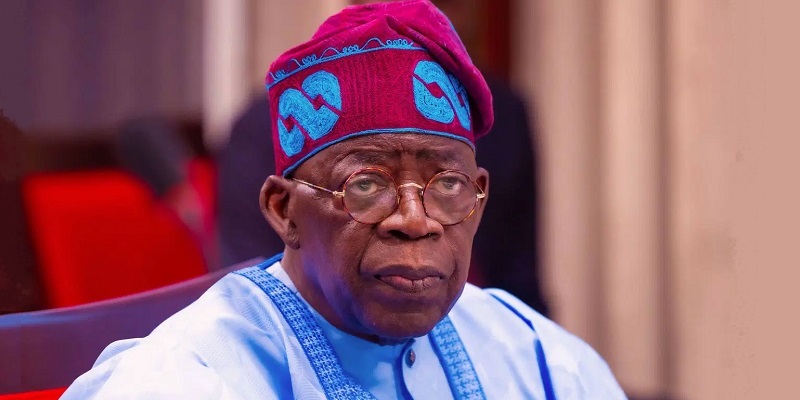

President Bola Tinubu’s administration’s decision to splurge $9 million on a U.S. lobbying firm, seemingly to curry favour with President Donald Trump and deflect attention from the ongoing Christian genocide in Nigeria, is far from its first attempt at image management.
In January 2025, reports revealed that Tinubu paid $2.7 million to polish an image tarnished by allegations of illicit drug dealing and certificate forgery.
Like the DCI Group contract, these lobbyists were hired to persuade U.S. lawmakers and executives that he was fit to lead Nigeria and command international legitimacy.
Lumped together, the latest lobbying maneuver speaks volumes about how the government of the day looks at itself in a mirror, perceives its own body odour and how much of regard it has for its tenuous social contract with millions of Nigerians, whose daily realities cannot be lobbied.
For many Nigerians, the latest lobbying expenditure and its motives raised valid questions and worrying concerns that should not slide out of the dock.
A staggering $4.5 million tranche was paid as a retainer fee to the U.S-based DCI Group, just weeks after the Trump administration had branded Nigeria a “country of particular concern” last November.
Remember that Trump even threatened to dramatically move gun-a-blazing into Nigeria in lieu of ‘Christian Genocide’ concern.
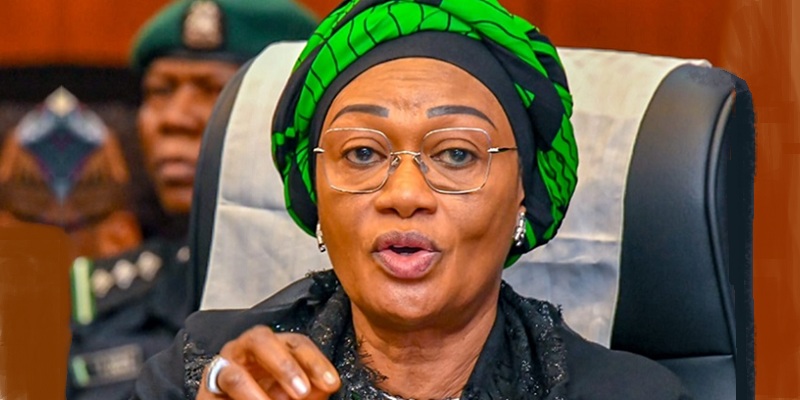
Scarcely weeks after, the lobbying scheme appears to show early signs of impact with President Trump praising Nigeria’s First Lady, Remi Tinubu, as a respected cleric later.
And since February, as expected, the president’s wife has consistently projected her husband’s administration as competent and everything contrary to what Trump hitherto said he saw.
The First Lady has sought to counter “misrepresentation” and what she considered calculated efforts by certain actors to tarnish the image of the Renewed Hope administration.
Despite all the public relations and lobbies to burnish the administration’s image, the abductions, killings and incineration of helpless Nigerians have numbered unabated.
Till the time of this column, President Bola Tinubu’s administration’s handling of Nigeria’s insecurity has been tragic and laid bare by even recent happenings.
No lavishly lobbying amount or ‘screwdriver salesman’ watering narrative have been able to distort or compete with the well-known truths of Nigeria’s insecurity crises nor mask the facts that have closely followed the U.S. labelling of Nigeria as a “country of particular concern”.
With death toll standing tall, daily, insecurity in Nigeria has deepened, evidenced by continuing killings in Kwara, Niger, Kaduna States and other vulnerable areas in the country.
The holes and the hollow nature of government’s claims of outperformance to address the festering security crisis, aimed at restoring the administration’s so-called image have, in practice, been nothing more than a charade.
As already emphasised, the grim realities and repercussions of the government’s dysfunction to critically address insecurity in the country cannot be lobbied away.
The disconnection between what the government wishes to project to foreign actors and what Nigerians see as its real performance in addressing the domestic concerns on ground could not be more different.
Since 2009, security incidents have been experienced on multiple fronts, with terrorism, banditry, communal conflicts and kidnappings threatening national stability.
More than a decade after, insecurity dynamics have surged, with the north-east embattled by sustained insurgency perpetrated by the interplay of Boko Haram and Islamic State West Africa Province (ISWAP) sects.
The north-central is faced by a deadly farmer-herder crisis, separatist agitation in the south-east, urban crime in the south-west and sophisticated banditry in the north-west have remained the unchanging order.
While its impacts have been disproportionate by geography, the sophistication, targeting and casualty rates have been consistent and tear-jerking.
Before Trump’s brag post, airstrike intervention and Tinubu’s undisputed lobbying bargaining, Nigeria experienced no fewer than 14,782 security incidents between 2018 and 2024.
The Nigeria Risk Index released at the fall of that year added that there were about 38,221 fatalities, 3482 kidnapping incidents, 2937 terrorist attacks and 1845 communal violence between those six years period only.
The losses afterwards have not been fair either. Nigeria has had to suffer an estimated N5.6 trillion economic consequence, 2.9 million displaced head count as of December 2023, with spillover effects of the impacts felt in both neighboring states and border-sharing countries of the Sahel.
These facts cannot be lobbied. The inactions of the Tinubu administration and its predecessors during this phase cannot be lobbied away from collective memory.
It is clear that lobbying cannot replace the absence of security infrastructure and strategy, which overtime is yet to become the government’s reputation.
A whopping $9 million would have been well-spent if used to procure military arsenals that could accelerate the government’s intervention and strategic responses to counter terrorism.
Or it could have helped to address the dynamics and trends of internal displacement burgeoning in conflict-affected areas such as the north-central and north-west.
With school abductions, village raids, and roadway attacks persisting in areas where vulnerability is as high as the absence of a security presence, such fund could have been better utilized.
Such dollars could have helped to fix the notably slow response or abetting inaction that was once the default during the Muhammadu Buhari’s Dapchi schoolgirls’ abduction or during Goodluck Jonathan administration, when Boko Haram gunmen invaded schoolgirls in the northeastern town of Chibok, as well as in the many subsequent cases thereafter.
By incentivizing the perception of the United States lawmakers, it can only be rightly said that priority has been lost on the true purpose of responsible governance.
Even now, hope seems to grow slimmer as the current administration continues along its chosen path, moving with a king’s gait, audacious and galling amidst the breaking news.
It is complete ridicule and to the service of governance that the president, or the presidency as we have come to know it, cannot lobby its way around its self-inflicted underperformance.
Sad as it is, its actions, both in the villa and in the president’s Senate chamber, does not reasonably fit with one of its own recent logic.
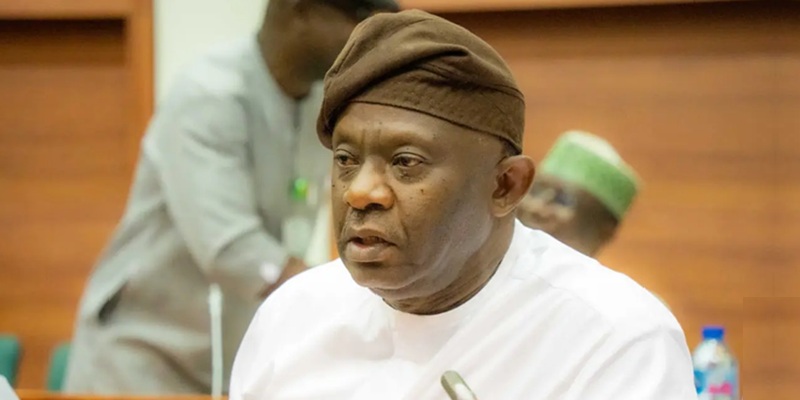
A good case study happened in the first week of February during a plenary. Senator Sunday Karimi (Kogi West) argued for a bill seeking to increase the share of the federation account to the greater advantage of the federal government.
Such a serious matter, in an age where decentralization of governance and federalism is expected to be readily teachable and effortlessly understood, has made the conversation on the whopping DCI Group lobby funds even more heart-wrenching.
The senator claimed that the 52.68 per cent share of the federation account has been inadequate to address or mitigate the insurgency mapped on the country’s skin, mounting national obligations, and the stripes of bad roads, which have made both the economy and all dependent social services on roads unnavigable.
Such logic quivers when the mathematics is cross-multiplied with the million-dollar image-laundering expense the same administration incurred for its photogenic appearance in the western corridor.
Who really spends so much abroad but needs to rob the other tiers of government to appear, like a grinning photo of good governance?
When the actual image of a government is being priced or subjected to posh editing, the implications can be devastating for the government seeking western airbrushing.
As a disadvantage, international partners, who could be plausible allies in combating the terror trend that has become borderless, may become misled into believing that the Nigerian government is actively prevailing over insecurity.
Diplomatic assistance, which is itself often conditional, can be withheld under the pretense that the government is taking responsible steps to curtail anomalies.
Worse among its peers, image laundering can also fuel distrust, especially when the smoke of razed villages and the spilled bloodbath of insecurity in the country rises to rooftop-level in what is unarguably today’s global village.
While lobbying can begin to change the lens, frame, tone colour and mood through which insecurity is perceived, it cannot address the root causes of insecurity, which have their sociological and local context.
The dead-end of President Tinubu’s misplaced lobbying priority can only mirror how the 1970s Koreagate American scandal ended in futility.
At that time, South Korean President Park Chung masterminded ‘Operation White Snow’, a-lobby-blazing-bid to garner influence within the U.S. political circle.
For Nigerians at home and in the diaspora, the danger of lobbying can be more devastating and an intolerable discovery.
Already, the weeks-long silence of the Nigerian government, particularly in responding to queries about the lobby funds have only deepened public distrust.
Taxpayers’ money, at worst, should not be used to curry the assistance of the U.S. government when other urgent needs, including underfunded education, healthcare and security, remain unaddressed and continue to underlie even insecurity itself.
The Tinubu administration has to pause for a couple of minutes, take stock of the irreplaceable losses Nigerians are witnessing, and ultimately question and re-imagine its own conscience.
For parents of missing children and relatives of disappeared loved ones, Nigeria, as Trump repeatedly dubbed his commentary, remains “a disgrace”.
First, to itself, and only to itself. Schools cannot be closed down due to the all-encompassing flu of insecurity, while the livelihoods of citizens, long endured in various parts of the country, teeter toward apocalypse, with the government doing nothing, doing too little, or as has often been the case, the president busy smiling at a fishing expedition in Argungu, while thousands are trapped in a gripping fate.
The president, along with members of the Senate and House of Representatives, must find a way out before the horrendous landslides make the country’s image even worse, and the king’s name under whose reign the people died, collapse under its own weight.
The truth, which must guide solutions to the country’s plights, cannot be lobbied. It just cannot.
The seeds of time, taking lessons from countries where lobbying has flatly failed, warns the President, presidency and all in control, against repeating the same action and expecting a different result. A local, economic, lawless, interconnected crises cannot be lobbied.
(Ejuchegahi A. Angwaomaodoko is the founder of Ejuchegahi Angwa Foundation, a non-profit focused on promoting good governance and addressing socio-political issues.
He is a scholar at Kean University and has authored extensively on Nigerian governance and policy since 2002. He can be reached via: ejuchegahi.angwaomaodoko@gmail.com.)