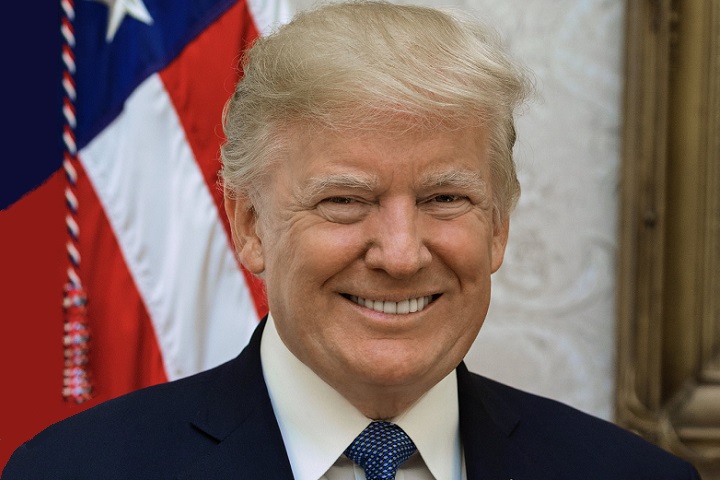
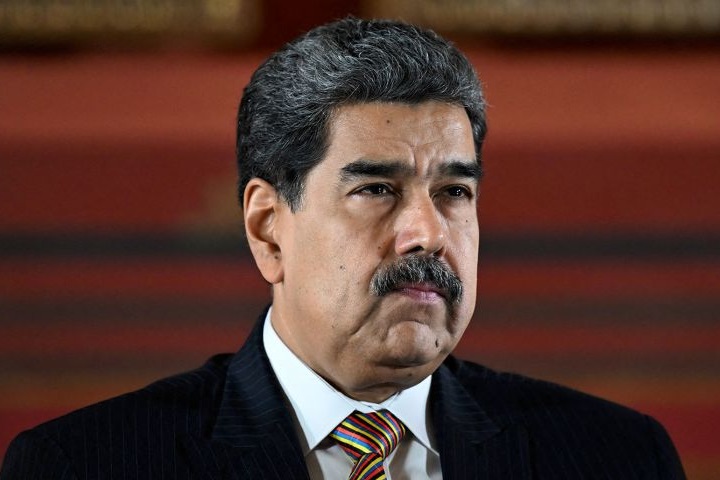
THIS DAWN — A dramatic escalation in U.S.–Venezuelan relations unfolded today as President Donald Trump announced that U.S. forces had captured Venezuelan President Nicolás Maduro and his wife.

The claim, delivered in Washington, immediately sparked a political firestorm in Caracas, where government officials demanded proof of life and vowed not to surrender.
Highlights:
- President Trump says Nicolas Maduro and his wife have been captured and flown out of Venezuela.
- Venezuelan President Maduro was captured by US military’s elite special unit Delta Force.
- Venezuela President Maduro to stand trial on criminal charges in the United States.
- US official says no Americans were killed in the operation to capture Venezuelan President Maduro.
Trump Administration’s Position
President Trump declared that Maduro was no longer recognized as Venezuela’s legitimate leader, describing him instead as the head of a criminal enterprise.
“Maduro is not the President of Venezuela,” the administration stated.
“He is the head of the Cartel de Los Soles, a narco-terror organization which has taken possession of a country. He is under indictment for pushing drugs into the United States,” it added.
The announcement marks one of the most forceful U.S. interventions in Venezuela’s ongoing political crisis, framing Maduro’s detention as part of a broader campaign against transnational narcotics networks.
Venezuelan Government Response
In Caracas, Vice President Delcy Rodríguez rejected the U.S. claims and demanded proof that Maduro and his wife remain alive.
“We demand evidence that our President and First Lady are safe,” she said, accusing Washington of fabricating narratives to destabilize Venezuela.
Venezuelan Defense Chief Vladimir Padrino López issued a defiant statement: “We will not surrender.”
He pledged that the armed forces would continue to resist what he described as foreign aggression and attempts to dismantle Venezuela’s sovereignty.
Opposition Reaction
Meanwhile, opposition leader María Corina Machado seized on the announcement, declaring that her movement was prepared to assume power.
“We are ready to take over the government,” Machado said, positioning herself as the transitional figure in a post-Maduro Venezuela.
Her remarks highlight the deep divisions within Venezuelan politics, where opposition groups have long sought international backing to dislodge Maduro’s government.
The alleged capture of Maduro and his wife, if confirmed, would represent a watershed moment in Latin American geopolitics.
For years, the U.S. has accused Maduro of presiding over a corrupt regime tied to drug trafficking and human rights abuses.
The Cartel de Los Soles, often linked to Venezuelan military officials, has been at the center of U.S. indictments alleging large-scale cocaine smuggling into North America.
Trump’s framing of Maduro as a “narco-terrorist” underscores Washington’s intent to treat Venezuela’s leadership not as a political adversary but as a criminal syndicate.
Uncertainty and Tensions
Despite the bold claims, uncertainty remains over the veracity of Maduro’s capture.
No independent evidence has yet been presented, and Venezuelan officials continue to insist that their president is alive and in control.
The demand for proof of life reflects growing anxiety within Caracas, as rumors swirl about the fate of the country’s leadership.
The situation has heightened tensions across the region, with neighboring countries monitoring developments closely.
Analysts warn that if Maduro’s capture is confirmed, Venezuela could face a volatile transition period, with the military’s loyalty and the opposition’s readiness both tested.
The announcement by President Trump that Nicolás Maduro and his wife have been captured has thrown Venezuela into political turmoil.
With the government demanding proof of life, the defense chief vowing resistance, and opposition leader María Corina Machado declaring readiness to govern, the country stands at a crossroads.
Whether this marks the end of Maduro’s rule or the beginning of a new phase of confrontation remains unclear.
What is certain is that Venezuela’s crisis has entered a new and unpredictable chapter, with global implications for democracy, sovereignty, and the fight against narco-terrorism.