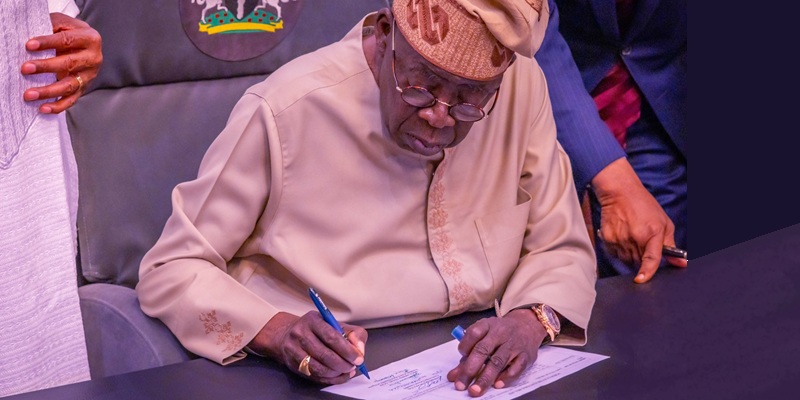

President Bola Ahmed Tinubu has signed into law the final amendments to the 2022 Electoral Act, a landmark move aimed at strengthening Nigeria’s democratic framework and restoring public confidence in the electoral process.
The amendments, according to the President, are the product of lessons learned from previous election cycles.
He said they are designed to close loopholes, streamline procedures, and provide greater clarity for both electoral officials and citizens.
Tinubu said:
“After every election cycle, we owe Nigerians an honest look at what worked and what must work better.
“That is how serious democracies behave, and our laws must grow with experience.”
‘Fairness and Transparency’
He emphasized that the reforms are not about partisan politics but about building a credible process that ensures fairness and transparency.
Tinubu noted that when citizens walk into polling units, they must do so with confidence, and when results are declared, they must be trusted.
The President expressed appreciation to the National Assembly for its cooperation and sense of national responsibility in bringing the amendments to fruition.
“Our responsibility remains to keep improving the system so that the people’s will is expressed clearly, peacefully, and credibly.
“The work of strengthening our democracy continues, and we shall not relent,” he added.
Implications of the Amendments
- Enhanced Transparency: The reforms are expected to improve the credibility of election results by tightening oversight and ensuring clearer procedures.
- Strengthened Institutions: Electoral bodies will benefit from more precise legal frameworks, reducing ambiguity in the conduct of elections.
- Public Confidence: Citizens are expected to gain renewed trust in the electoral process, knowing that gaps from past cycles have been addressed.
- Democratic Growth: The amendments signal Nigeria’s commitment to evolving its democratic institutions in line with global best practices.
Observers note that these changes could play a pivotal role in shaping the political landscape ahead of the 2027 general elections.
It hoped to ensure that Nigeria’s democracy continues to mature and adapt to the challenges of modern governance.