TDThe International Olympic Committee (IOC) has announced a sweeping new policy that bans transgender women and athletes with differences in sex development (DSD) from competing in female categories at the Olympic Games, beginning with the 2028 Los Angeles Olympics.

The decision, unveiled after an executive board meeting in Lausanne, Switzerland, marks one of the most significant shifts in Olympic eligibility rules in decades.
Under the new policy, eligibility for female events will be restricted to “biological females,” determined through a one-time genetic test for the SRY gene, which is part of the Y chromosome and triggers male development.
“Eligibility for any female category event at the Olympic Games or any other IOC event, including individual and team sports, is now limited to biological females,” the IOC stated.
The test, conducted via saliva, cheek swab, or blood sample, will be required only once in an athlete’s lifetime.
Those who test negative for the SRY gene will permanently qualify for female competition.
Athletes who test positive will remain eligible for male, mixed, or open categories.
Why the IOC Acted
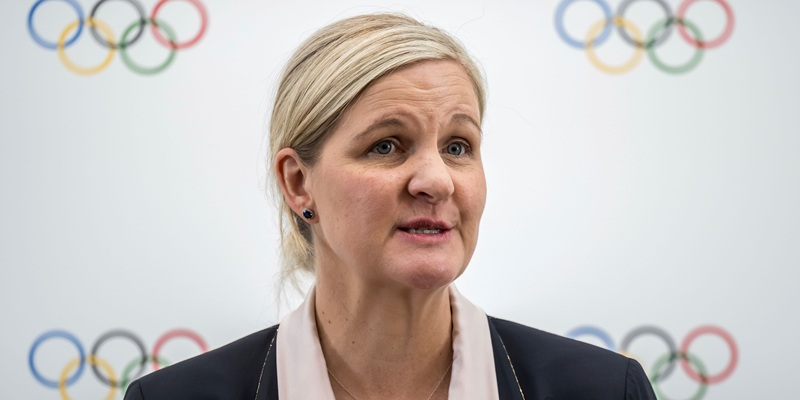
IOC President Kirsty Coventry, the first woman to lead the Olympic body in its 132-year history, said the policy was guided by medical experts and athlete consultations.
“At the Olympic Games even the smallest margins can be the difference between victory and defeat,” Coventry explained.
“It would not be fair for biological males to compete in the female category. In addition, in some sports it would simply not be safe.”
The IOC cited scientific evidence that male physiology confers lasting advantages in strength, power, and endurance, even after testosterone suppression.
Controversies That Shaped the Decision
The ruling follows years of heated debate and high-profile controversies:
- Tokyo 2021: New Zealand’s Laurel Hubbard became the first openly transgender woman to compete at the Olympics, sparking global debate.
- Paris 2024: Algerian boxer Imane Khelif and Taiwan’s Lin Yu-ting, both previously disqualified from world championships after sex tests indicated male chromosomes, won gold medals in women’s boxing.
Their participation drew sharp criticism and accusations of unfairness.
- Caster Semenya Case: The South African two-time Olympic champion was barred from certain events unless she reduced her testosterone levels, a requirement she refused, calling it discriminatory.
These incidents intensified calls for a universal policy to protect fairness in women’s sport.
Alignment with Global Trends
The IOC’s move aligns with recent decisions by major sports federations:
- World Athletics, World Aquatics, and World Cycling have already banned athletes who underwent male puberty from elite female competition.
- FIFA has yet to issue clear rules, but pressure is mounting for consistency across all sports.
- In the United States, President Donald Trump signed an executive order titled “Keeping Men Out of Women’s Sports”.
Trump pledged to enforce the policy at the Los Angeles Games and deny visas to transgender athletes seeking to compete.
Support and Opposition
Many female athletes and sports scientists welcomed the ruling, arguing it preserves fairness and safety.
Surveys conducted by the IOC found strong support among women athletes for genetic testing as a proportionate and confidential measure.
Supporters say the policy is more humane than requiring athletes to suppress testosterone and avoids the intense media scrutiny that has plagued transgender and DSD competitors.
However, critics warn the policy could violate human rights and stigmatize athletes.
A group of academics recently described sex testing as “a harmful anachronism” in the British Journal of Sports Medicine.
They argued that reducing sex to a single gene oversimplifies a complex biological reality.
A Seismic Shift in Olympic Sport
The IOC confirmed the policy will take effect at the 2028 Los Angeles Olympics and will not apply retroactively or to grassroots sports.
Athletes will undergo the SRY gene test once, with counselling and medical support provided.
The IOC emphasized that all athletes must be treated with dignity and respect.
A press conference has been scheduled to outline how the policy will be enforced across international federations, which are expected to adopt similar rules.
The ruling represents a dramatic departure from the IOC’s previous framework, which prioritized inclusion and left eligibility decisions to individual sports.
By ring-fencing women’s categories for biological females, the IOC has taken a definitive stance in one of the most contentious debates in modern sport.