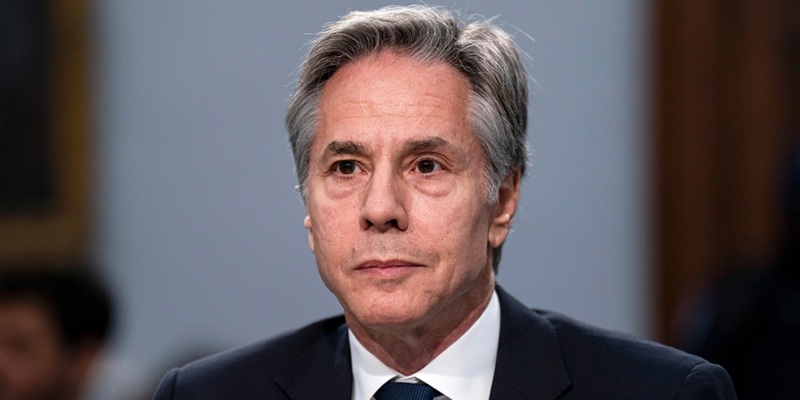
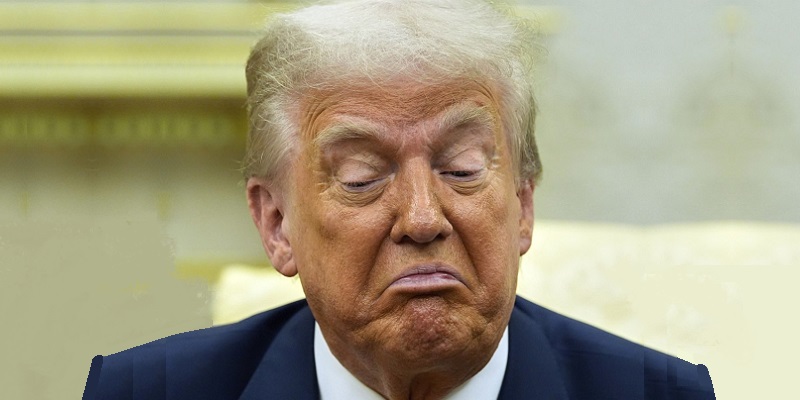
TDA sharp exchange unfolded this week between President Donald Trump and former Secretary of State Antony Blinken over U.S. policy toward Iran.

Speaking at a recent event, President Trump suggested that Blinken had admitted the Biden administration “made a mistake” by not carrying out a military strike against Iran.
“Blinken is Biden’s guy I guess. Who the hell knows who he is.
“But he came out with the statement that they should have done it, they made a mistake,” Trump said.
Blinken, however, swiftly rejected the characterization.
In a series of posts on X (formerly Twitter), he clarified:
“Donald Trump cited me as supporting his attack on Iran and expressing regret we didn’t do it during the Biden Administration. Except I didn’t.”
The exchange highlights deep divisions over the legacy of the Iran nuclear deal and the ongoing conflict in the Middle East.
Blinken’s Position
Blinken reiterated that his actual remarks focused on Trump’s 2017 decision to withdraw from the Joint Comprehensive Plan of Action (JCPOA), the Iran nuclear deal negotiated under the Obama administration.
“In short: President Trump made a terrible decision to tear up the Iran nuclear deal and replace it with nothing.
“The Obama Administration put Iran’s nuclear program in a box, President Trump let it out,” Blinken wrote.
He argued that had the JCPOA remained in place, the U.S. would have retained leverage through intrusive inspections and the option to renegotiate or extend the agreement.
Instead, he said, Trump’s withdrawal empowered Iranian hardliners and left the U.S. with fewer tools to contain Tehran’s nuclear ambitions.
Costs of the Current Conflict
Blinken’s posts also underscored the human and strategic costs of the ongoing confrontation.
He noted that 13 American servicemembers have been killed and hundreds wounded, while Iran continues to enrich uranium to near-weapons-grade levels.
He warned that the failure to anticipate Iran’s potential weaponization of the Strait of Hormuz has left global markets vulnerable and the U.S. isolated from allies.
“America is more isolated than ever from our closest allies and partners.
“And billions more U.S. taxpayer dollars are being spent on another war in the Middle East,” Blinken wrote.
He added that the administration has requested an additional $200 billion from the Pentagon to sustain operations.
Strategic Questions
Blinken acknowledged that some tactical gains had been achieved, including the death of Iran’s Supreme Leader Ayatollah Ali Khamenei and damage to Iran’s missile arsenal.
But he questioned the long-term impact.
He noted that power has simply shifted to a younger Ayatollah and that Iran retains significant nuclear material and the capacity to rebuild its weapons systems.
“The regime could fall in five days or five years. And to be replaced by what?” Blinken asked.
His question highlighted the uncertainty surrounding Iran’s political future.
Conclusion
Blinken’s emphatic rebuttal makes clear that he does not support Trump’s framing of the Iran strike. “So no, I would not have done it. For the record,” he concluded.
The exchange underscores the continuing controversy over U.S. policy toward Iran, the legacy of the JCPOA, and the broader debate about America’s role in Middle Eastern conflicts.
With both leaders staking out sharply divergent positions, the issue is likely to remain a flashpoint in U.S. foreign policy discussions.