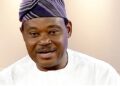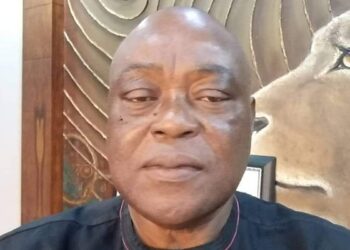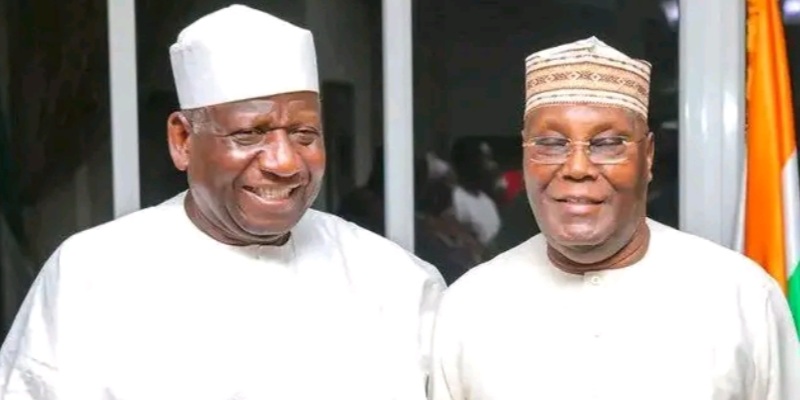

Former Vice President Atiku Abubakar convened a high-level meeting with the National Chairman of the Action Democratic Party (ADP), Yabagi Yusuf Sani, and senior executives of the party at his Abuja residence.
The closed-door engagement has sparked intense political chatter, coming at a time when Nigeria’s opposition landscape is rife with speculation and strategic maneuvering.
The meeting follows growing rumours of a potential alliance between Peter Obi and Rabiu Kwankwaso.
These are reportedly considering a joint bid for the African Democratic Congress (ADC) presidential ticket in a move that could challenge Atiku’s political ambitions.
ADP’s Clarification
Addressing the media after the meeting, ADP National Chairman Yabagi Yusuf dismissed speculation about mergers or defections.
He insisted that the engagement was strictly about strengthening the ADP’s internal structures and refining its democratic processes.
“This engagement was not about a merger with any party, nor was it about recruiting any individual into the ADP,” Yusuf stated firmly.
His statement underscored that the party remains focused on consolidating its base and preparing for the future.

Political Context
- Opposition dynamics:
The Nigerian opposition is in flux, with multiple parties exploring alliances to mount a credible challenge against the ruling party in the 2027 general elections.
- Obi-Kwankwaso rumours:
Reports of a possible partnership between Obi and Kwankwaso have heightened speculation about shifting blocs within the ADC and beyond.
It also raises questions about how Atiku and other opposition leaders will respond.
- Atiku’s strategy:
The former Vice President’s meeting with ADP leadership signals his intentions.
Atiku intends to keep channels open with smaller but strategically significant parties.
That way, he potentially broadens his influence ahead of the next electoral cycle.
Implications
The Abuja meeting highlights the fluid nature of Nigeria’s political terrain, where alliances can be forged or dissolved rapidly in response to emerging threats and opportunities.
In the meantime, Atiku and ADP leaders have sought to downplay talk of mergers.
However, the timing of the engagement suggests a calculated effort to shore up political capital and maintain relevance amid growing competition.
Analysts note that such meetings often serve as precursors to broader coalition-building efforts, even if immediate outcomes are denied publicly.
The opposition’s ability to unify—or at least coordinate—will be critical in determining its strength against the ruling party in 2027.
This development adds another layer to Nigeria’s evolving political chessboard.
Every meeting, denial, or rumour feed into the larger narrative of who will emerge as the strongest challenger in the next presidential race.