TDAt least 555 people have been killed in Iran as a result of ongoing U.S. and Israeli air and missile strikes, the Iranian Red Crescent Society has reported.

Prominent Iranian government and military figures reported killed in the recent wave of joint U.S.–Israeli airstrikes across Iran include:
-
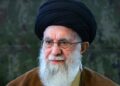
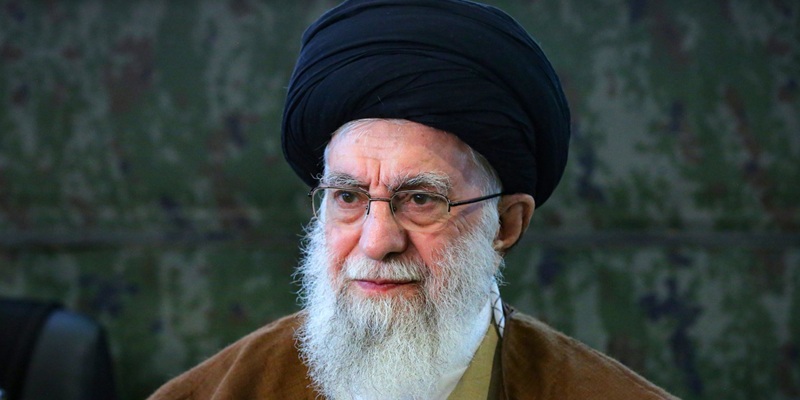
Ayatollah Ali Khamenei – Supreme Leader of Iran, killed in strikes targeting senior leadership in Tehran.
-
Abdolrahim Mousavi – Chief of Staff of the Iranian Armed Forces.
-
Ali Shamkhani – High-ranking security adviser and head of Iran’s Defence Council.
-
Mohammad Pakpour – Commander of the Islamic Revolutionary Guard Corps (IRGC).
-
Aziz Nasirzadeh – Defence Minister of Iran.
-
Mohammad Shirazi – Head of the Supreme Leader’s military office.
-
Hossein Jabal Amelian – Chairman of Iran’s Organization of Defensive Innovation and Research.
-
Saleh Asadi – Senior intelligence officer and head of intelligence at the Khatam-al-Anbiya command.
Additional Reported Casualties
Several sources also indicate the deaths of top officials close to the supreme leadership.
These include close family members of Khamenei and other senior intelligence figures, though some identities have not been formally confirmed by Tehran.
These deaths represent some of the most significant disruptions to Iran’s political-military leadership in decades.
They also underscore the scale of the recent joint military campaign in the region.
Corresponding official confirmations vary, and investigations into the full extent of the casualties are ongoing.
Meanwhile, the conflict in the Middle East continues to intensify.
The strikes, which began in late February, have hit targets across multiple regions of Iran, including Tehran and more than 130 cities, according to Iranian authorities and relief agencies.
The figure released by the Red Crescent reflects the growing human toll of the military campaign.
Details of the Airstrike Campaign
Iranian state media reported explosions in the capital and other cities as coordinated attacks unfolded.
The extensive bombardment — described by officials as a combined U.S.–Israeli operation — has been linked to strategic and military objectives.
Relief workers have been dispatched throughout the country to assist with rescue operations and treat the wounded.
Concerns have also risen about the impact on civilian populations.
Officials in Iran have yet to release a detailed breakdown of civilian versus military casualties.
However, the Red Crescent’s figures signal a sharp increase in fatalities compared with earlier reports, which cited over 200 deaths and hundreds injured.
Regional and International Fallout
The reported death toll underscores how the conflict has spread beyond targeted military sites, affecting broader parts of Iranian society.
Reports of strikes affecting schools, residential areas and infrastructure have drawn international attention and concern.
The situation has prompted responses from governments around the world, with many calling for urgent measures to protect civilians and avert further escalation.
Next Steps and Responses
As the conflict continues, both humanitarian organisations and foreign governments are monitoring developments closely.
The Red Crescent and other relief agencies have reiterated calls for safe corridors and greater access to affected communities to support rescue and medical operations.
No official confirmation has been issued by U.S. or Israeli authorities regarding the casualty figures published by Iranian sources.
Further updates are expected as additional data becomes available.
Iranian Strikes on Civilian Sites Across Gulf and Israel
New and serious allegations have emerged amid the escalating conflict involving Iran, the United States, and Israel.
There are claims that Iranian forces have targeted civilian infrastructure and residential areas across multiple countries in the region.
According to circulating reports, more than a dozen locations were allegedly struck, including major international airports, hotels, ports, and residential neighborhoods in the Gulf and Israel.
The locations cited in the claims include:
-
Dubai International Airport
-
Kuwait International Airport
-
Zayed International Airport (Abu Dhabi)
-
Erbil International Airport, Iraq
-
Fairmont Palm Hotel, Dubai
-
Burj Al Arab Hotel, Dubai
-
Crowne Plaza Hotel, Bahrain
-
Port facilities in Dubai
-
Residential areas in Beit Shemesh, Israel
-
Residential areas in Tel Aviv, Israel
-
Era Views Towers residential complex, Bahrain
-
Residential areas in Qatar
Official Confirmation from Affected Governments
As of the time of publication, authorities in the United Arab Emirates, Kuwait, Bahrain, Qatar, Iraq, and Israel have issued detailed confirmations verifying the full scope of these alleged strikes.
There have, however, been no official casualty figures released in connection with the newly listed locations.
Aviation authorities in the Gulf region have also not formally confirmed sustained operational disruptions at the named airports.
Regional Security Concerns Intensify
Attacks on civilian airports, hospitality infrastructure, and residential neighborhoods would represent a significant escalation, potentially broadening the conflict beyond direct military targets.
Targeting international airports and major commercial hubs would have far-reaching implications for:
-
Civil aviation safety
-
International travel
-
Energy and trade routes
-
Diplomatic relations across the Gulf
Military and diplomatic observers note that direct strikes on Gulf infrastructure would risk drawing additional regional actors into the conflict.
International Monitoring Underway
Governments and international aviation authorities are reportedly assessing airspace security and monitoring potential disruptions.
Several Gulf states have heightened alert levels in recent days amid growing regional instability.
Humanitarian organizations have not yet reported confirmed civilian casualty figures linked specifically to the newly alleged strike locations.
Situation Remains Fluid
The broader conflict has already resulted in significant casualties inside Iran, with the Iranian Red Crescent previously reporting at least 555 deaths following U.S.–Israeli strikes.
However, the newly reported incidents involving Iranian retaliation across multiple countries are raising concerns.
Further updates will follow as official confirmations and independent assessments become available.
Prominent Iranian Government Figures Reported Killed in Airstrikes
Coordinated U.S.–Israeli strikes on Iran have reportedly killed several of the country’s most senior leaders.
According to multiple credible sources, the following officials have been confirmed dead:
| Name | Position | Date of Death | Notes |
|---|---|---|---|
| Ayatollah Ali Khamenei | Supreme Leader of Iran | Feb 28, 2026 | Killed in an airstrike on his Tehran compound |
| Commodore Ali Shamkhani | Former Secretary of the Supreme National Security Council | Feb 28, 2026 | Targeted strike in Tehran |
| Major General Mohammad Pakpour | Commander of the IRGC Ground Forces | Feb 28, 2026 | Killed in airstrikes; long‑time senior IRGC leader |
| Major General Abdolrahim Mousavi | Chief of the General Staff of the Armed Forces | Feb 28, 2026 | Died in strikes on military leadership sites |
| Aziz Nasirzadeh | Defense Minister of Iran | Mar 1, 2026 | Reported killed in Tehran during coordinated bombing |
Context
- These deaths represent one of the most significant ruptures in Iran’s leadership since the 1979 Islamic Revolution.
- The strikes have eliminated both political and military figures, leaving a major power vacuum.
- Iran has declared national mourning and vowed retaliation against U.S. and Israeli interests.
This list reflects confirmed reports from multiple outlets. Additional unnamed officials from Iran’s Ministry of Intelligence are also believed to have been killed, but their identities have not yet been publicly released