TDUPDATE: An official of the Enugu Electricity Distribution Company (EEDC) has just confirmed to This Dawn News that the situation is even worse than was earlier projected by this medium.

According to the official, who spoke on condition of anonymity, residents of the aforementioned areas in Awka — Okpuno, Isuaniocha, and Mgbakwu — received less than 12 hours of electricity last month.
The worst-case scenario was when he said EEDC uses generators to power their various offices and operate their devices.
He lamented that his residence, which is not far from EEDC office, was badly hit as they not only lack electricity but also water.
According to him, they don’t have electricity to power the water pumping device in the compound, leading to water scarcity.
His words were also echoed by other residents interviewed Monday morning in the affected areas.
~~~
Earlier Report
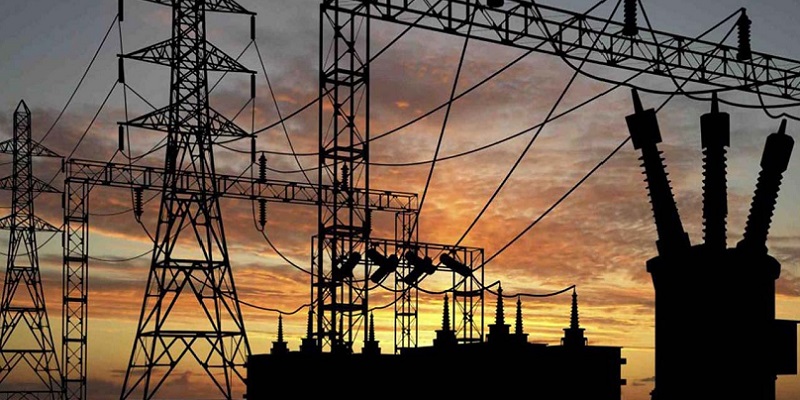
Residents of Awka, the state capital and some towns in Anambra State have lamented that they now receive less than 24 hours of electricity in an entire month.
The shortage highlights the deepening power crisis affecting communities across Nigeria’s South-East region.
Investigations by This Dawn News reveal that some neighborhoods in Awka have been plunged into near-permanent darkness.
Electricity supply has become so erratic that many households reportedly experience only a few hours of power within several weeks.
Communities Worst Hit
The situation is particularly severe along the Okpuno–Isuaniocha–Mgbakwu axis, where residents say electricity supply has almost completely collapsed.
Residents in Okpuno, Isuaniocha, and Mgbakwu told reporters that electricity distribution in the area has become extremely rare.
This has forced households and businesses to rely almost entirely on petrol and diesel generators, or in some cases solar energy.
Small business owners in the affected communities say the lack of power has significantly increased operating costs and reduced productivity.
A trader in the Okpuno area said the situation has become unbearable.
“Sometimes an entire month passes, and we don’t get up to one full day of electricity.
“We hardly see light anymore. We are paying for darkness,” the resident said.
South-East Receives Lowest Electricity Allocation
Energy sector reports indicate that the South-East geopolitical zone receives one of the lowest allocations of electricity generated on Nigeria’s national grid.
Industry stakeholders estimate that the region receives roughly 7 percent of total electricity supply nationwide, far below demand for households, commercial activity, and growing urban centers like Awka.
Experts warn that the imbalance leaves many communities in prolonged blackout conditions while other regions receive relatively higher distribution.
Businesses Struggle to Survive
For artisans, traders, and small-scale manufacturers, the power shortage is taking a heavy toll.
Hairdressers, welders, cold-room operators, and internet service providers say they now depend entirely on generators, leading to higher prices for goods and services.
A welder in Mgbakwu explained that fuel costs alone have doubled his operating expenses.
“Without generator we cannot work. But diesel and petrol prices are too high.
“Many people are closing their shops because they cannot afford it anymore,” he told our reporter.
Structural Challenges in Electricity Supply
Energy analysts attribute the persistent electricity shortages in the South-East to several structural problems, including:
-
Limited power generation infrastructure within the region
-
Dependence on electricity transmitted from other parts of the country
-
Gas supply constraints affecting power plants connected to the national grid
-
Load-shedding by power authorities due to limited available generation
These factors combine to reduce the amount of electricity allocated to distribution companies serving the South-East.
Calls for Regional Electricity Investments
Stakeholders have increasingly called for major investments in local power generation projects to reduce dependence on the national grid.
Energy experts argue that developing independent power plants within the South-East could significantly improve electricity availability and stimulate economic growth.
Until such reforms materialize, however, residents in Awka and surrounding communities say they remain trapped in what many describe as a “cycle of darkness.”
For many households along the Okpuno–Isuaniocha–Mgbakwu corridor, electricity has effectively become a rare luxury rather than a basic public utility.
This Dawn News tried to reach out to the Federal Ministry of Power, but the official telephone line was not reachable.