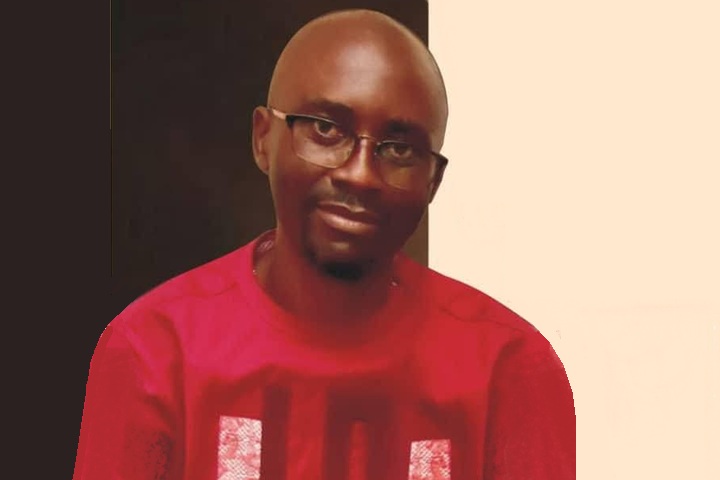
THIS DAWN — On December 5th, 2025, Nigeria lost one of its quiet warriors—Mr. Kingsley Obiekezie Aneke, aged 48, who passed away after a long battle with heart disease.

The Aneke-Akpaka family of Okpuyo Agbo in Imeama, Obinagu, Udi LGA, Enugu State, announced his death.
It was not just a personal tragedy but a searing indictment of a system that failed him—and continues to fail many.
Aneke’s passing was not sudden.
It was the culmination of years of struggle, not just with illness, but with a healthcare system that crumbled around him.
In a heartfelt farewell letter, Kingsley left behind more than memories—he left a message, a warning, and a call to action.
“I’ve always hoped for a Nigeria that works for everyone,” he wrote.
“But sadly, I became a victim of the system I’ve long wished to see change,” he lamented.
Failed optimism
For years, Aneke managed his heart condition with optimism and discipline.
He relied on a trusted cardiologist who eventually left Nigeria, driven away by the deteriorating state of the country’s medical infrastructure.
Aneke’s condition got worse in late November.
He was admitted to a familiar hospital that had previously helped him recover.
But when his situation became critical, the hospital sought to refer him to Lagos University Teaching Hospital (LUTH)—a public institution with the expertise he needed.
LUTH, like many others, was on strike and with no other choice, the family, turned to private hospitals.
Both Evercare Lekki and Dukes Neurosurgery and Specialist Hospital demanded over ₦2 million upfront before offering care.
According to his own account, the family took Aneke to Dukes, where the hospital prioritized billing over treatment.
“The hospital was more interested in milking my family than saving me,” he wrote. “They kept billing until the last minute.”
Despite his family’s sacrifice, he died.
The system failed Aneke
His death was not just medical—it was systemic. It was political. It was preventable.
In his final words, he did not hold back.
Aneke called out those who support bad governance simply because their tribe is in power and even named names.
He spoke of the daily deaths caused by bad roads, rising kidnappings, and the mass exodus of Nigeria’s best medical minds.
He warned that private hospitals are no alternatives.
They are not equipped for critical care, and worse yet, they are driven by profit.
“May this my death be a wake-up call,” he pleaded. “Some cannot afford the care I received, or even access basic medical support.”
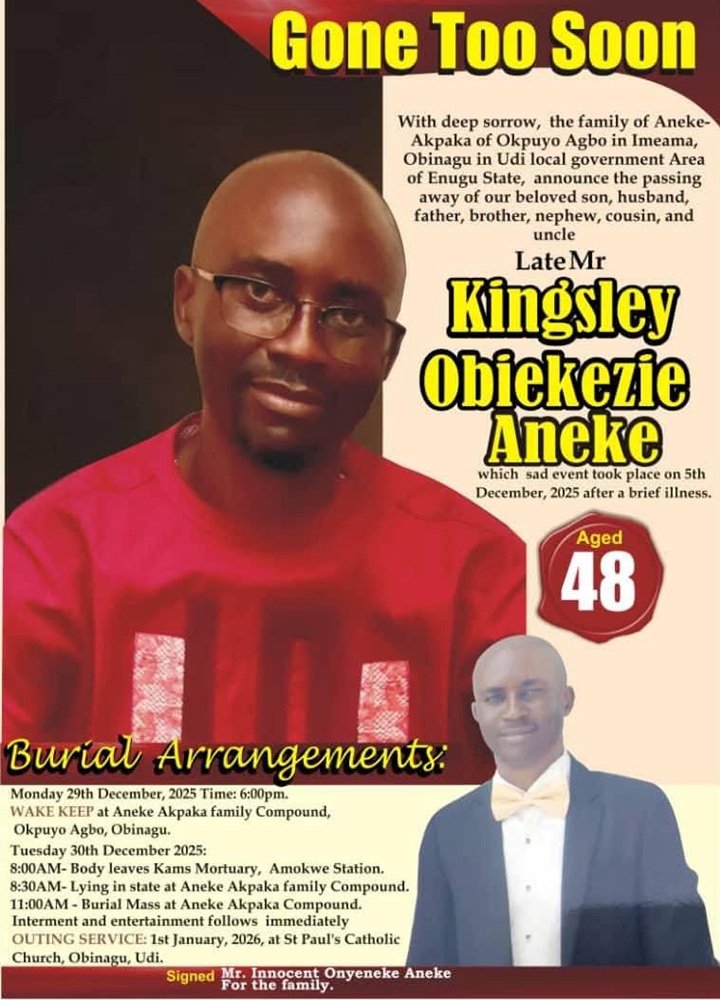
Aneke’s funeral arrangements reflect the love and respect he earned in life.
Friends and well-wishers will hold a wake on December 29th at the Aneke Akpaka family compound in Obinagu.
His body will leave Kams Mortuary on December 30th, followed by a lying-in-state, burial mass, and interment.
There will also be an outing service for January 1st, 2026, at St. Paul’s Catholic Church, Obinagu.
See flyer below:
The legacies of Aneke
But Aneke’s legacy is more than dates and ceremonies. It is a call to conscience.
He urged his friends to prioritize health, to seek early detection, and to live with purpose.
“Eat right, exercise, and have a positive mindset,” he advised.
Above all, he asked that the fight for a better Nigeria continue—not just for him, but for all who dream of a fair and just nation.
As Nigeria mourns Kingsley Obiekezie Aneke, may his words echo beyond the walls of mourning.
May they stir hearts, awaken minds, and ignite the change he longed for.