TDWith barely a year to the 2027 general elections, Nigeria’s political landscape is already bracing for a season of brazen manoeuvres.

Even now, the rise and fall of godfatherism plays out like episodic scenes across the nation’s political stage.
Quite predictably, there are ongoing undercover lobbying, whispered conversations, exchange-rate promises, tentative trusts, arranged alliances and figurative praise-and-worship political patronage already in the air.
They are beneath the defections, cross-carpeting and regrouping political alliances reported in the news.
The country is without doubt in that incautious season when many eagerly sell and buy adulations or favours of powerful men and women, all in a bid to promote their personal ambitions.
And the godfathers? They are widely across the country in their usual posture – silent, promising and strategic, ever-relying on their permutation skills.
In many ways, Nigerian politics have shown that at the core of nurtured political ambition is an imbalanced relationship, often between godfathers and their protégés. Each instance as history reminds us unfortunately confirms that true democratization remains an elusive wish in Nigeria. The dividends of democracy has been overly hampered by a host of factors including the infesting culture of godfatherism and its grounds. The proven vulnerability of individuals who step forward to lead, and more importantly, the structural weaknesses of the multiple political parties are two profound pieces of evidence for the infestation. The very lack of resourceful platforms for candidates has allowed certain individuals or groups to wield power beyond the party’s authority, accounting for the reason some political platforms are barely the reflections of the whims and influence of their powerful leaders.
Godfatherism in Nigeria dates far back. Between Nigeria’s pre-independence and First Republic, elements of godfatherism emerged in its becoming form although it was yet to bear the character the term holds today. During these years, young and aspiring Nigerians admired nationalist and regional leadership figures like Nnamdi Azikiwe, Obafemi Awolowo and Ahmadu Bello. The Nigerian budding folks emulated their rhythms, speeches and public gestures. As it was at the time, the idea of political patronage largely however revolved around ethno-regional loyalty. The January 15 1966 military coup, however, reshaped the landscape of this practice. The coup dismantled the stronghold of “godfatherism” and other gimmicks of political theatre lexicon until the Fourth Republic resumed and restored the current phase of democracy in 1999. Although there were skirmishes of actions and loyalty knitted within the military system, they were not as pronounced. Twenty-six years into the fourth republic, the theme of godfatherism has become an unmistakable feature of Nigeria’s right-leaning politics.
Dramatic as it is, the ebb and flow between incumbent Rivers State Governor, Siminalayi Fubara, and the Minister of the Federal Capital Territory (FCT), Nyesom Wike, or the similar strained ties between former Kano State Governor, Rabiu Kwankwaso, and his successor, Abba Yusuf, are telling examples today. Nigeria’s classic clashes between godfathers and their rebellious protégés remain a persistent and alarming concern. History’s solemn reminder of the crises godfatherism engenders to democracy cannot be repaired. The fallout between former Anambra State Governor Chris Ngige and the influential Uba brothers; the power struggle between Chinwoke Mbadinuju and Emeka Offor which is another flashpoint; Bola Tinubu’s influence on Lagos politics enduring till date; the contentious conflicts between Adewolu Ladoja and Lamidi Adedibu, an aristocratic power broker; the rift between former Presidents Olusegun Obasanjo and Goodluck Jonathan; the discord between incumbent Governor Uba Sani and his predecessor, Nasir El-Rufai, in Kaduna; and the deteriorated relationship between Adams Oshiomhole and Godwin Obaseki, among others, are serious illustrations that must be learned from.
Commonly referred to as ‘godfatherism,’ the glorification of certain individuals based on the positions they hold and the perks they offer has become both a cultural norm and a degeneracy in Nigeria. Godfatherism, which may be conceptualized as “males (or females) who behave god-like,” can be described as a core-peripheral, or patron-client relationship that often exists between two or more political actors. It is fundamentally a disproportionate relationship that endures only until its agreed terms and conditions can no longer be met. While the concept is most often associated with politics, godfatherism permeates many other aspects of life, with consequences that are consistently destructive and tragically futile. In Nigeria’s corridors of governance, it has remained one of the top ills in the political space since 1999. And this is because the enterprise of governance has been made to function or seem like an eatery where the godfathers are referees who offer the meal tickets.
Far removed from mentorship or political coalition-building, godfathers assume far more assertive roles. They sponsor candidates, provide political protection and the juiciest part, they attempt to control the state’s resources. While they may appear similar, since both involve engagement with a less experienced individual, godfatherism and mentorship are sharply distinguished by principles and outcomes. While mentorship is developmental and ethically guided, godfatherism is primarily transactional, power-driven and does not care. While a mentor seeks to guide, teach and nurture the independent abilities of his or her mentee, a godfather, by contrast, is motivated by the desire to sponsor and install a protégé. Importantly, while a mentor expects a mentee to surpass them, a godfather expects the reverse. In Nigeria, typical godfathers demand material and political returns for their support. It is in the same manner, coalition-building, often misunderstood, fundamentally differs from godfatherism. Although interest-based, coalition-building in politics pursues a set of shared goals, whereas godfatherism, in contrast, is hierarchical and commodity-like. It is politics cloaked in an unequal and dependent relationship that disrespects institutions and prioritizes personal gain over the public good.
The trend and crises of godfatherism are caused and sustained by multiple factors, which are deeply connected and demanding of urgent rescue. In Nigeria and across the tiers of politics, the cost of electioneering activities is hugely high. As such, the inalienable right of every Nigerian to be voted for is amputated by the material and monetary costs of having, nursing or pursuing ambitions. Starting with getting home grown support and to make the ambition a street slang or topic, the role and demand of money cannot be overemphasized. As it is the Nigerian case, a moment a politician identifies himself or herself as one, there are cultural expectations that his cough, sneeze and eye blinks must wring out cash or credit alerts. Typically true, good ambitions have never been enough in a country where the quest for material possession is significantly high and unpruned. Within political parties, the price of nomination forms are outrageously expensive. The belief that the cost of nomination forms should be heavily costly to fund needs such as logistics and primaries are flimsy reasons, which does concur with the functions of political parties. The similar reason that such would help filter out unserious aspirants’ is equally futile and unconvincing. Wealth or owning a pool of resources cannot be said to be synonyms to credibility or competence.
The lack and weak enforcement of spending limits in state, local and federal elections in Nigeria is another underlying reason for the existence of godfatherism in Nigeria. The implication of institutional failure, particularly by regulatory agencies like the ICPC, EFCC, among others have paved way for the unbridled nature and brazen presence of godfatherism. Unlike the obtainable expenditure monitoring practice in India and the United Kingdom for instance, where spending is capped for candidates and parties, and candidates respectively, the Independent National Electoral Commission (INEC) runs a weak monitoring oversight of campaign spending. There is little to no assurance that the commission can proactively limit campaign expenditure per candidate at the pegged rate of N10 billion for presidential candidates and N3 billion for governorship candidates, as contained in the amended Electoral Act 2026. Spending colossal sum of naira (or dollars), without monitoring, leaves both the ambitious politician and his extremely wealthy sponsors (godfathers), to living a daring way of life, more so emboldened by the thinking that after election is a pool of resources to (mis)manage.
The unbridled imposition of personality-driven candidates within the structures of political parties is equally another route through which godfatherism has made itself virile. The absence of ideological discipline and clarity which plays out in many parties, particularly where values are not established, defended or strictly respected, makes it cheaply possible for godfathers to assume unchallengeable positions. When what should function as an appropriate mechanism for political power regulation is fluid or unable to effect such a principle-driven stance, any leadership that emerges from such an arrangement would certainly be both opportunistic and transactional. It is in this regard that Nigerian political parties have failed to convincingly show Nigerians that they can run a type of internal democracy that is completely worthy of emulation in the mainstream. It is more worrying that the absence of ideological discipline in parties is the very lack of self-disciplined or willing members across Nigeria’s multiple party system to see past the veneer of politics.
A 2007 Human Rights Watch publication, titled “Annex: Agreements between Chris Uba (Godfather) and Chris Ngige (former Anambra State Governor),” stands out as perhaps the most striking discovery of how entrenched and corrosive godfatherism domiciles in the Nigerian system. The document leaves little doubt that the relationship between the two Chris, the governor and his godfather, was strictly contractual and brazen. The document available on the internet detailed the governor-elect’s willingness to offer state resources, as well as submit to coercive enforcement if the agreed pledges were broken. To secure the governorship, Chris Ngige, according to the document, agreed to “exercise and manifest absolute loyalty,” relinquishing critical roles tied to his office to the caucus leader, Chris Uba. The document titled “Memorandum of Irrevocable Undertaking to Serve as Governor of Anambra State for One Term of Four Years” confirms the suspicious elite capture of economic opportunities by godfathers and their overly ambitious sons or daughters.
This is to infer that the exploitation of the people’s commonwealth also sometimes is a result of the client-like and structural deficit which poverty can necessitate at times. Voter vulnerability, which party members also crassly display, provide an opening for the menace or sheep’s clothing of godfatherism practice and tendency. In 2020, Ex-Edo State Governor, Godwin Obaseki, while filing his nomination and expression of interest form openly confessed about how he and a cluster of others financially helped his predecessor, ex-labour leader Adams Oshiomole. Obaseki who beat the warning drum in the interview specifically told journalists that Oshiomole “assisted me just as I assisted him.” It was not unexpected that the exchange between the two took a turn for the worse over the re-election bid of Obaseki. More than meets the eye, the politics of “help me and help you” shows that the patterns of godfatherism is self-interested, barter-like and opportunistic.
The schism between the erstwhile and incumbent Kaduna State governors, particularly in 2025, is another instance that hits the nail. El-Rufai’s endorsement of Uba Sani went south when the incumbent governor differed from the former governor’s approach to governance and handling of issues. The subsequent choice by Uba Sani to ultimately re-prioritize his political independence, aggravated the rivalry. Ibadan’s graver fray between 2003 and 2007 is another succinct case example of an audaciously extractive politics. Controlling the state affairs from his Molete residence, Chief Lamidi Adedibu, an octogenarian ran most of the elective offices in the echelons of leadership to his satisfaction. Chief Adedibu heydays in Ibadan illustrates how godfathers are themselves nothing without the monopoly of violence and reliance on organised proliferated groups.
Exerting sit-tight influence in an atmosphere and buoyed tradition that has normalized violence as a means to pursuing and securing election victory, godfathers bank on the underclass, the lumpen-proletariat, the thugs, the mob of fanatics lurking around in their compounds, who serve as vectors of violence and influence. When the conflict would spark between Chief Adedibu and the then Oyo State Governor, Rasheed Ladoja, who is today the current Olubadan of Ibadanland, over claims of reneging on vows made, the crises ultimately resulted into the illegal impeachment of the governor on January 12 2006. The impeachment was performed in a legislative sitting constituted by lawmakers loyal to the godfather and presided over by a notorious member of the NURTW, Lateef Salako, as widely reported. Before the hiccup, Chief Adedibu had reportedly played cordial role towards the former governor’s senatorial ambition and emergence. When asked Chief Adedibu the godfather insisted that the refusal of the then governor to give him a “pint of water to drink” from his government as an entitlement stirred the fight. Quite ridiculous!
With 2027 general elections underway to determine Nigeria’s future, the need for strict regard for democracy, sanity and the people must become a top priority. Public offices often than being reported seems to be platforms for political debt repayment to exalted individuals than the people, which democracy should serve. There is a need to dismantle the creed of godfatherism. The responsibility is a collective task although onerous. We must take lessons from Africa’s broader political trajectory and debacle. Tunisian sociologist and writer, Albert Memmi’s master piece “The Colonizer and the Colonized” warns us about the solemn end of transactional or exploitative politics. For what it is, godfathers are “colonizers”. They pose about like “a noble adventurer” or “a righteous pioneer” and venture into politics to “earn more and spend less”. Too instructive a work, Memmi understood as far back as 1956 that the exploiters breathe more freely where the exploited gets choked.
It is election cycle again. Nigerians must reject godfatherism and its presence. The mass and the critical mass must be as aware as godfathers and their godsons or daughters. Like Memmi instructively noted that it is impossible for the exploiter “not to be aware of the constant illegitimacy of his status.” The exploiter-godfathers across the length and breadth of Nigeria’s politics “knows, in his own eyes as well as those of his victim, that he is a usurper.” Hence, the bond of godfatherism and those who make it lucrative has to be earnestly destroyed. This is again a practical responsibility. The imminent election must not be based on patronage of any sorts. It mustn’t be because an individual commanded or ordered the direction of ballot signatures. Each Nigerian must be on the lookout for competence and cross check the credentials, including manifestoes and programs of the party contesting. Respect for the voting populace must be well demanded and its shortfalls well accounted. Parties and candidates that exhibit the tendencies of the illness called godfatherism must be consciously profiled. The democracy that is profitable to the people must be led by candidates and parties that have respect for the people, not some god-like individuals. We must wake up and take charge of the 1999 promise of democracy and its dividends. We must.
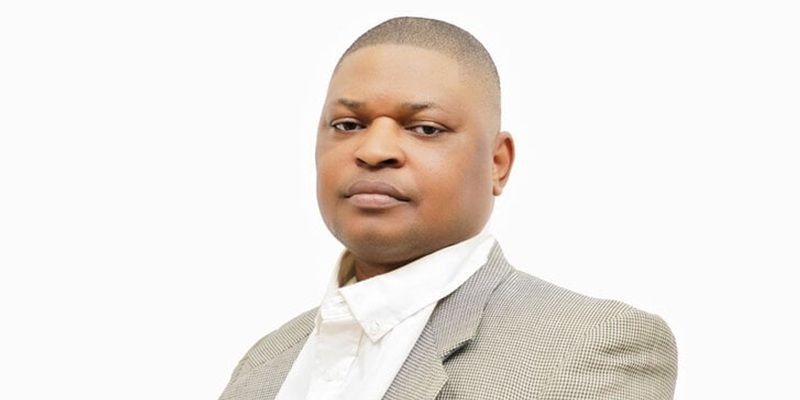
The Author
Ejuchegahi A. Angwaomaodoko is the founder of Ejuchegahi Angwa Foundation, a non-profit focused on promoting good governance and addressing socio-political issues. He is a scholar at Kean University and has authoured extensively on Nigerian governance and policy since 2000. He can be reached via: ejuchegahi.angwaomaodoko@gmail.com.