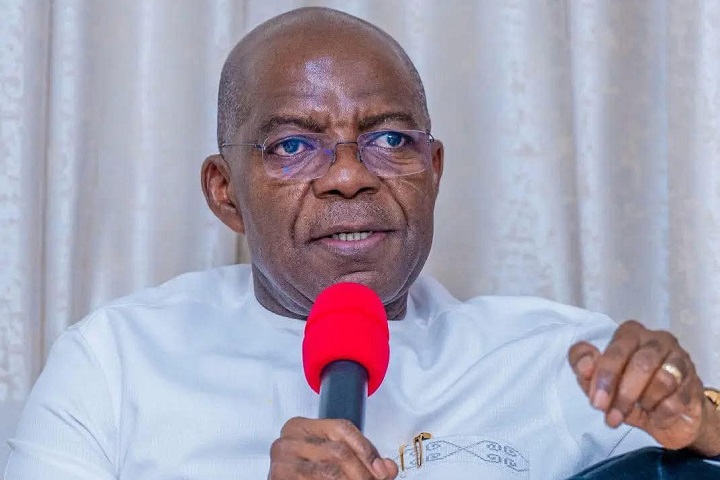
THIS DAWN — Abia State Governor, Dr. Alex Otti, has intensified pressure on his predecessor, Dr. Okezie Ikpeazu, over the controversial ₦10 billion airport fund.

Governor Otti insisted that the previous administration must either provide evidence of a completed airport project or return the money to the state treasury.
The dispute has dominated Abia’s political landscape in recent months.
It, moreover, resurfaced after Otti reiterated that a forensic audit conducted by KPMG Nigeria revealed that the funds were instead transferred to 32 separate company accounts during Ikpeazu’s tenure, with no physical airport project executed.
The funds were originally approved for the construction of an Abia State Airport.
Speaking at a public event earlier in the year, Otti stated:
“We are not interested in jailing anyone. Just show us the airport, or return the money belonging to Abia people.”
His remark has since evolved into the now-viral shorthand: “Return our ₦10bn or give us the airport.”
According to Otti, the audit findings suggested widespread financial irregularities in the disbursement of the airport allocation.
This prompted his administration to invite the Economic and Financial Crimes Commission (EFCC) to investigate.
Ikpeazu denies allegations
However, former Governor Ikpeazu has firmly denied all allegations.
He made the denials through former Information Commissioner, Mr. John Okiyi Kalu and other allies.
Ikpeazu maintained that the airport project was suspended after consultations with traditional rulers and community stakeholders who preferred road infrastructure.
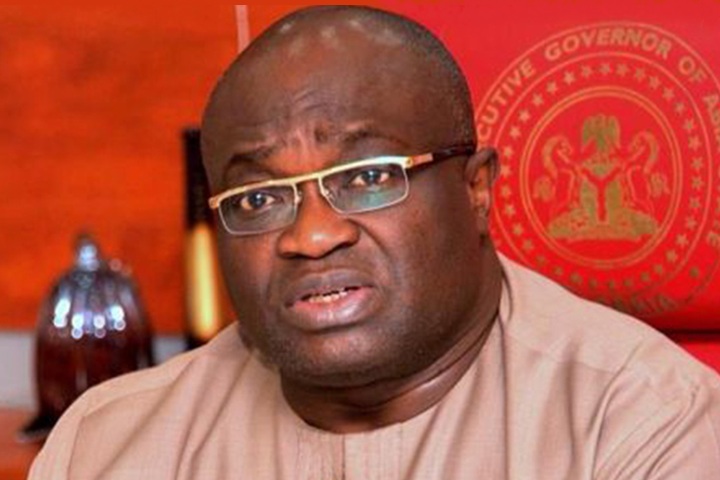
He insists the ₦10 billion was duly reallocated to critical road projects with Executive Council approval,
He described Otti’s allegations as “misguided” and “politically motivated.”
Ikpeazu’s camp has also challenged the Otti administration to publish the full audit report rather than release selected findings.
It accused the current government of framing a “false corruption narrative” to delegitimise the past administration.
The back-and-forth has triggered widespread public debate, with civil society groups and residents calling for greater transparency.
Public reaction
Observers note that at stake is not merely the question of whether an airport was ever intended or funded, but also broader issues of accountability in state-level budgeting.
Meanwhile, Otti insists the matter is strictly administrative, not personal: “This is not about politics.
“It is about recovering the people’s money. Abians deserve to know what happened to ₦10bn,” he added.
In the meantime, EFCC continues preliminary enquiries and pressure mounts on both leaders to defend their positions.
The ₦10 billion airport controversy remains one of the most consequential fiscal accountability battles in Abia State’s recent history.
Ambassadorial nominee
Amidst the airport funds controversy, however, President Bola Ahmed Tinubu nominated Ikpeazu for ambassadorial post.
Ikpeazu was successfully screened by the Senate Committee on Foreign Affairs as Ambassador on December 11, 2025.
Reacting after the screening, Ikpeazu posted on social media, @IkpeazuOkezie:
“Successful screening by the Foreign Affairs Committee of the Senate in-lieu of the position of Ambassador of the Fed. Rep. of Nigeria.
My heartfelt appreciation goes to President Bola Tinubu, Senators & well wishers.
God helping me, I will serve with dedication & patriotism.”