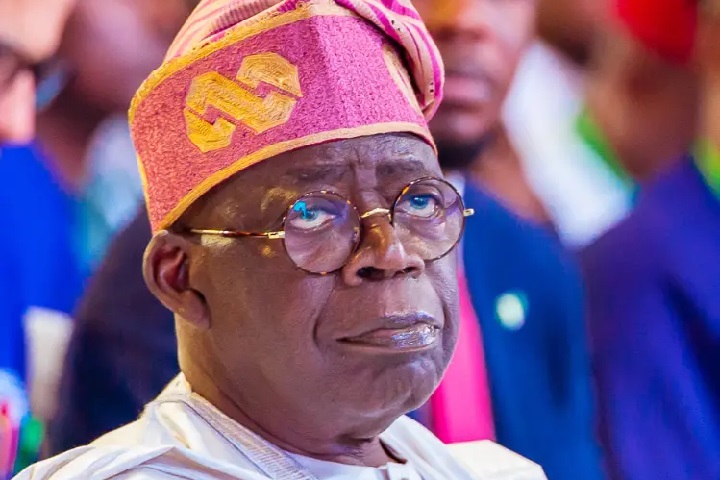
THIS DAWN — Prominent activist Aisha Yesufu has issued a scathing critique of President Bola Ahmed Tinubu over the deployment of Nigerian troops to the Republic of Benin without prior approval from the National Assembly, describing the action as unconstitutional and dangerous for Nigeria’s democracy.

In a strongly worded statement titled “Mr Tinubu and the Path to a Unilateral Government,” Yesufu accused the President of breaching Section 5(4)(b) of the 1999 Constitution, which mandates Senate authorisation before Nigerian forces can be deployed outside the country. She argued that Tinubu’s decision to order military operations in Benin—before later seeking legislative approval—amounted to executive overreach.
Yesufu warned that the action “sets a dangerous precedent” and reflects a pattern of governance in which constitutional safeguards are ignored. She cited what she called previous unconstitutional actions, including the declaration of a state of emergency in Rivers State, as examples of the administration’s disregard for rule of law.
According to Yesufu, Nigeria’s democracy is being weakened by a “steadily expanding executive power,” while the judiciary and legislature have, in her view, “emasculated themselves,” leaving the executive free to act without proper checks. She expressed concern that Tinubu’s handling of military deployment could erode the constitutional role of the National Assembly.
The activist outlined several risks associated with bypassing legislative oversight in military decisions. Among them, she argued, is the possibility that a President acting without restraint could deploy security forces domestically to suppress dissent, ultimately creating what she described as a “militarized democracy.” She also warned that Nigeria could be dragged into foreign conflicts lacking public support or legislative mandate, exposing troops and national resources to unnecessary danger.
“Our armed forces are not Tinubu’s private militia to dispatch on whims,” she said, adding that Nigerians continue to face daily attacks by terrorists while resources are spent on “foreign adventures.”
Yesufu argued that Tinubu’s move signals a test of how far executive power can be stretched, cautioning that decisions related to war, peace and national security must never be concentrated in the hands of one individual. Allowing such unilateral action, she said, would “strike at the heart of our democracy” and undermine sacrifices made by Nigerians in the struggle for civil rule.
She called on the National Assembly to “find courage” and assert its constitutional authority to prevent Nigeria from sliding into authoritarian governance under the guise of regional stability efforts.
“Democracy must be defended both abroad and at home,” Yesufu concluded. “Nigeria must be protected from Tinubu’s recklessness wrapped in the cloak of heroism.”