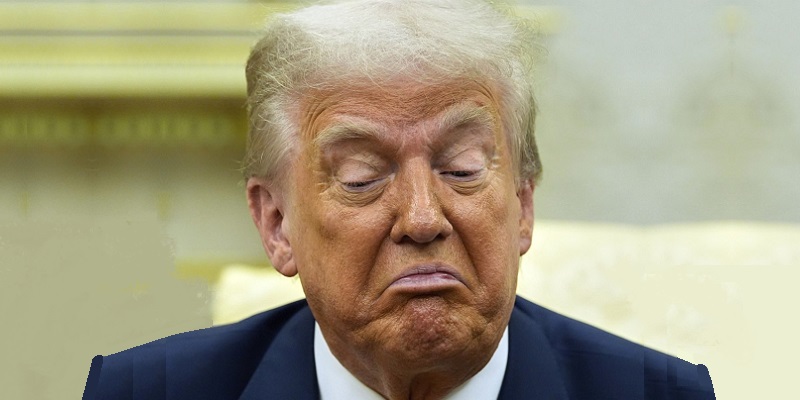
TDIran’s military-affiliated media outlet has categorically rejected claims by U.S. President Donald Trump that negotiations are underway between Washington and Tehran.

In a statement posted on social media, Iran Military declared:
“Contrary to Trump’s claims, there are no negotiations between Iran and the US, and the channels of exchange of messages are blocked.”
The outlet added that Iran considers even one-way exchanges of messages detrimental to its war strategy.
Iran’s Position on Communications
Iranian officials have repeatedly insisted that dialogue with the United States is off the table amid the ongoing conflict sparked by U.S. and Israeli strikes on Iranian military and nuclear facilities.
According to the military outlet, Tehran views any form of communication—even indirect or unilateral—as a potential weakness that could undermine its strategic posture.
This stance reflects Iran’s broader war strategy, which emphasizes resistance and deterrence over diplomacy.
Analysts note that by cutting off communication channels, Iran aims to project strength.
It also tends to avoid giving Washington leverage in the information space.
Trump’s Claims and Market Strategy
The statement accused President Trump of deliberately adopting “a strategy of reckless lying” to calm financial markets and create discord within Iran.
Trump has repeatedly suggested that back-channel talks are taking place, a claim now firmly rejected by Tehran.
Observers believe Trump’s remarks are aimed at reassuring investors and stabilizing global energy markets.
These have been rattled by disruptions in the Strait of Hormuz and escalating military exchanges.
By hinting at possible negotiations, Trump may be attempting to temper fears of prolonged instability.
Iran, however, interprets these claims as psychological warfare designed to weaken its internal cohesion and create divisions among its leadership.
Strategic Implications
The denial underscores the widening gulf between U.S. rhetoric and Iran’s battlefield strategy.
While Washington signals openness to talks, Tehran insists that negotiations would compromise its resistance narrative.
Experts warn that the absence of communication increases the risk of miscalculation, particularly as military operations intensify.
With both sides entrenched in their positions, the likelihood of diplomatic breakthroughs appears remote.
Iran’s rejection of Trump’s claims highlights the deep mistrust defining U.S.-Iran relations in the current conflict.
By branding the U.S. president’s statements as lies intended to manipulate markets, Tehran has reinforced its commitment to a no-negotiation stance.
As the war continues, the clash between Washington’s messaging and Iran’s refusal to engage illustrates the volatile mix of military confrontation and information warfare shaping the crisis.