THIS DAWN — Africa’s political and economic outlook in 2026 is defined less by outright crisis than by contradiction. While fewer elections are scheduled compared to 2025, democratic choice continues to narrow where voters do go to the polls.

At the same time, economic growth is projected to accelerate in pockets, even as debt, unemployment, and inequality tighten their grip. The continent’s global relevance is rising just as internal fragmentation deepens.
Elections Under Strain
Across Africa, ten national polls are scheduled for 2026, including in Ethiopia, Somalia, South Sudan, Uganda, and Zambia. Yet in many cases, voting is expected to legitimize incumbents rather than enable genuine political competition.
In Ethiopia, elections due in June are likely to entrench one‑party dominance under Prime Minister Abiy Ahmed’s Prosperity Party. Insecurity in Amhara, Oromia, and Tigray is expected to limit participation, while opposition boycotts narrow voter choice further.
Uganda’s January election is widely expected to extend President Yoweri Museveni’s decades‑long rule amid continued restrictions on opposition activity. Somalia’s planned polls face uncertainty driven by electoral disputes, federal tensions, and persistent al‑Shabaab attacks.
The common thread across these contests is a widening gap between electoral form and political substance, pushing political pressure beyond the ballot box and into the streets.
Wars That Refuse to End
If elections are one axis of instability, armed conflict is the other. Several of Africa’s major wars show little sign of resolution and, in some cases, risk converging into wider regional crises.
Sudan’s civil war, now in its third year, continues to devastate the country. Fighting between the Sudanese Armed Forces and the Rapid Support Forces has intensified in Kordofan and Darfur as mediation efforts stall.
External actors continue to supply arms, and neither side appears willing to accept a settlement that would restore civilian rule. The humanitarian toll is catastrophic, with spillover effects spreading across the Horn of Africa.
South Sudan is again on the brink following the collapse of the power‑sharing agreement between President Salva Kiir and Deputy President Riek Machar.
Kiir’s consolidation of power has raised the risk of renewed war, with cross‑border links between armed factions deepening instability.
The eastern Democratic Republic of the Congo remains another unresolved flashpoint. Fighting with Rwanda‑backed M23 rebels persists despite diplomatic efforts, underscoring a broader pattern: Africa’s wars are being managed, not ended.

Coup Contagion and Managed Instability
Beyond active war zones, political instability continues to ripple across the Sahel and parts of West Africa. Military juntas in Burkina Faso, Mali, and Niger—now operating under the Alliance of Sahel States—remain locked in confrontation with regional bodies and Western partners.
Meanwhile, jihadist violence linked to Jamaat Nusrat al‑Islam wal‑Muslimin and Islamic State–Sahel Province has intensified.
Even in countries not under military rule, the precedent of unconstitutional power grabs has altered political calculations. Leaders hedge against electoral risk by weakening institutions in advance, while opposition movements increasingly doubt that ballots alone can shift entrenched power.
The result is a drift toward what might be called “managed instability”: regimes that are neither fully authoritarian nor meaningfully democratic, presiding over fragile security environments and ruling through a mix of coercion, patronage, and procedural legitimacy.
Growth Returns—On Fragile Foundations
Against this political backdrop, Africa’s economic story in 2026 appears more upbeat. The International Monetary Fund projects that the continent will host several high‑growth economies expanding at 6 percent or more—outpacing any other region globally.
East and West Africa are leading the charge, buoyed by post‑conflict recoveries, commodity exports, and reform momentum.
South Sudan and Guinea top the growth rankings, driven by oil and mining respectively.
Uganda, Rwanda, and Ethiopia benefit from infrastructure investment and services expansion. Côte d’Ivoire and Benin continue to strengthen their roles as regional trade hubs.
Yet beneath the headline figures lies a harsher reality. Much of this growth is narrow, externally exposed, and weak on job creation, leaving millions of young Africans with little immediate relief.
Debt as the Binding Constraint
Debt remains the single most constraining variable shaping policy space in 2026. African countries are expected to pay close to $95 billion to creditors this year, diverting scarce resources away from health, education, and infrastructure. In Kenya, debt servicing now absorbs roughly a fifth of government spending.
The risk of further debt distress is rising, particularly in Ethiopia, Mozambique, Tunisia, and Zambia, all of which face acute refinancing pressures. While hopes are pinned on lower global interest rates, relief is far from guaranteed.
Debt restructuring remains slow, fragmented, and politically costly, with private creditors often resisting meaningful concessions. The planned launch of an Africa Credit Rating Agency in 2026 reflects growing frustration with what policymakers see as systemic bias in global credit assessments that inflate borrowing costs.
Whether the initiative can materially shift investor perceptions remains uncertain, but it signals a broader push for financial and policy sovereignty.
Critical Minerals and Contested Corridors
One area where Africa’s global leverage is undeniably increasing is in critical minerals. As competition intensifies over inputs essential to the energy transition—including copper, cobalt, manganese, and lithium—African producers have gained new strategic importance.
Governments are increasingly insisting on local value addition, seeking to move beyond raw extraction toward processing and manufacturing. While progress is uneven and capacity constraints remain severe, local‑content requirements are reshaping investment terms and supply‑chain strategies.
This resource competition is also geopolitical. Gulf investors continue to expand their footprint in African mining, China remains deeply embedded across extraction and infrastructure, and Western governments are scrambling to secure supply outside rival blocs.
At the same time, US protectionism and European climate regulations—including the EU’s Carbon Border Adjustment Mechanism—are forcing African governments to rethink trade alignments and industrial policy.
Power Shortages and Climate Pressure
Industrial ambitions face a stubborn obstacle: electricity. Despite new investments, large parts of Central and East Africa remain among the least electrified regions globally. Unreliable power continues to stifle manufacturing, raise costs for businesses, and limit job creation.
Climate shocks—floods, droughts, and heatwaves—compound the challenges, forcing governments to prioritize short‑term adaptation over long‑term transformation. Renewable energy investment is rising, but financing gaps remain vast.
The African Development Bank estimates the continent needs an additional $108 billion annually to meet infrastructure needs. Without addressing these bottlenecks, growth risks plateauing.
A Low Point—and a Pivot?
Taken together, 2026 may mark a low point for African democracy, but not necessarily its endpoint. While many elections will be tightly managed, pockets of genuine political competition persist—notably in Zambia and Cape Verde.
In several countries, civil society, courts, and independent media continue to place limits on executive power where space remains.
Heightened geopolitical rivalry offers African states greater scope to assert agency, even as it subjects them to new pressures.
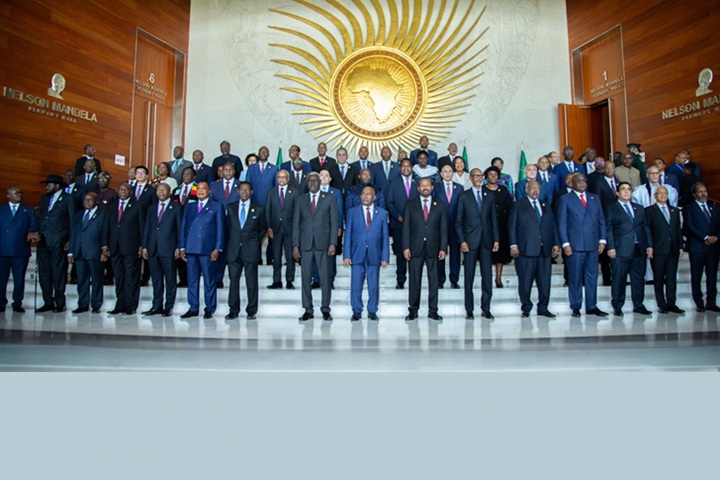
A crowded diplomatic calendar in 2026—including the France‑Africa summit in Nairobi, the Turkey‑Africa Summit in Libya, the Russia‑Africa summit in Equatorial Guinea, and a second Italy‑Africa summit—underscores the continent’s rising strategic weight.
Governments able to balance competing partnerships and extract concrete concessions stand to gain, but the margins for miscalculation are narrowing.
For Africa’s youthful population, however, patience is wearing thin. Growth without jobs, elections without choice, and peace processes without peace form a combustible mix.
The defining question of 2026 is whether political and economic systems can absorb popular demands through reform—or whether Africa’s brittle equilibrium will fracture under the weight of unmet expectations.