TDNigeria is not merely struggling. Nigeria is under siege.

From the forests where bandits operate with audacity, to highways turned into ransom corridors, to communities emptied by terror, the atmosphere is heavy with one recurring question:
Who is truly in command?
When President Bola Ahmed Tinubu responded to allegations of political hostility by saying, “I have no gun,” the remark may have been rhetorical. But in a nation bleeding daily from insecurity, that phrase carries a deeper implication.
A Commander-in-Chief does not need to carry a gun.
He commands those who do.
And when a nation is under siege, command responsibility cannot be rhetorical.
Insecurity as an Expanding Enterprise
Let us speak plainly.
Kidnapping has become structured.
Ransom payments are negotiated like contracts.
Rural communities pay levies to armed groups.
Highways have toll collectors who are not government agents.
When criminality becomes predictable and profitable, it stops being random chaos. It begins to resemble an enterprise.
This is the painful national suspicion:
Has insecurity grown beyond failure into a system that survives on compromise?
If so, the President does not need a rifle to confront it. He needs reform.
Because guns do not fail nations.
Weak institutions do.
Compromised chains of command do.
Selective enforcement does.
Political hesitation does.
The Constitutional Weight of Command
The Constitution does not describe the President as a ceremonial symbol. It names him Commander-in-Chief of the Armed Forces.
That title is not decorative.
It means:
He appoints service chiefs.
He determines strategic direction.
He approves deployments.
He oversees intelligence architecture.
He sets the tone for accountability.
He can demand measurable outcomes.
If insecurity persists, the burden does not float in abstraction. It rests on the table of command.
The President may not hold a weapon in his hand.
But he holds authority in his signature.
And history measures authority not by possession of guns, but by the discipline of those who carry them.
Silence, Signals, and the Psychology of Power
In a fragile country, silence is not neutral. It is interpreted.
When citizens are abducted and responses feel mechanical…
When security briefings produce no visible structural overhaul…
When prosecutions of security failures are rare…
The public begins to ask uncomfortable questions.
Is this incapacity?
Is this complacency?
Or is this a system too entangled to confront itself?
A nation under siege does not need explanations alone. It needs visible correction.
Nigerians Must Demand More
Citizens must not normalize abnormality.
We must demand:
Transparent security performance benchmarks.
Public reporting of anti-kidnapping operations.
Clear prosecution of compromised officers.
Intelligence restructuring with measurable targets.
Constitutional reforms that decentralize and modernize policing.
Democracy does not function on emotional loyalty.
It functions on accountability.
When insecurity thrives, patriotism demands pressure.
A President’s Conscience
Mr. President, you may not carry a gun.
But the widows of slain officers know someone commands the guns.
The farmers driven from their land know someone directs national security.
The parents who pay ransom know someone presides over the system meant to protect them.
A Commander-in-Chief without a gun is understandable.
A Commander-in-Chief without decisive reform is not.
Nigeria is under siege — not only by criminals, but by the slow erosion of public confidence.
This is not the season for clever phrases.
It is the season for structural courage.
History will not ask whether you had a gun.
It will ask whether you used your command.
And Nigerians must insist that command be felt — not merely declared.
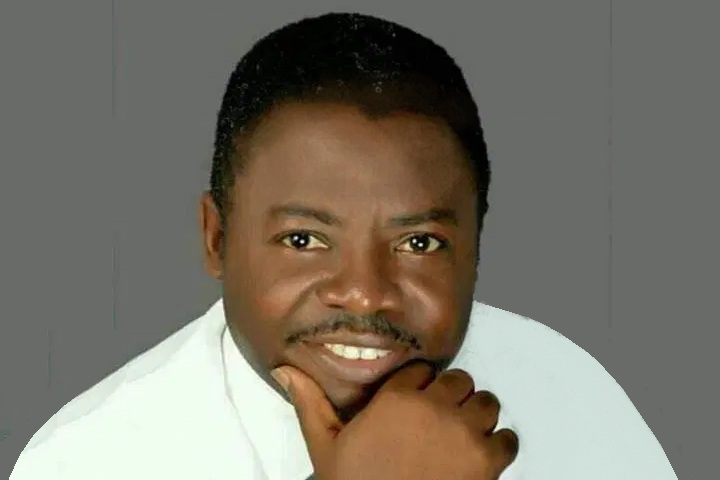
Dr. Bolaji O. Akinyemi is an Apostle and Nation Builder. He’s also President Voice of His Word Ministries and Convener Apostolic Round Table. BoT Chairman, Project Victory Call Initiative, AKA PVC Naija. He is a strategic Communicator and the C.E.O, Masterbuilder Communications.