THIS DAWN — By any objective measure, Nigeria’s last decade tells a grim economic and social story—one that challenges the dominant political narrative.

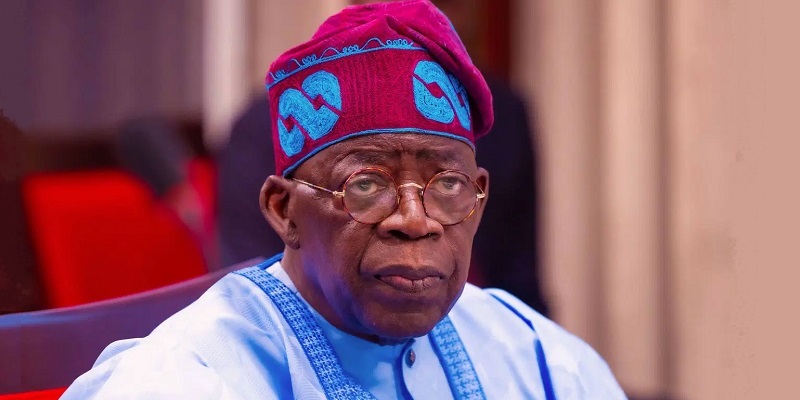
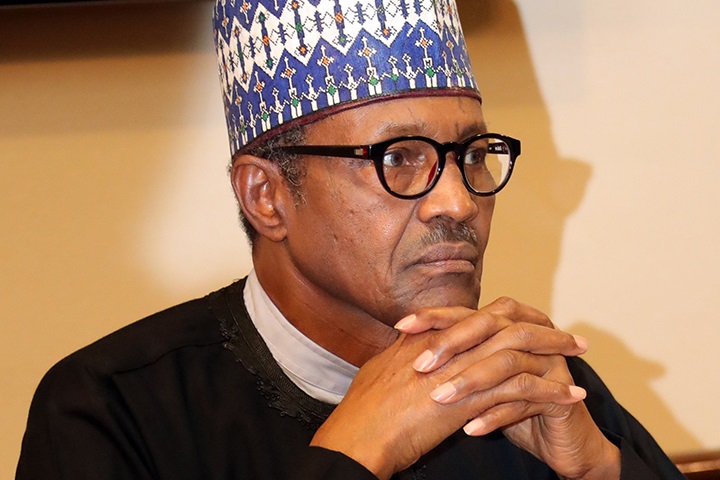
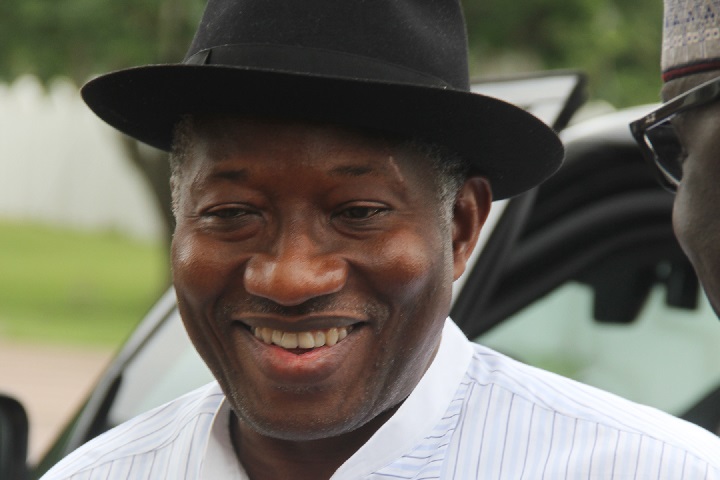
In political rhetoric, Nigeria’s modern history is often reduced to a convenient binary: Jonathan broke it; Buhari and Tinubu fixed it.
This claim has been repeated so frequently that it is treated as self-evident truth.
Yet when measured against lived realities between 2015 and 2025, the evidence raises a far more uncomfortable question: what, exactly, was fixed?
When Goodluck Jonathan handed over power in May 2015, Nigeria faced undeniable challenges—corruption, insecurity, oil dependence, and structural weaknesses.
But ten years later, after two successive administrations of the All Progressives Congress (APC), the everyday Nigerian is entitled to ask whether those challenges were resolved or profoundly worsened.
The Cost of Survival
In 2015, petrol sold for ₦87 per litre.
By 2025, it crossed ₦1,000 before retreating to ₦740–₦770, a “reduction” now celebrated as progress.
Cooking gas followed the same trajectory: from roughly ₦200 per kilogram to over ₦1,500 at its peak, now marginally lower but still beyond the reach of many households.
What was once basic domestic energy has become a luxury.
Food prices tell an even harsher story.
A bag of rice that sold for ₦8,000 now fluctuates between ₦52,000 and ₦60,000 after peaking above ₦100,000.
Beans, a staple protein, climbed from ₦20,000–₦25,000 to nearly ₦200,000, settling today around ₦120,000–₦140,000.
Hunger, once a policy failure, has become socially normalised.
Greater Cost of Survival
Even the smallest indicators of daily life reflect economic stress. A 50cl soft drink that cost ₦100 now sells for up to ₦550.
A 5kg bag of semovita has tripled in price. These are not luxury items; they are markers of basic consumption.
Mobility, Education, and Opportunity
Domestic air travel, once accessible to the middle class, has become an elite privilege.
Local flight tickets that sold for under ₦50,000 now exceed ₦400,000.
Public universities, traditionally the ladder of social mobility, have quietly priced out the poor, with fees rising from around ₦40,000 to ₦200,000–₦300,000 or more.
Technology—essential for participation in modern life—has followed the same path. Feature phones have quadrupled in price.
Entry-level smartphones now cost six figures.
Flagship devices approach ₦2.5 million in a country where the minimum wage, even after rising from ₦18,000 to ₦70,000, barely covers food.
Wage increases without purchasing power are arithmetic, not progress.
Currency, Security, and the State
The naira’s collapse remains one of the starkest symbols of national decline—from roughly ₦160 to the dollar to nearly ₦1,500. Nigerians are told to be grateful it has not fallen further.
Meanwhile, insecurity has metastasised.
What was once largely confined to Boko Haram has expanded into ISWAP insurgency, nationwide banditry, and industrial-scale kidnapping.
The killing of senior military officers now passes with disturbing regularity, a sign not only of violence but of institutional fragility.
Even governance has taken on an almost surreal quality, with reports of federal appointments awarded to individuals long deceased—an apt metaphor for a system increasingly detached from accountability.
What Was Fixed?
So What Was Restored?
Economy? National dignity? Security? Education? Welfare? Infrastructure? National assets?
If the Jonathan administration “broke” Nigeria, the empirical record suggests the past decade has not repaired it.
Instead, Nigerians are asked to applaud partial reversals of crises that should never have occurred at such scale.
Decline is reframed as reform; survival is marketed as success.
This is not a defence of past failures, nor a denial of Jonathan-era shortcomings. It is a demand for intellectual honesty.
A government that inherits problems but deepens them cannot credibly claim restoration.
History is not written by slogans but by outcomes.
And judged by the cost of living, the value of the currency, the reach of insecurity, and the shrinking space for ordinary Nigerians to live with dignity, the record of the APC era demands far more scrutiny than applause.
The question remains unanswered: what, exactly, was fixed?