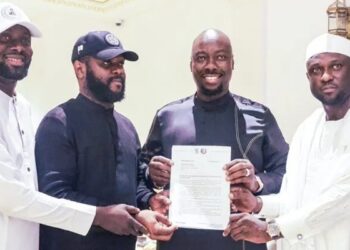
THIS DAWN — A major fiscal controversy has reached the National Assembly following the submission of a petition by Dr. Bolaji O. Akinyemi, a Nation Builder and Chairman of the Board of Trustees, Project Victory Call Initiative (PVC-Naija).

The petition, dated 4 December 2025, was formally transmitted through Hon. Bamidele Salam, Chairman of the House Committee on Public Accounts, and Senator Solomon Olamilekan Adeola, Chairman of the Senate Committee on Appropriations.
The petition was titled “Public Petition and Citizens’ Advisory Note on Re-Prioritising the 2026 Federal Budget Around SEA: Security, Education & Agriculture”.
The document was addressed to the President of the Senate, the Speaker of the House of Representatives, and all members of both chambers.
Massive Spending Discrepancy Sparks Outcry
Dr. Akinyemi drew the Parliament’s attention to what he describes as an “urgent and disturbing fiscal revelation”.
The subject was the audited financial statements of NNPC LTD. purportedly showing ₦17.5 trillion spent within one year on “pipeline protection, energy-security costs and under-recovery.”
By contrast, he notes, the entire national security budget—covering Defence, Police, Intelligence Services and others—was ₦3.25 trillion within the same period.
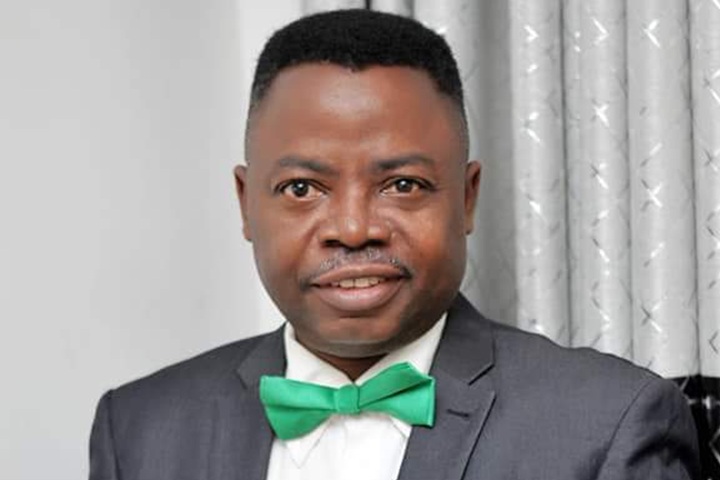
He argues that the spending pattern is indefensible, especially at a time of worsening conditions, including:
- terror incidents,
- soaring PMS prices (₦1,000–₦1,200/litre),
- widespread displacement, and,
- chronically underfunded security agencies.
Akinyemi therefore calls for:
-
A parliamentary investigation and forensic audit of the ₦17.5 trillion expenditure; and
-
A sweeping re-prioritisation of the 2026 budget around SEA: Security, Education and Agriculture.
Why SEA Should Guide the 2026 Budget
Akinyemi warned that Nigeria risks deepening insecurity, ignorance and hunger without strategic budget shifts.
He cites alarming data:
- 35 million Nigerians may face hunger in 2026 (UN WFP).
- 20.2 million out-of-school children, the highest globally.
- Agriculture employs over 70% of citizens yet receives 2–4% of federal allocations.
- Education budgets remain at 5–8%, far below UNESCO’s 15–20% recommendation.
Assessing the Buhari and Tinubu Administrations
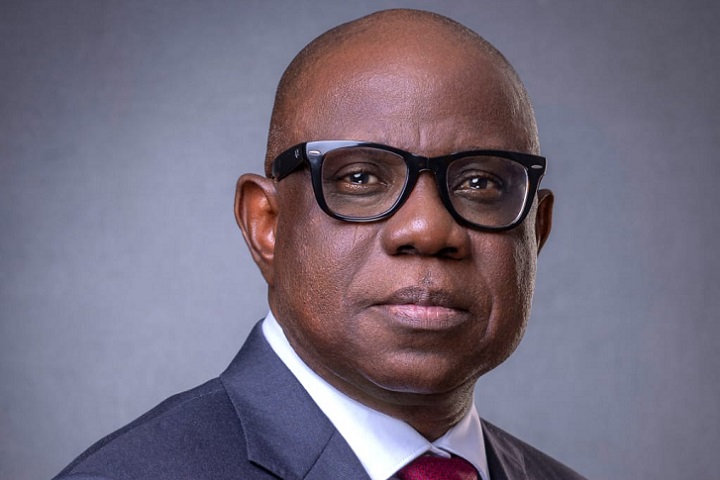
Akinyemi reviewed spending trends from 2015 to 2025 and concluded that increases in security allocations did not translate into safety, while education and agriculture suffered chronic underfunding.
Under President Bola Ahmed Tinubu, he acknowledged macroeconomic reforms but says SEA sectors remain weak.
He pointed out that security emergencies were declared despite a ₦6.57 trillion 2025 allocation.
Key Demands for 2026
The petitioner — Akinyemi proposed a People’s Development Budget, urging Parliament to:
- Redirect security spending to intelligence, technology and welfare.
- Raise education allocation to 12% in 2026, rising to 20% by 2030.
- Increase agriculture funding to 7% in 2026, reaching 10% by 2028.
- Reform NYSC into a two-year SEA-focused national service scheme.
- Ring-fence subsidy savings and cut recurrent waste to finance SEA without increasing debt.
A Call for Legislative Action
Finally, Akinyemi urged the National Assembly to:
- investigate and freeze opaque pipeline expenditures,
- adopt SEA benchmarks,
- amend key laws including the UBE and NYSC Acts, and,
- institutionalise quarterly SEA oversight hearings.
“If Nigerians are not safer, not learning and not feeding themselves, then the budget—no matter how elegant—has failed,” he concluded.